Varanasi's air quality 'deteriorating', Delhi victim 'negligence': Report
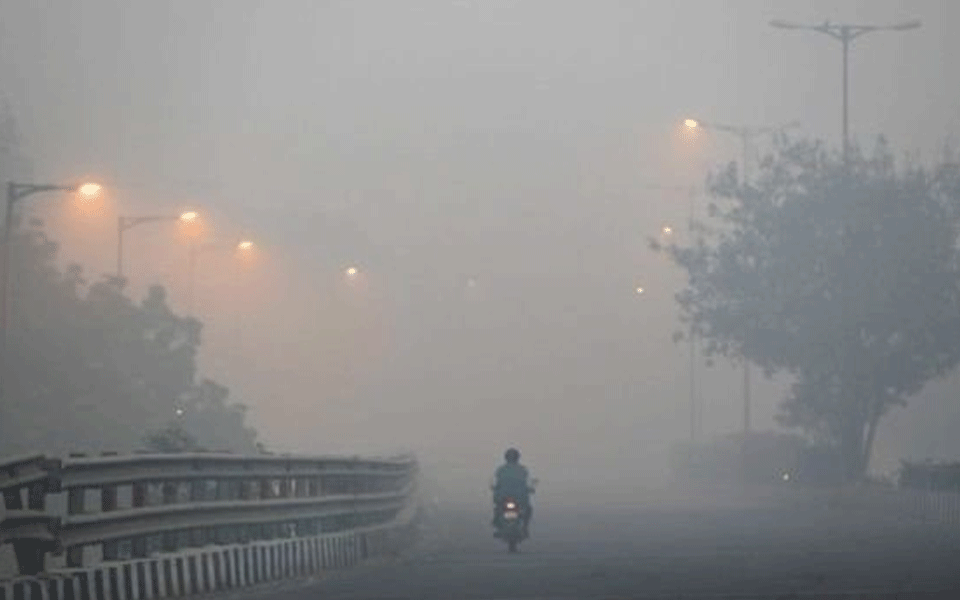
New Delhi: The air quality in Varanasi, Prime Minister Narendra Modi's Lok Sabha constituency, is ranked third on the WHO's list of 15 most polluted cities and the situation is "deteriorating" as its MP has focused on beautification and infrastructure, a Delhi-based environment body claimed.
Delhi is ranked sixth on the list and there has been "laziness" on part of its elected caretakers in tackling air pollution in the city, the 'Political Leaders Position and Action on Air Quality in India 2014-2019' report, released by Climate Trends, said.
Fourteen of the 15 cities, including four in Uttar Pradesh, on the World Health Organisation (WHO) list of most polluted cities in the world are in India, it said.
The organisation, in its report, has also listed out the proposed actions and works of respective authorities in these cities.
Varanasi in Uttar Pradesh, from where Modi had won in 2014, is witnessing a rise in the number of people suffering from allergies and respiratory problems due to a "lot" of construction in the city, the report said.
"The air quality in Varanasi has been deteriorating faster than other towns in the state (Uttar Pradesh), largely due to lot of construction in the city. Doctors and residents are confirming the rise in allergies and respiratory diseases in the past few years with zero-good quality air days.
"While the state and local city governments have taken a few knee-jerk actions, the focus of the MP has been on beautification and infrastructure that do not fully address the primary causes of consistently poor air quality at the city and regional levels, it said.
The air quality index (AQI) in Varanasi reached an alarming 490 in 2017 and 384 -- very poor category -- in December 2018, the report claimed.
An AQI between 0 and 50 is considered "good", 51 and 100 "satisfactory", 101 and 200 "moderate", 201 and 300 "poor", 301 and 400 "very poor", and 401 and 500 "severe", as per pollution control authorities.
Kanpur in Uttar Pradesh is the most polluted city in the world and is ranked one on the list. Faridabad in Haryana has been ranked second and Varanasi third.
Gaya and Patna in Bihar are fourth and fifth on the list, while Delhi is sixth and Uttar Pradesh capital Lucknow is seventh. Cities of Agra, Muzaffarpur, Srinagar, Gurugram, Jaipur, Patiala and Jodhpur are also on the WHO list of most polluted cities.
The report claimed MPs of Lucknow and Kanpur -- Home Minister Rajnath Singh and senior BJP leader Murli Manohar Joshi respectively -- have mostly been silent on the issue of air pollution in their respective constituencies.
The MP of Patna (former BJP leader Shatrughan Sinha) has been more interested in Delhi's "smog politics", it claimed.
The national capital, which occupied sixth position, has been witnessing "negligence and laziness from its elected caretakers", the report said.
Delhi has seven MPs and an elected government with several MLAs, but "the government institutional machinery can at best be described as reactive than pro-active based on evidence available", it claimed.
"Instead of instant relief, the city is witnessing criminal negligence and laziness from elected caretakers and their implementation agencies in the form of piece-meal, limited, and short-term impact solutions being applied, the report said.
With the AQI of Delhi at 448, the city is faces problems of construction, garbage burning, vehicular pollution and crop stubble burning, it said, adding that the seven MPs in the national capital have taken different stands on the issue of air pollution.
The report has compiled the quotes of MPs of Delhi on the air quality issue.
Let the Truth be known. If you read VB and like VB, please be a VB Supporter and Help us deliver the Truth to one and all.
CM Siddaramaiah alleges ‘criminal conspiracy’ in Sringeri recount, vows legal action
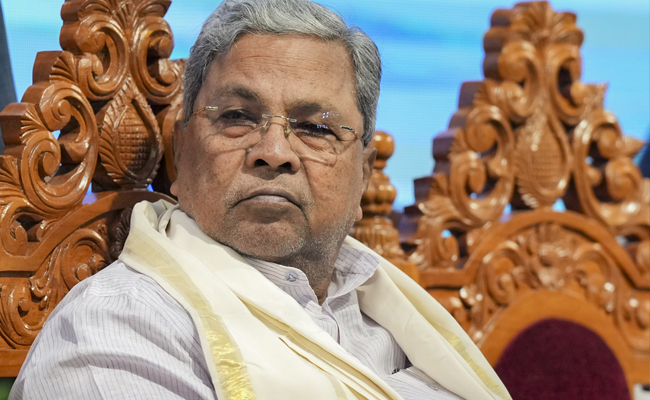
Bengaluru (PTI): Alleging a “criminal conspiracy” by BJP candidate D N Jeevaraj in the Sringeri Assembly poll recounting, Karnataka CM Siddaramaiah on Tuesday said the outcome was manipulated after valid postal ballot votes in favour of Congress leader T D Raje Gowda were tampered with during the recounting process.
Following a Karnataka High Court order on an election petition filed by Jeevaraj, challenging Raje Gowda’s election, the reverification and recounting were conducted on Saturday.
After the reverification and recount of postal ballots for the Sringeri Assembly constituency, votes polled in favour of Raje Gowda were reduced by 255, the returning officer said.
A report on the matter has been submitted to the Election Commission of India for further action, the officer added.
Congress leader Raje Gowda had won the 2023 Assembly polls from Sringeri by 201 votes, defeating his nearest rival Jeevaraj.
Addressing a press conference in Bengaluru, Siddaramaiah said the High Court had directed the recounting of postal ballots and that irregularities were noticed during the exercise conducted on May 2.
“This is a clear case of criminal conspiracy,” Siddaramaiah said, alleging that valid votes cast in favour of Raje Gowda were altered after being accepted by counting agents of all parties, including Congress, BJP, and JD(S).
He claimed that during the recounting of postal ballots, 255 votes were initially accepted as valid by all agents but were later tampered with by subordinate officials.
“There is a second mark on the votes polled in favour of Raje Gowda. They had accepted these as valid votes. Subsequently, another mark was made by officials. This is a clear case of criminal conspiracy,” he said.
When asked who was behind the alleged conspiracy, the CM replied, “It was hatched by Jeevaraj and others. It is planned.”
Siddaramaiah further alleged that the returning officer acted improperly by declaring the result despite the presence of an Election Commission observer during the recounting.
“Immediately after the counting, the returning officer announced the result. He should not have done so; this is against the law,” he said.
He pointed out that Raje Gowda had originally won by 201 votes, but after the recounting, the BJP candidate was declared the winner by 52 votes.
“The BJP has committed a criminal act of conspiracy. This is not vote chori but vote dacoity,” he alleged.
The CM said a police complaint had already been filed by Raje Gowda’s election agent, Sudhir Kumar, and emphasised the need for electoral integrity.
“We want transparency and free and fair elections. That is what our Constitution mandates,” he added.
Stating that the government would pursue legal remedies, Siddaramaiah said, “We are preparing an appeal challenging the returning officer’s announcement in a court of law.”
Responding to a separate query on elections in other states, the CM said there appeared to be an anti-incumbency factor in West Bengal, while results in Tamil Nadu were “surprising,” adding that Vijay’s party was emerging as the largest there.
Following the victory of party candidates in Bagalkote and Davanagere South, Siddaramaiah expressed confidence about future electoral prospects in Karnataka.
“Even in 2028, we will win the Assembly elections. We will come back,” the CM said.
Siddaramaiah added that he would order a forensic examination into the alleged tampering of postal ballots.