VB-G RAM G Act to come into force from July 1, MGNREGA to be repealed: Govt
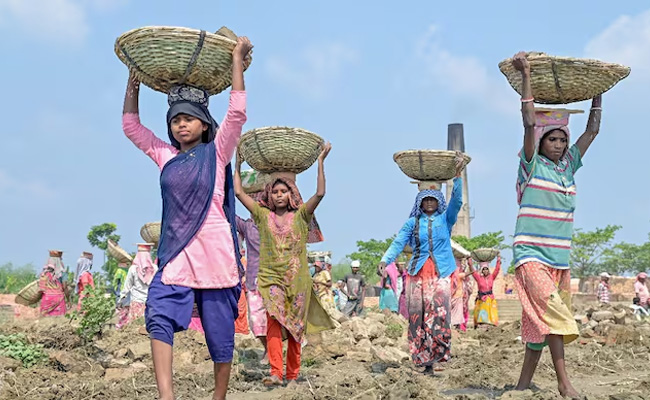
New Delhi (PTI): The Centre on Monday announced that the Viksit Bharat -- Guarantee for Rozgar and Ajeevika Mission (Gramin) Act will come into force across the country from July 1, replacing the two-decade-old Mahatma Gandhi National Rural Employment Guarantee Act.
The new Act will have a fresh framework that promises 125 days of statutory wage employment to rural households, it said.
In a statement, the Ministry of Rural Development described it as a "historic transition" in India's rural development architecture, aligned with the vision of "Viksit Bharat @2047".
The Act seeks to usher in a "future-ready and productivity-oriented rural transformation" while strengthening livelihood security, rural incomes and village-level infrastructure development, it said.
According to notifications issued by the ministry, the VB-G RAM G Act will come into force in all states and Union Territories on July 1, and the MGNREGA will stand repealed from the same date.
The ministry statement assured that the transition from MGNREGA to the new framework would be seamless, without disruption to workers.
"Ongoing works under MGNREGA as on June 30 shall be saved and carried over to the new framework seamlessly," the notification said.
The existing e-KYC verified MGNREGA job cards will remain valid until the new "Gramin Rozgar Guarantee Cards" are issued, it said, adding that workers without job cards can continue to register at the gram panchayat level.
Workers will not be denied employment due to pending e-KYC, the ministry said.
Draft rules related to wage payments, grievance redressal, allocation norms, administrative expenditure and transitional provisions are being prepared in consultation with states and Union Territories and will soon be published for public consultation, it added.
Under the VB-G RAM G Act framework, every rural household whose adult members volunteer to undertake unskilled manual work will be entitled to 125 days of guaranteed wage employment in a financial year, an increase from the existing 100-day guarantee under MGNREGA.
Employment will have to be provided within the prescribed timeframe, failing which workers will remain eligible for unemployment allowance as per the provisions of the Act.
The government also emphasised timely and transparent wage payments, stating that wages will continue to be transferred directly into workers' bank or post office accounts through Direct Benefit Transfer.
Payments will be made weekly or within 15 days from the closure of the muster roll, failing which workers will be entitled to delay compensation.
The Centre said the allocation of Rs 95,692.31 crore for 2026-27 is the highest-ever Budget Estimate allocation for a rural employment programme. Including the likely contribution of states, the total programme outlay is expected to exceed Rs 1.51 lakh crore, it said.
Let the Truth be known. If you read VB and like VB, please be a VB Supporter and Help us deliver the Truth to one and all.
AI, fake Army officer profiles and blackmail: UP cops bust extortion racket linked to man's suicide

Sonbhadra (UP) (PTI): The Sonbhadra police have busted with the arrest of five people an inter-state cyber crime racket involving blackmail, extortion and impersonation of Army and police officers on social media, which allegedly drove a man to suicide, officials said on Wednesday.
They said the deceased man was allegedly subjected to sustained online harassment and threats. Five accused from Rajasthan were arrested following a multi-state investigation involving technical surveillance, bank transaction analysis and scrutiny of CCTV footage, police said.
The development comes after complainant Ankita Pathak approached Sonbhadra SP Abhishek Verma on April 29, alleging that her husband Rajendra Pathak had died by suicide on the night of April 7-8 at their newly-constructed house.
Initially, the reasons behind the suicide were unclear. However, family members later examined the deceased's mobile phone and allegedly found chats, call records and evidence showing that unknown persons had been threatening and extorting money from him repeatedly.
Additional SP (Naxal) Rishabh Runwal told PTI that bank statements and mobile conversations revealed that Rajendra Pathak had transferred money multiple times to the accused and was allegedly under severe mental distress due to cyber harassment and blackmail.
"Taking the matter seriously, police registered a case at Robertsganj police station under provisions of the Bharatiya Nyaya Sanhita related to abetment and extortion-linked offences, and formed a joint investigation team comprising the cyber crime police station, Special Operations Group (SOG) and surveillance cell," Runwal, who supervised the investigation, said.
Investigators carried out technical analysis of the victim's mobile phone, including chats, calls and video calls, and found that the video calls had originated from Alwar district in Rajasthan.
Police also found that the bank account into which the money was transferred belonged to Maharashtra, while the cash withdrawals were being made from Bhiwadi in Rajasthan.
Based on electronic surveillance and technical evidence, a police team led by cyber police station in-charge Dhirendra Kumar Chaudhary travelled to Rajasthan. With assistance from local police, investigators analysed CCTV footage from bank ATMs and other locations to identify the accused, the officer said.
On May 10, police arrested five accused allegedly involved in different parts of the racket -- threatening victims, withdrawing money and arranging mule bank accounts and ATM cards, he said.
The arrested accused were identified as Afsil Khan, Noor Mohammad alias Nanda, Rashid, Washim and Barish, all residents of different areas of Rajasthan's Alwar and Khairthal-Tijara districts, he added.
Police said the gang operated in an organised manner and used fake social media identities with photographs of Army and police officers to intimidate victims.
According to investigators, the main accused, Afsil Khan, allegedly used artificial intelligence tools to create obscene videos and then threatened people using those fabricated clips to extort money.
Police said Nanda and Rashid withdrew extorted money through ATM machines. Their identities were established through CCTV footage obtained from a Maharashtra Bank ATM in Bhiwadi.
Investigators further found that accused Washim allegedly arranged fake documents to open bank accounts and procure ATM cards, while Barish allegedly helped provide mule accounts used for routing the money.
Police said the accused used to receive nearly 20 per cent commission on transactions routed through the mule accounts.
Five mobile phones, two ATM cards linked to mule accounts, SIM cards used in the operation and Rs 6,000 cash were recovered from the accused, police said.