Visionary leader, scholar Dr. Muhammad Manzoor Alam passes away at 80
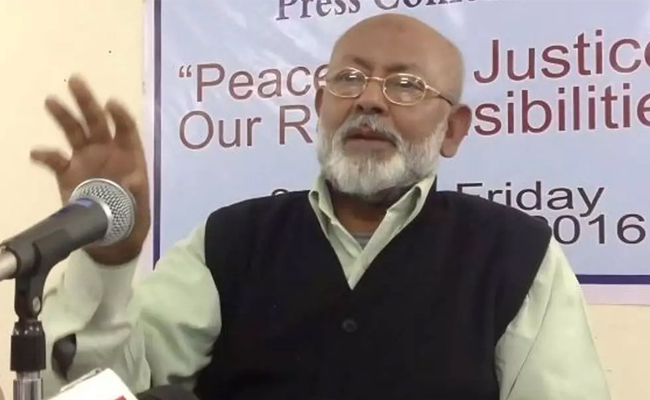
New Delhi: Dr. Muhammad Manzoor Alam, a noted scholar, educationist, and social thinker, passed away peacefully on the morning of January 13, 2026. He was 80. His death has left a deep void in academic, social, and religious circles in India and abroad, where he was widely respected for his lifelong work in education, minority empowerment, and ethical scholarship.
Dr. Alam was born on October 9, 1945, in Bihar, to the late M. Abdul Jaleel. From an early age, he showed a strong inclination towards learning and social issues. He pursued higher studies in economics and earned his PhD from Aligarh Muslim University. During his academic years, he developed a keen interest in Islamic social sciences, economic reform, and the role of knowledge in bringing positive change in society.
Dr. Alam had a long and distinguished professional career that took him across several countries. Over the years, he held key academic and advisory positions, including serving as an Economic Advisor at the Ministry of Finance in Saudi Arabia. He was also an Associate Professor of Islamic Economics at Imam Muhammad bin Saud University in Riyadh, where he taught and guided students from different parts of the world.
He played an important role in religious and scholarly work as the Chief Coordinator for the translation of the Quran at the King Fahd Printing Complex in Madinah. He also served as the Chief Representative of India at the International Islamic University in Malaysia and was an active member of the Islamic Development Bank Scholarship Programme Committee.
Dr. Alam was associated with several national and international bodies in leadership and advisory roles. These included the Institute of Objective Studies, the All India Milli Council, the Muslim Social Sciences Association, the Fiqh Academy, the Indian Association of Muslim Social Scientists, the Indo-Arab Economic Cooperation Forum, and other international advisory boards.
In 1986, Dr. Alam founded the Institute of Objective Studies in New Delhi. The institute was set up with the aim of building a strong research-based platform to address issues related to Indian Muslims and other marginalized communities. Under his leadership, IOS emerged as an important centre for academic research, policy studies, interfaith dialogue, and advocacy for minority rights.
Dr. Alam stressed the need for ethical scholarship, serious research, and practical solutions to real-life problems. During his tenure, the institute published several research works, organised national and international seminars, and supported young scholars and researchers. Many academics who worked with IOS credit Dr. Alam for shaping their intellectual and professional journeys.
Dr. Alam was closely connected with leading Muslim scholars and thinkers across the world. He worked and exchanged ideas with well-known intellectuals such as Prof. Ismail Raji Faruqi, Dr. Abdul Hamid AbuSulayman, and other scholars engaged in Islamic thought, economics, and social reform. His work helped strengthen global networks focused on education, research, and dialogue.
His areas of interest included Islamic economics, minority rights, interfaith understanding, education policy, and the broader project of linking knowledge with ethical and social responsibility. His contributions in these fields continue to be studied and discussed by scholars in India and abroad.
Dr. Alam wrote extensively on issues affecting Indian Muslims, global politics, media, education, and social justice. One of his notable works, The Final Wakeup Call, focused on media freedom, global narratives, and the need to amplify the voices of marginalized communities. Through his writings, he consistently argued for informed debate, intellectual honesty, and independent platforms for underrepresented groups.
Beyond his formal roles, Dr. Alam was known as a mentor to hundreds of students, researchers, and social activists. Those who worked closely with him often spoke about his calm approach, clarity of thought, and ability to connect ideas with action. He encouraged young scholars to think independently, work collaboratively, and remain grounded in ethical values.
Dr. Alam was widely admired for his leadership skills, organisational ability, and deep concern for the poor and the marginalized. He was known for his humility, discipline, and unwavering commitment to public service. Colleagues recall him as someone who combined strong principles with a practical understanding of social realities.
Dr. Muhammad Manzoor Alam leaves behind a rich legacy of scholarship, institution-building, and social engagement. The institutions he helped build and the people he mentored continue to carry forward his vision of knowledge-driven social change and justice.
He is survived by his family, students, and a wide circle of admirers across the world.
Condolence prayers have been offered, seeking Allah’s forgiveness for him, elevation of his status in Jannah, and the continuation of his work through future generations.
Let the Truth be known. If you read VB and like VB, please be a VB Supporter and Help us deliver the Truth to one and all.
UP: 11 killed in multi-vehicle crash in Mirzapur

Mirzapur (UP) (PTI): Eleven people were killed in a multi-vehicle accident on Wednesday in Dramandganj area here, police said.
SP Aparna Rajat Kaushik said that information about the accident was received at around 8.30 pm.
The collision occurred on a route descending from Dramandganj valley towards the Lasoda area, where a vehicle lost control and crashed.
Preliminary investigation suggests that a truck coming from behind possibly rammed into another truck after suffering a brake failure.
A car got trapped between the two trucks during the collision. In the sequence of events, another vehicle was also hit and caught fire, she said.
Police teams and fire brigade personnel rushed to the spot immediately upon receiving the information, according to Kaushik.
With the assistance of local residents, rescue and relief operations were launched without delay, she said.
"So far, 11 deaths have been reported, and efforts are underway to establish the identities of the victims," the SP said.
Police personnel remain deployed at the site, and efforts are ongoing to restore traffic movement on the affected route.
According to initial information, one of the trucks involved bears a Bihar registration number, while the other is registered in Madhya Pradesh.
Among the cars involved, one is from Sonbhadra district and another from Mirzapur district, the SP said.
A detailed probe is on in the matter.