
Votes cast in 6 seconds, post-midnight voting: Experts flag ‘unusual patterns’ in 2024 Andhra polls
If EVMs take 14 seconds to reset, how were votes recorded in 6 seconds: Parakala Prabhakar
_vb_89.jpeg)
New Delhi: Citing data on the 2024 Andhra Pradesh Assembly elections, experts including economist Parakala Prabhakar at a conference here on Tuesday, March 31 pointed to “unusual patterns,” including 17 lakh votes cast after midnight and ballots recorded within six seconds.
The conference titled “challenges to electoral integrity: examining recent evidence of electoral manipulations,” was organised by Bharat Jodo Abhiyan, and was attended by Parakala Prabhakar, S. Y. Quraishi, Prashant Bhushan, Rajesh Mahapatra and Yogendra Yadav.
According to a report by India Today, Parakala Prabhakar also alleged that polling continued till 2 am across around 3,500 booths, even as the NDA led by Chandrababu Naidu secured a sweeping mandate winning 164 of the 175 seats.
Citing the data Prabhakar called it a ‘troubling picture.’
According to Prabhakar, a significant portion of votes appeared to have been cast late into the night.
“There are indications that polling went on till around 2 am in nearly 3,500 booths,” he said.
He explained that the data showed a noticeable rise in votes during late hours. “About 4.16% of the total votes were recorded between 11:45 pm and 2 am,” he added.
According to him “nearly 52 lakh votes were polled between 8 pm and 2 am, and more than 17 lakh votes were cast after midnight alone."
He further pointed to the speed at which votes were allegedly recorded during this period.
“One vote appears to have been cast every 20 seconds after midnight,” he said.
Raising questions over the functioning of voting machines, he added, “if EVMs take around 14 seconds to reset, how were votes being recorded in as little as 6 seconds? Is it practically possible for a voter to enter, vote, and exit within that time?”
“Something unusual seems to have happened after 8 pm,” he remarked.
The elections resulted in a decisive victory for the National Democratic Alliance (NDA), led by N. Chandrababu Naidu.
The alliance secured 164 out of 175 seats, with the Telugu Desam Party (TDP) winning 135 seats, the Bharatiya Janata Party (BJP) eight seats, and Pawan Kalyan-led Jana Sena Party securing 21 seats.
Meanwhile, concerns over voter turnout figures had also been raised earlier by opposition and other experts.
According to the report, on the day of polling, May 13, 2024, the Andhra Pradesh Chief Electoral Officer initially announced a turnout of 68.04% at 5 pm. Later in the evening, the Election Commission of India (ECI) put the figure at 68.12% at 8 pm. By 11:45 pm, the turnout was revised to 76.50%. The final turnout, released four days later, was recorded at 81.79%.
However, sources from the Election Commission of India responded to the allegations by stating that legal options were available to address any discrepancies during the election process.
“The law provides clear remedies if any candidate or party finds discrepancies. Appeals can be filed or the matter can be taken to court, but none of these options were used in Andhra Pradesh,” India Today reported citing sources.
“Raising such data two years after the election is unconstitutional,” sources added.
lack of transparency in how election data is shared: Prashant Bhushan
At the same press conference, senior advocate Prashant Bhushan raised concerns about transparency in the election process. He questioned why detailed booth-level data had not been made easily accessible.
“There appears to be a lack of transparency in how election data is shared,” he said.
He pointed out that Form 17C, which contains details of votes polled at each booth, had not been made publicly available in a usable format.
“When such data is not accessible, independent verification becomes difficult,” he noted.
He further stressed the importance of transparency in a democratic system.
“Resistance to transparency suggests a deeper institutional issue. Democracy cannot function without openness,” he said.
He also called for additional safeguards to improve trust in the process. “There should be mandatory counting of VVPAT slips to ensure credibility,” he added.
Bhushan also highlighting the absence of certain key records, said “there is no public record of voters who were in queue after polling hours, and no real-time access to booth-level data.” He also stated warning that such gaps could allow large-scale issues to go unnoticed.
Former Chief Election Commissioner S. Y. Quraishi also supported the demand for closer scrutiny of election records.
“There should be an audit of documents such as Form 17C and Form 20,” he said.
“If Form 17C is signed and sealed at the booth level, why do differences appear later in the compiled data?” he asked.
Suggesting steps to improve transparency in future elections, Quraishi said, “polling percentages should be disclosed on the same day, and booth-level summaries should be released immediately.”
Let the Truth be known. If you read VB and like VB, please be a VB Supporter and Help us deliver the Truth to one and all.
Will not tolerate bias of Congress anymore: Muslim organisations of Karnataka slam party
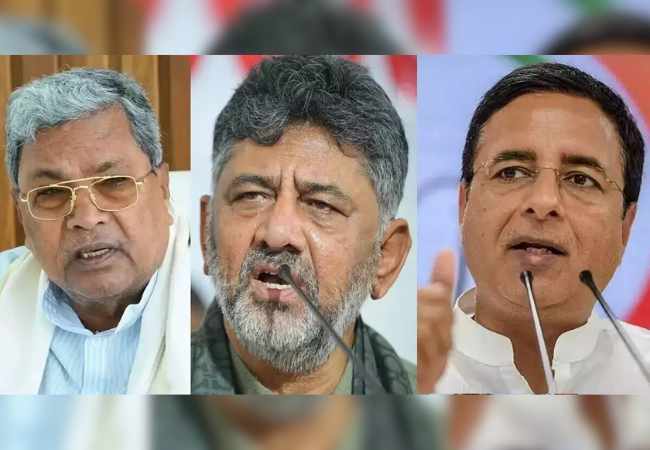
Bengaluru: Representatives of leading Muslim organisations, associations and unions from across Karnataka have issued a strong and sharply worded joint statement, declaring that the Muslim community “will no longer tolerate” what they described as the biased attitude of the Congress party towards the community and its leaders.
The organisations said the united support extended by Muslims in the state was the main reason for the Congress party coming to power. However, they alleged that the party and its government are not treating Muslims with dignity, and that there is growing anguish within the community over being repeatedly insulted by denial of proper representation in political appointments and key positions in the bureaucracy.
Referring to the Davangere by-election and recent developments, the statement said the Congress party appears to have sent a clear message to Muslims: “You are merely a vote bank for us. Your job is only to vote for the Congress party. Positions, status, representation and opportunities in the party are alms that we give. If you question your rights or the injustice done to you, disciplinary action will be taken.”
The organisations said this approach is unacceptable and warned that the community will no longer remain silent. They questioned the party’s disciplinary actions against certain Muslim leaders, asking what action had been taken in similar situations in the past involving others. “Otherwise, a serious question arises as to whether the party’s disciplinary rules are applicable only to one community,” the statement said.
Calling the issue one of dignity, the organisations said it is not just about a few individuals but concerns the entire Muslim community. They criticised the Congress for taking unilateral decisions without consulting religious and social leaders and said such actions cannot be justified as mere political decisions.
The statement also accused the party of portraying Muslims as being wrong for asking for fair representation. It said it is not fair to expect the community to campaign for the party without giving them tickets that should have been given fairly, and then initiate disciplinary action on what were described as trivial grounds. The organisations termed the attitude of “you should have simply obeyed what we said” as highly condemnable.
They also expressed concern over what they described as attempts by the party leadership to pit leaders of the Muslim community against each other. At the same time, the statement criticised certain leaders within the community for choosing to pursue personal interests instead of standing firmly against what it called discriminatory policies.
Drawing a comparison, the organisations said that when leaders from some communities commit even serious mistakes or make direct statements against the party, no action is taken and they are instead rewarded. “But if leaders from a particular community deviate even slightly from the party’s diktat, they are subjected to severe punishment this is not fair, this is not acceptable,” the statement said.
Warning of political consequences, the organisations said such discriminatory behaviour will harm the Congress party in the coming days and could lead to a serious setback. They said Muslims had supported the party to ensure a secular government based on constitutional values and to prevent divisive forces from gaining power. However, treating this support as a weakness and assuming that the community has no alternative would prove “politically very costly” for the party.
The organisations strongly condemned what they termed as mistreatment of the community in the name of political calculation and demanded that such unilateral decisions be stopped. They also called for the present decision to be reconsidered.
The statement was issued by a wide group of leaders and organisations, including Maulana Syed Tanveer Hashmi, President, Muslim Muttahida Mahaz, Vijayapura; Abdul Khadeer Saheb, President, Shaheen Group of Educational Institutions, Bidar; Maulana Shabbir Ahmed Nadvi, President, Welfare of Humanity Foundation, Bengaluru; K. S. Mohammed Masood, President, The Muslim Central Committee, Dakshina Kannada and Udupi District and former President of the State Minorities Commission; Haji Mohammed Hanif, General Secretary, The Muslim Central Committee, Dakshina Kannada and Udupi District; Muhammad Maula, President, Udupi District Muslim Okkuta; Yaseen Malpe, Immediate Past President, Udupi District Muslim Okkuta; Maulana Abdul Raqeeb MJ Nadvi, General Secretary, Majlis E Islah Wa Tanzeem, Bhatkal; Ashraf Ali Basheer, Convenor, Muslim Voice of Karnataka, Hubballi; Dr Abdul Kareem, former President, Karnataka State Minorities Commission, Hubballi; K. Ashraf, President, Dakshina Kannada District Muslim Okkuta; Muhammad Hanif, Secretary, Dakshina Kannada District Muslim Okkuta; Maulana Abdul Azeez Darimi, Leader, Sunni Yuvajana Sangha Karnataka; Haji Abubakar Nejar, District President, Sunni Samyukta Jamaath, Udupi District; Mohammad Rafiq, District President, Karnataka Muslim Jamaath, Udupi District; Rafiuddin Kudroli, President, Uniwef Mangaluru; Kasim Shuaiburrahman Qureshi, President, All India Jamiatul Qureshi, Karnataka; Afzal Mahmood, Secretary, Karnataka Muslim Political Forum, Gulbarga; Jabbar Kalaburagi, President, Karnataka Muslim Unity, Bagalkote; Nisar Ahmed, State Coordinator, Eddelu Karnataka, Mangaluru; Naqwa Yahya Malpe, President, Namma Naada Okkoota, Udupi District; Afsar, President, Karnataka Souharda Okkoota, Mandya; Advocate Abdul Jabbar Gola, Vice President, Joint Action Committee, Gulbarga; Advocate Anshad Palya, State Committee Member, All India Lawyers Association, Karnataka and Leader, Hassan District Muslim Organisations Federation; Haji Suleiman Saheb, President, Thirthahalli Taluk Joint Muslim Federation; and Mujahid Pasha of Al Jamaatul Quraish Trust, Basavakalyan.
_vb_05.jpeg)
_vb_92.jpeg)