Want fair and speedy trial in Unnao rape case, says Supreme Court
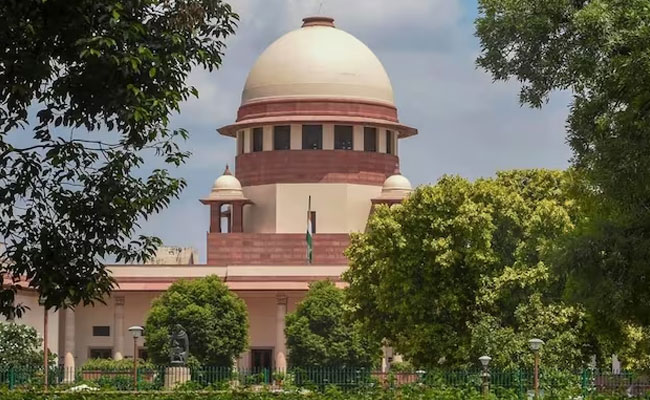
New Delhi: The Supreme Court Monday said it wanted "fair and speedy trial" in the cases arising out of the rape of a minor allegedly by ex-BJP legislator Kuldeep Singh Sengar in Unnao.
The top court sought a report from the special judge Dharmesh Sharma, who is holding trial in cases arising out of the Unnao rape.
A bench of Justices Deepak Gupta and Aniruddha Bose sought the report from the trial court judge by September 6, on how much time is needed for the completion of the trial.
"We want a fair trial but at the same time we also want a speedy trial in these cases," the bench said.
During the hearing, counsel appearing for Sengar and other co-accused Shashi Singh said that charge-sheet has not been filed by the CBI in the accident case.
The bench said that it would be better if it knows the views of the special judge on how much time was needed to complete the trial in these cases. The bench listed the matter for Friday.
On August 19, the apex court had granted CBI time till September 6 to complete the investigation into the road accident in which the Unnao rape survivor and her lawyer were critically injured and two of her aunts killed. The apex court, which had earlier given two weeks to the CBI to complete the probe, extended the time while noting that the probe agency has done "extensive investigation" in the case so far.
The CBI had told the top court that statements of rape survivor and her lawyer have not been recorded yet and it wants to analyse certain electronic evidence collected so far during the probe.
The court had also directed the Uttar Pradesh government to pay Rs 5 lakh to the lawyer, who is in a critical condition and undergoing treatment. The court had taken exception to some public statements made by the family members of the rape survivor in the media and said it might help the accused during the trial of the case.
On August 1, the apex court had directed Uttar Pradesh government to provide Rs 25 lakh to the rape survivor as an interim compensation. The top court had on August 2 directed the CBI to complete the investigation in the case within seven days, adding that the agency could avail additional seven days in exceptional circumstances, but in no case the time frame would be extended beyond a fortnight.
It had earlier ordered transfer of all the five related cases in the matter to Delhi but later modified its order putting in abeyance shifting of the accident case till the probe was completed. The modification was done stating that due to shifting of the case, the local court was facing technical hurdle in passing orders of remand for the accused who are being arrested in course of the probe.
The court had said the order transferring the accident case "shall remain in abeyance for the period during which the said case remains under investigation, which we have stipulated in the order dated August 1, 2019, to be completed in a maximum period of 15 days, preferably within seven days. The order dated August 1, 2019, is modified accordingly".
The woman, allegedly raped by Sengar in 2017 when she was a minor. In July this year, a truck rammed into the car she was travelling in with some family members and her lawyer. Two of her aunts died in the road accident.
She was airlifted from a hospital in Lucknow and brought to the AIIMS for better care as she continued to be critical.
Let the Truth be known. If you read VB and like VB, please be a VB Supporter and Help us deliver the Truth to one and all.
Man arrested with Rs 2.54-crore heroin in Mumbai

Mumbai (PTI): Police have arrested a man and seized over 500 grams of heroin worth Rs 2.54 crore in the illicit market from him in Mumbai, officials said on Friday.
The police's Anti-Narcotics Cell (ANC) made the drug seizure in Santacruz in the western suburbs. The operation was conducted by the Kandivali unit of the ANC on Thursday as part of a special crackdown against drug trafficking in the area, they said.
Acting on specific inputs, an ANC team conducted a raid in Santacruz (East) and intercepted a man. During a search, the team recovered 508 grams of high-grade heroin from his possession, an official said.
The seized contraband, a highly addictive, opioid drug derived from morphine, is estimated to be worth Rs 2.54 crore in the international market, he informed.
Following the seizure, a case was registered against the man under relevant sections of the Narcotic Drugs and Psychotropic Substances (NDPS) Act, 1985, and he was formally placed under arrest in the early hours of Friday.
The police are currently investigating the source of the drug and trying to identify the intended recipients of the consignment, he said.