Want to set up administrative machinery for hate speeches, can't deal with individual cases: SC
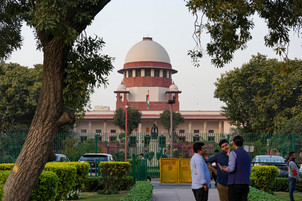
New Delhi, Nov 29: The Supreme Court on Wednesday said it was looking to put in place an administrative machinery to deal with hate speeches across the country and clarified that it cannot deal with individual cases as it will lead to flooding of cases.
A bench of Justices Sanjiv Khanna and SVN Bhatti said hate speech has been defined by the court and the question is of implementation and understanding how it is to be applied.
"We can't deal with individual aspects. If we start dealing with individual cases, it will lead to flooding of cases. We want to put infrastructure or administrative machinery in place. If there is any breach in that then you may approach the concerned high court.
"We cannot take pan India cases as it will be impossible for us to handle. In a country as big as India, there will be problems but the question is whether we have enough administrative machinery in place to take action wherever required. Society must know that if you indulge in it then there will be some state action," the bench said.
The top court also issued notices to the states of Tamil Nadu, Kerala, Nagaland and Gujarat over the non-appointment of nodal officers.
The top court had earlier said defining hate speech is complex but the real problem in tackling it lies in the implementation and execution of law and judicial pronouncements.
On October 21 last year, the top court had directed Uttar Pradesh, Delhi and Uttarakhand to crack down hard on those making hate speeches, calling them shocking for a country that is religion-neutral.
Holding that the Constitution of India envisages a secular nation, the court had directed the three states to promptly register criminal cases against the offenders without waiting for a complaint to be filed.
Let the Truth be known. If you read VB and like VB, please be a VB Supporter and Help us deliver the Truth to one and all.
Karnataka School Edu Dept prohibits children from being made to dance to obscene songs
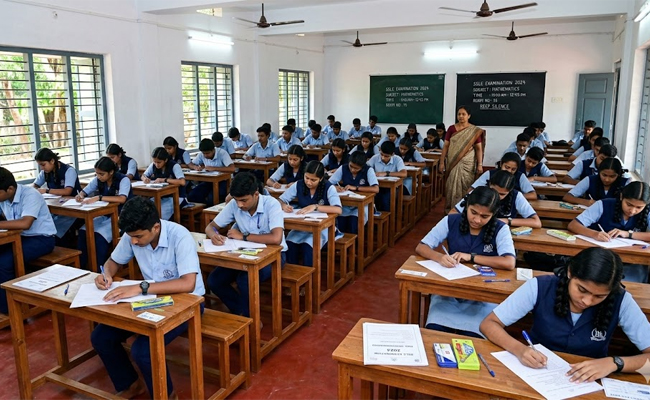
Bengaluru (PTI): The Karnataka School Education Department has issued a circular strictly prohibiting children from being made to dance to obscene songs in educational and cultural programmes.
It stated that such dances would negatively impact students' mental health and moral values. It will create indiscipline and harm the sanctity of education.
"All the Deputy Directors (Administration) of the state's School Education Department have been asked to take strict measures to prevent children or students from dancing to obscene songs in all government, aided and unaided schools in the state," the office of the commissioner of the School Education Department said in a recent circular.
"If it is found that children are being made to dance to obscene songs, appropriate action will be taken against the headmaster or management of such school," it added.
The department also listed certain measures in this regard, which include: strictly prohibiting children from being made to dance to obscene songs during educational and cultural programmes; selecting songs that are inspiring, positive, instilling national pride in children and reflecting the greatness, dignity, values, culture, and morality of the state.
Stating that the school headmaster and management are responsible for selecting songs and dances for cultural programmes, it said, they should also ensure that students wear decent clothes in dance or cultural programmes.