Wanted for 3 murders, UP's TikTok 'villain' shoots self dead in roadways bus
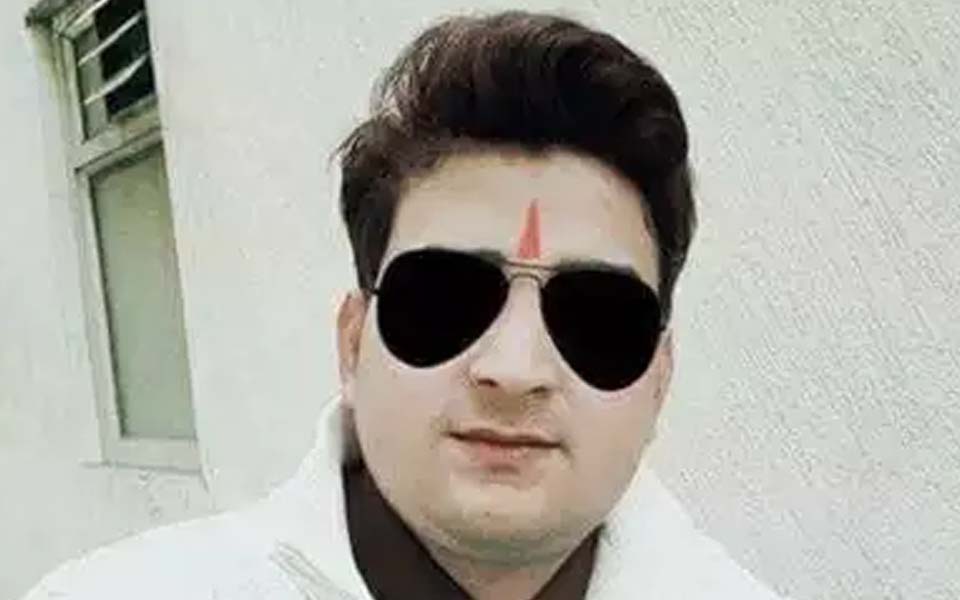
Bijnore: In a sordid turn of events, the saga of Ashwini Kumar, also known as Johny Dada and Tik Tok Villain, ended on Saturday when he shot himself dead in a roadways bus in Barhapur area in Bijnore in Uttar Pradesh.
Ashwini Kumar, 30, was the main suspect in three murders and reportedly a drug addict, who used to upload TikTok videos of himself posing as a ‘villain’.
He also posted violent Facebook messages like ‘I will destroy everything’, ‘Devil is ready now’ and ‘See my havoc’.
Though he had no criminal record, Ashwini made it to the ‘most wanted list’ in Bijnore with reward of Rs 1 lakh on his head, after he shot dead a local BJP leader’s 25-year-old son and his nephew, following a dispute on September 27.
He also shot dead a girl, who had spurned his advances.
Fifteen police teams had been chasing Ashwini since the past week, when on Friday his location was traced to Bijnore’s Nagina area.
Bijnore Superintendent of Police (Rural) Vishwajeet Srivastava said, “He was trying to flee and had boarded a roadways bus to Delhi. A local police team stopped the bus around 1.15 a.m. on Saturday.”
Ashwini was spotted after two constables became suspicious of passenger, who had covered his face with a white handkerchief. When the policemen approached a man, he panicked, drew his gun and shot himself in the head. He died on the spot.
The police recovered a pistol, two magazines and a 14-page note with detailed account of the three murders allegedly committed by Ashwini from him.
Ashwini was a graduate and his father was a clerk in a sugarcane cooperative society in Dhampur tehsil, while his elder brother works in a private company in Dehradun.
According to his family, Ashwini also used to work with a private firm in Delhi but abruptly gave it up. His family believes his sustained drug addiction might have affected his mental health.
Let the Truth be known. If you read VB and like VB, please be a VB Supporter and Help us deliver the Truth to one and all.
Man arrested with Rs 2.54-crore heroin in Mumbai

Mumbai (PTI): Police have arrested a man and seized over 500 grams of heroin worth Rs 2.54 crore in the illicit market from him in Mumbai, officials said on Friday.
The police's Anti-Narcotics Cell (ANC) made the drug seizure in Santacruz in the western suburbs. The operation was conducted by the Kandivali unit of the ANC on Thursday as part of a special crackdown against drug trafficking in the area, they said.
Acting on specific inputs, an ANC team conducted a raid in Santacruz (East) and intercepted a man. During a search, the team recovered 508 grams of high-grade heroin from his possession, an official said.
The seized contraband, a highly addictive, opioid drug derived from morphine, is estimated to be worth Rs 2.54 crore in the international market, he informed.
Following the seizure, a case was registered against the man under relevant sections of the Narcotic Drugs and Psychotropic Substances (NDPS) Act, 1985, and he was formally placed under arrest in the early hours of Friday.
The police are currently investigating the source of the drug and trying to identify the intended recipients of the consignment, he said.