Waqf Act violates idea on which nation is built: Derek O'Brien
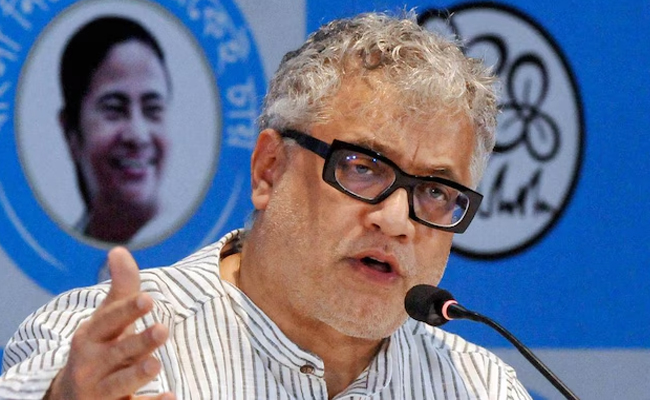
New Delhi (PTI): The Waqf Act-2025 violates equality, personal autonomy, federalism, and the idea on which the nation is built, Trinamool Congress leader Derek O’Brien said on Friday.
In a blog post, the Trinamool Congress leader said the issue is not just about land or law, but about dignity and asserted that if the rights can be rewritten for one, it can be rewritten for all.
“The Waqf Amendment Bill is not just about land or law. It is about dignity,” O’Brien said in the blog titled “Am I Indian Enough”, adding that for millions of Indians, especially those from minority and marginalised communities, this is not a rhetorical question but a lived reality.
“It is a quiet burden. It is a deep suspicion cast on their belonging. Their being. Every legislation. Every policy,” he said.
“The Waqf Amendment Bill is not merely a legislative proposal. It is a mirror. And what we see in it should disturb all of us – whether Hindu, Muslim, Christian, Sikh, any religion or none. Because if rights can be rewritten for one, they can be rewritten for all,” he said.
“This Bill violates equality. It violates personal autonomy. It violates federalism. And, more than anything, it violates the idea that our great nation is built on... The Constitution does not ask how much we belong. It guarantees that we do,” he said.
The TMC Rajya Sabha parliamentary party leader called the Act an attack on federalism.
“Land is a State Subject under List II of the Seventh Schedule of the Constitution. Tomorrow, what stops the Union Government from taking over Hindu temple boards? Or church-managed lands? This isn’t about reform. This is about control. And such overreach is a direct assault on Indian federalism,” he said.
The TMC leader pointed out certain provisions in the Act, including the “five-year criteria”, which says one can dedicate land to Waqf only if they have been practising Muslims for at least five years.
“This is not only arbitrary but also deeply discriminatory. No such restriction exists for other religious endowments (Violation of Right to Equality). A Hindu, Christian, or Sikh can donate property to their religious institutions at any time. Why and how should Muslims alone prove the longevity of their faith before making a charitable endowment?” he said.
O’Brien called the removal of “Waqf by user”, a concept that allows property that has been used for religious or charitable purposes for a long time to be considered Waqf even without formal documentation, a serious issue.
“By stripping Muslim institutions of this same recognition, the government is creating a legal hierarchy among religious communities. This is a clear violation of Article 14 of the Constitution, which guarantees equality before the law,” he said.
He questioned if legislations are being framed for the greater good or for “cynical pigeonholing”.
“All this is not just about land or law. It is about dignity. About whether our Constitution still holds meaning for all of us or only for some of us,” he said.
He also raised concerns about non-muslims being allowed in the Waqf panels, and centralisation of power by assigning power to a government official to declare if a property is Waqf or not.
In response to a batch of petitions, the Supreme Court on Thursday barred the de-notification of Waqf lands and ordered a status quo on assets and appointments until the hearing scheduled for May 5.
A bench comprising Chief Justice Sanjiv Khanna and Justices Sanjay Kumar and K V Viswanathan also recorded the assurance of Solicitor General Tushar Mehta, representing the Centre, that no appointments in the central Waqf council and boards will be made in the meantime.
Let the Truth be known. If you read VB and like VB, please be a VB Supporter and Help us deliver the Truth to one and all.
CM Siddaramaiah alleges ‘criminal conspiracy’ in Sringeri recount, vows legal action
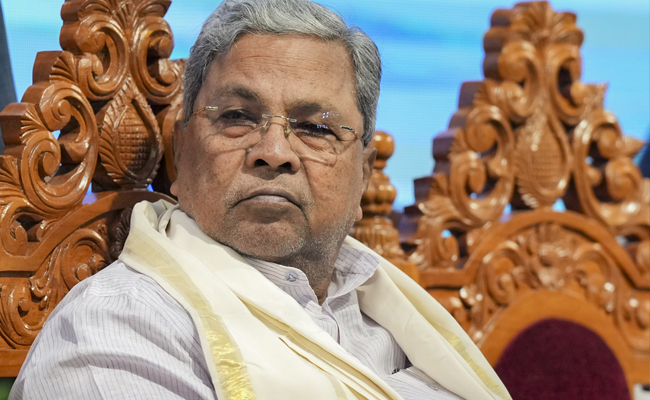
Bengaluru (PTI): Alleging a “criminal conspiracy” by BJP candidate D N Jeevaraj in the Sringeri Assembly poll recounting, Karnataka CM Siddaramaiah on Tuesday said the outcome was manipulated after valid postal ballot votes in favour of Congress leader T D Raje Gowda were tampered with during the recounting process.
Following a Karnataka High Court order on an election petition filed by Jeevaraj, challenging Raje Gowda’s election, the reverification and recounting were conducted on Saturday.
After the reverification and recount of postal ballots for the Sringeri Assembly constituency, votes polled in favour of Raje Gowda were reduced by 255, the returning officer said.
A report on the matter has been submitted to the Election Commission of India for further action, the officer added.
Congress leader Raje Gowda had won the 2023 Assembly polls from Sringeri by 201 votes, defeating his nearest rival Jeevaraj.
Addressing a press conference in Bengaluru, Siddaramaiah said the High Court had directed the recounting of postal ballots and that irregularities were noticed during the exercise conducted on May 2.
“This is a clear case of criminal conspiracy,” Siddaramaiah said, alleging that valid votes cast in favour of Raje Gowda were altered after being accepted by counting agents of all parties, including Congress, BJP, and JD(S).
He claimed that during the recounting of postal ballots, 255 votes were initially accepted as valid by all agents but were later tampered with by subordinate officials.
“There is a second mark on the votes polled in favour of Raje Gowda. They had accepted these as valid votes. Subsequently, another mark was made by officials. This is a clear case of criminal conspiracy,” he said.
When asked who was behind the alleged conspiracy, the CM replied, “It was hatched by Jeevaraj and others. It is planned.”
Siddaramaiah further alleged that the returning officer acted improperly by declaring the result despite the presence of an Election Commission observer during the recounting.
“Immediately after the counting, the returning officer announced the result. He should not have done so; this is against the law,” he said.
He pointed out that Raje Gowda had originally won by 201 votes, but after the recounting, the BJP candidate was declared the winner by 52 votes.
“The BJP has committed a criminal act of conspiracy. This is not vote chori but vote dacoity,” he alleged.
The CM said a police complaint had already been filed by Raje Gowda’s election agent, Sudhir Kumar, and emphasised the need for electoral integrity.
“We want transparency and free and fair elections. That is what our Constitution mandates,” he added.
Stating that the government would pursue legal remedies, Siddaramaiah said, “We are preparing an appeal challenging the returning officer’s announcement in a court of law.”
Responding to a separate query on elections in other states, the CM said there appeared to be an anti-incumbency factor in West Bengal, while results in Tamil Nadu were “surprising,” adding that Vijay’s party was emerging as the largest there.
Following the victory of party candidates in Bagalkote and Davanagere South, Siddaramaiah expressed confidence about future electoral prospects in Karnataka.
“Even in 2028, we will win the Assembly elections. We will come back,” the CM said.
Siddaramaiah added that he would order a forensic examination into the alleged tampering of postal ballots.