War of words in Kerala assembly over Sabarimala gold row; UDF announces non-cooperation
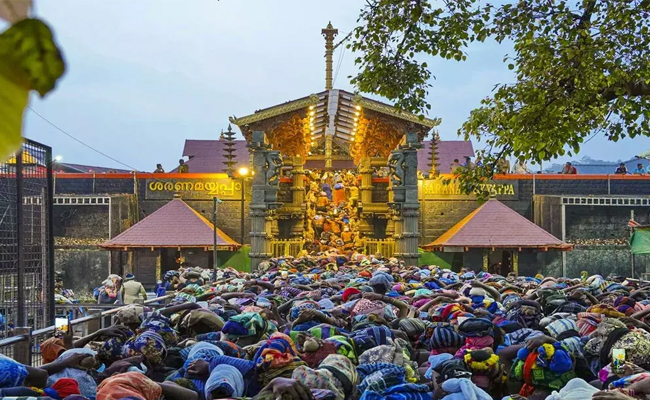
Thiruvananthapuram (PTI): The ruling LDF and the opposition UDF engaged in an intense war of words in the Kerala Assembly over the Sabarimala gold loss case and the arrest of Tantri Kandararu Rajeevaru as the House reconvened after a brief break on Monday.
As soon as the question hour began, the Congress-led opposition informed Speaker A N Shamseer that they would not cooperate with the House proceedings due to the government's stand on various matters related to Sabarimala, including the gold loss case and the women's entry issue.
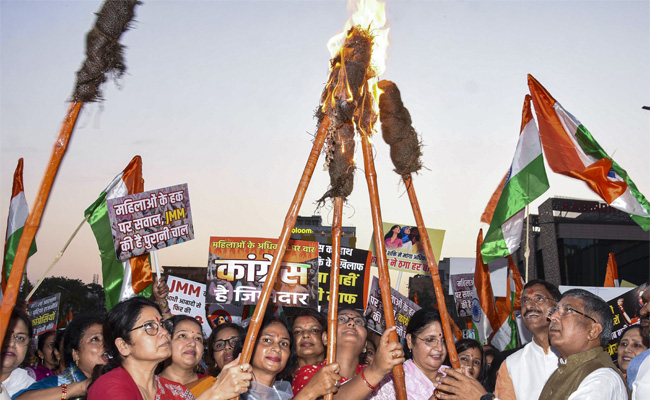
Raising slogans and holding placards demanding the resignation of Devaswom Minister V N Vasavan, the UDF members staged a protest in front of the Speaker's podium. Later, they squatted in the well of the House and continued sloganeering.
ALSO READ: Delhi: 3 northeastern women face racial abused, called 'dhandhewali', FIR registered
In the absence of Leader of Opposition V D Satheesan, who is away as part of his ongoing "Navayuga Yatra", senior Congress legislator K Babu informed the House of their stand.
He flagged the grant of bail to the accused in the case and strongly criticised the government over the arrest of Tantri (chief priest) without any iota of evidence.
"The Tantri was imprisoned for 40 days, as he had not favoured the government stand supporting the violation of rituals at Sabarimala," Babu alleged, referring to the women's entry issue in 2018.
He further pointed out that the alleged irregularities happened at the Global Ayyappa Sangamam organised by the Travancore Devaswom Board (TDB) with the support of the government.
The Tripunithura MLA also accused the government of adopting a "suspicious stand" in the women's entry issue when the matter was taken up by the Supreme Court again recently.
"Because of the government's stand in these matters, we have not been cooperating with the House proceedings for some time. Today also we will not cooperate," he added.
However, Law Minister P Rajeev and Parliamentary Affairs Minister M B Rajesh strongly rejected the UDF charges.
Rajeev said the opposition's remarks were against the observation of the High Court that the Special Investigation Team (SIT) probe into the Sabarimala gold loss case was progressing in the right direction.
"The UDF is continuing their agitation even after the High Court made it clear that the probe is progressing in the right direction. So, the protest is with a clear political agenda," he alleged.
Referring to the Ayodhya temple matter, the minister alleged that the Congress has paved the way for the BJP to use Hindutva and temple politics.
Though the BJP and the Congress have different names, both parties now represent the same politics and ideology, which is a threat to the secularism of Kerala, he said.
Rajeev said it is completely a High Court-monitored probe and the investigation report is being submitted to the court in a sealed cover and the government has no role in it.
The opposition's allegations were against the High Court, and so it should be removed from the Assembly records, he added.
Minister Rajesh also vehemently criticised the Congress-led UDF over its support extended to Tantri and said the chief priest had no more privilege than the other accused in the case.
He also alleged that the opposition was expecting a "golden opportunity" to take agitation to the streets again in the name of Sabarimala tantri.
Let the Truth be known. If you read VB and like VB, please be a VB Supporter and Help us deliver the Truth to one and all.
Gujarat voted for development & good governance, says Pradhan as BJP sweeps local body polls
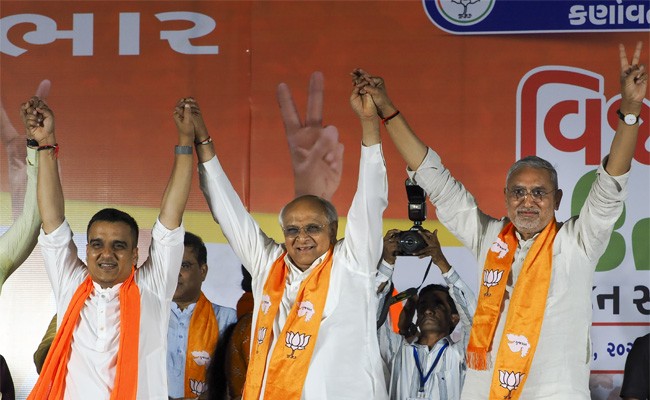
New Delhi (PTI): Union minister Dharmendra Pradhan on Tuesday said the people of Gujarat have reaffirmed their faith in the politics of development, stability and good governance as the BJP swept the local body elections by winning all 15 municipal corporations and 33 out of 34 district panchayats in the state.
Thanking the voters, Pradhan said the result is a testament to the people's unwavering trust in the BJP, the relentless hard work of the party workers and the strength of the organisation under the guidance of Prime Minister Narendra Modi and the leadership of Chief Minister Bhupendra Patel.
“The people of Gujarat have once again made it clear that their trust remains firmly aligned with the politics of development, stability and good governance. I express my heartfelt gratitude to the people of Gujarat for the support received by the BJP in the local body elections,” Pradhan posted on X.
“Under the guidance of the Hon'ble Prime Minister Narendra Modi and the leadership of Gujarat's Chief Minister Bhupendra Patel, this result is a remarkable testament to the people's unwavering trust, the relentless hard work of the Gujarat BJP workers, and the strength of the organisation,” he added.
Earlier, Prime Minister Narendra Modi thanked the people of Gujarat for what he termed a "sweeping mandate" in the local body polls, saying the bond between the state and the BJP has grown even stronger.
Modi said people have voted for the politics of good governance, and assured that the party would work harder to take Gujarat to new heights of progress.
Though final results for 250 taluka panchayats and 84 municipalities were awaited, data from the State Election Commission (SEC) showed that the ruling BJP won most of these local bodies while some were bagged by the Congress, AAP and Independents.
Polling was held on Sunday for 15 municipal corporations, 84 municipalities, 34 district panchayats and 260 taluka panchayats.
The BJP emerged a clear winner in the municipal corporations of Ahmedabad, Vadodara, Surat, Bhavnagar, Jamnagar and Rajkot, besides the newly created municipal corporations of Navsari, Gandhidham, Morbi, Vapi, Anand, Nadiad, Mehsana, Porbandar and Surendranagar.