'We are not lawmakers': Delhi HC refuses to entertain PIL for compulsory voting in elections
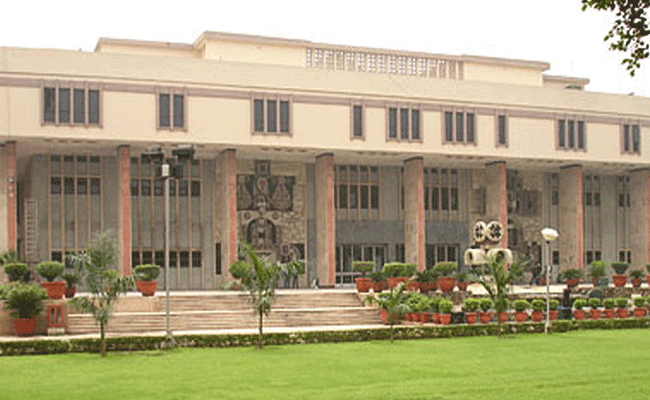
New Delhi (PTI): The Delhi High Court on Friday refused to entertain a PIL seeking direction to the Centre and the Election Commission to make voting compulsory in parliament and assembly polls, saying it cannot force a person to vote.
"We are not lawmakers. We cannot pass such directions. Is there any provision in the Constitution that makes voting compulsory?" a bench of Chief Justice Satish Chandra Sharma and Justice Subramonium Prasad said.
The court warned the petitioner, advocate Ashwini Kumar Upadhyay, it would dismiss the petition with costs after which he withdrew it.
Upadhyay had filed the public interest litigation, saying compulsory voting will ensure every citizen has a voice, will improve the quality of democracy and secure the right to vote. The plea said low voter turnout is a persistent problem and compulsory voting can help increase the turnout, particularly among marginalised communities.
During the hearing, the petitioner cited the example of drivers, saying many of them are not able to cast vote as they had to work in other cities.
The bench said it is their right and their choice.
"We cannot force a person present in Chennai to come back to his hometown in Srinagar and vote there. You want us to direct the police to catch him and send him to Srinagar," the bench said.
It also refused to direct the Election Commission to treat the petition as a representation.
The petition had said, "When voter turnout is high, the government is more accountable to the people and is more likely to act in their best interests."
It said compulsory voting promotes political participation by making voting a civic duty, and when voting is compulsory, people are more likely to take an interest in politics and get engaged in the democratic process.
"This can help overcome voter apathy, which is a significant problem in India. Many people are disillusioned with the political system and feel that their votes do not count. Compulsory voting can help restore faith in the democratic process and encourage people to become more involved in politics," the petition said.
It added that compulsory voting ensures that elected representatives are chosen by a larger and more representative group of people, which will increase the legitimacy of the government.
The petitioner said compulsory voting has been successfully implemented in countries like Australia, Belgium and Brazil and they have seen significant increase in voter turnout.
As an alternative prayer, the plea had urged the court to direct the Election Commission to use its plenary constitutional power to increase voters' turnout in the elections for parliament and state assemblies. It had also sought a direction to the Law Commission to prepare a report on compulsory voting.
Let the Truth be known. If you read VB and like VB, please be a VB Supporter and Help us deliver the Truth to one and all.
Allahabad HC orders probe into 'reinstatement' of teacher in UP's Barabanki
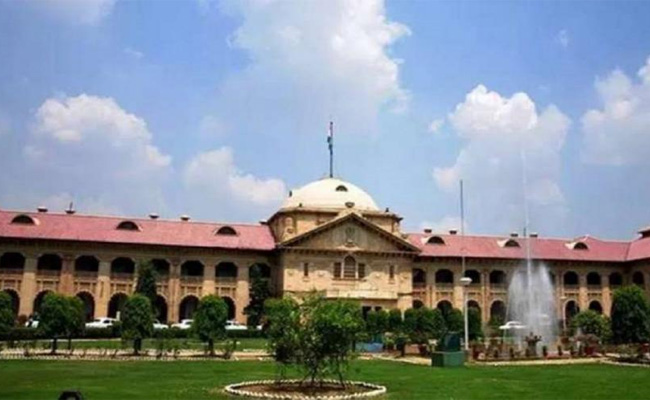
Lucknow (PTI): The Lucknow Bench of the Allahabad High Court on Friday ordered a probe by the special task force (STF) into alleged irregularities in the rejoining of a teacher at City Intermediate College in Barabanki, observing that the reinstatement appeared to be prima facie illegal.
The court also directed the recovery of the salary paid to the teacher during the disputed period.
A bench of Justice Rajeev Singh passed the order on a petition filed by the college management committee. The court expressed doubts over the roles of the District Inspector of Schools (DIOS), Barabanki, the college principal and the teacher concerned and hence, directed a detailed inquiry into the matter.
Taking note of alleged manipulation of records and misleading submissions, the court ordered the immediate transfer of the Barabanki DIOS to ensure a fair probe. It also directed the initiation of disciplinary proceedings against the then joint director of education of the Ayodhya division.
In its order, the court found that the teacher, Abhay Kumar, was initially appointed as an assistant teacher in 2018 but joined an Eklavya Model Residential School in Chhattisgarh as a lecturer in June 2024 without obtaining permission from the management. His subsequent request to retain the lien was rejected.
Despite this, he was allowed to rejoin the Barabanki College in September 2025 on the directions of the joint director of education and the DIOS, and was even paid the salary for October 2025. The court termed the rejoining "wholly illegal" and lacking any legal basis.
The bench also expressed concern over lapses in communication within the education department and directed the Uttar Pradesh chief secretary to ensure that official orders are communicated through email and WhatsApp as well, to prevent disputes.
The matter is next listed for hearing on May 28 when a compliance report is sought.