We have to show 'maximum flexibility' in implementing NEP: PM Modi
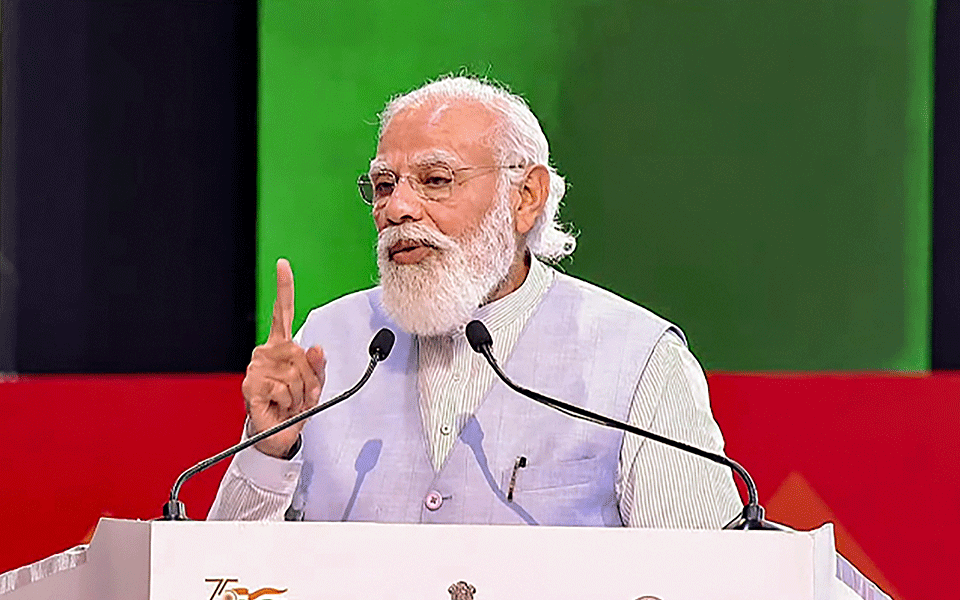
New Delhi: Prime Minister Narendra Modi said on Monday that "maximum flexibility" has to be shown in implementing the new National Education Policy (NEP) and all questions about it have to be addressed, as he asserted that it is not a government's but the country's education policy.
Addressing the 'Governors' Conference on the Role of NEP in Transforming Higher Education', Modi said it is natural for stakeholders to have questions about various aspects of the policy and "we are all working to address all these questions".
The view of every stakeholder is being heard with an open mind, he said, adding that most of the questions about the NEP are related to its implementation.
He likened the education policy to defence and foreign policies, saying they belong to the country not government. The education policy is linked to the nation's aspirations, he added.
"We have to collectively address all doubts. The vision of flexibility with which this policy was brought... We will have to show in a similar way maximum flexibility in implementing it," he told the conference, which was also attended by President Ram Nath Kovind, education ministers from states and union territories and vice chancellors besides governors.
The prime minister urged them to hold virtual conferences before September 25 in universities on the NEP, 2020 which, he said, has been widely welcomed, from a village teacher to noted educationists, as it was based on feedback received from across the country.
Highlighting the main features of the policy, first since 1986, he said it attempts to bring all aspects of higher education, be it academic, technical or vocational, out of silos and to cut down on administrative layers while bringing about a better coordination.
Modi said the idea behind the concept of graded autonomy is to encourage healthy competition among colleges and universities and to reward the performers.
"It is now our collective responsibility to implement this essence of NEP, 2020 in letter and spirit," he said. The policy focuses on learning instead of studying and goes beyond curriculum to focus on critical thinking, he said.
In the NEP, the concerns about students facing heavy burden of their books and examination pressure have been addressed and efforts are being made to expose them to vocational courses and practical training from an early age to make them more employable in Indian and global market, he said.
The policy will give a new shape and strength to India's push towards 'Aatmanirbhar Bharat' (self-reliant India), he said. Our youth will now be able to learn according to their interests, he said.
Earlier, students used to pick a stream beyond their aptitude and they would realise it much later, and these problems have been addresses now, the prime minister said.
India has been an ancient centre of global learning, and the government is working to make it hub of knowledge economy in the 21st century, he said.
While governments, be it at Centre or states, have a role in shaping education policy and system, but this is also true that they should have minimal intervention and influence in preparing the education policy, he said.
The more teachers, parents, students are associated with the education policy, the more relevant and broadbased it will be, he added.
The prime minister said that new policy has paved way for best international institutions to set up their campuses in India, which will allow youngsters from common families to join them.
This will also curb brain drain, he added.
The NEP approved by the Union Cabinet in July replaces the 34-year-old National Policy on Education framed in 1986 and is aimed at paving the way for transformational reforms in school and higher education systems to make India a global knowledge superpower.
The NEP will prepare students on the fronts of knowledge as well as skills and focuses on learning instead of studying, the prime minister said, adding that it will bring our education system out of "one size fits all" mindset.
Let the Truth be known. If you read VB and like VB, please be a VB Supporter and Help us deliver the Truth to one and all.
Right to vote under threat, must be made fundamental right: Cong's Jairam Ramesh
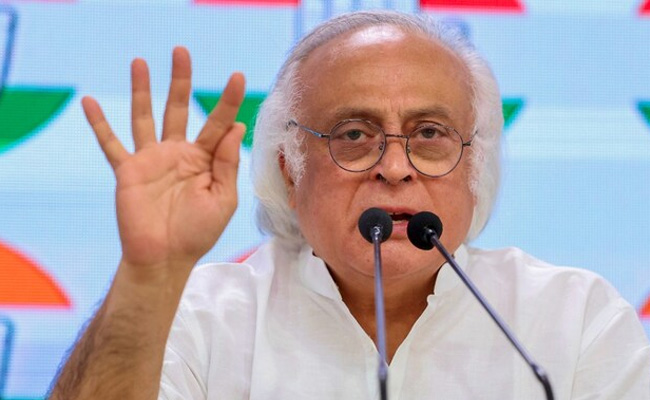
New Delhi (PTI): Congress leader Jairam Ramesh alleged on Thursday that the right to vote is under threat and the time has come when it should be made a fundamental right for citizens.
Speaking with reporters, Ramesh lashed out at Chief Election Commissioner (CEC) Gyanesh Kumar, saying the Election Commission (EC) has never been as compromised as it has been under him.
"The rot started under his predecessor. This man is a player and not a neutral observer," the Congress leader said, slamming Kumar.
Kumar is completely compromised and has become a player in elections, he alleged.
"Home Minister Amit Shah had talked about three Ds -- detect, delete and deport. So we want to know how many non-Indian citizens have been detected, how many have been deleted and how many have been deported," Ramesh said, adding that the right to vote is now under threat.
On opposition parties submitting a fresh notice in the Rajya Sabha, seeking to move a motion for the CEC's removal, the Congress leader said they will continue to make efforts for Kumar's removal as he is "compromised".
Ramesh also batted for the right to vote to be recognised as a fundamental right.
"I believe that the time has come that the right to vote should be made a fundamental right. It is a statutory right, it is not a fundamental right. Fundamental rights are justiciable," he said.
The former Union minister said this was discussed in the Constituent Assembly, but it was eventually decided that it should be made part of the Constitution.
B R Ambedkar and Jagjivan Ram had warned that in the future, governments might try to disenfranchise voters, he added.
"Once and for all, include the right to vote as a fundamental right for Indian citizens," Ramesh asserted.