We must rethink our path to progress, says historian Ramachandra Guha
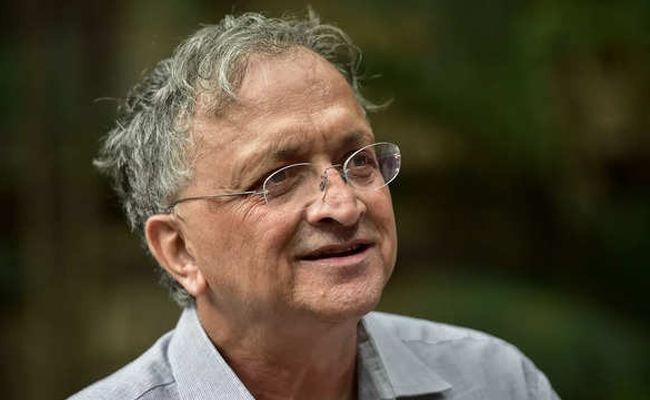
Bengaluru (PTI): Stating that multiple forms of environmental degradation have pushed India towards a deep civilisational crisis, Bapu Ke Log, a nation-wide coalition of Gandhians, has put together a manifesto intending to mitigate the effects of the present crisis.
The manifesto was officially released on Sunday by Anil Hegde, Rajya Sabha MP representing Bihar.
In his speech at the event, historian, Gandhian and environmentalist Ramachandra Guha said we must rethink our path to progress.
"Even if climate change was not occurring, India will be an environmental disaster. Climate change is making the problem much worse and less predictable," he said.
Bapu Ke Log's manifesto tells us how to rethink, Guha said. "It tells us how to forge a path for our country that is suitable to not just its culture, but to its environmental constraints," he added.
To put a check on the "rapid downfall of our society", Guha suggested measures like degrowth wherever needed, political decentralisation, renewal and revitalisation of civil societies and re-orientation of science.
Prasanna, a noted theatre personality and Gandhian, who was instrumental in drafting the manifesto, suggested a 70-30 economy where at least 70 per cent human labour is involved in the production of all goods and services to lift the society from its current predicament.
He said the manifesto was shaped by many organisations and individuals across the country and that a book will be brought out detailing the idea.
"We believe annihilation of labour, or the process of complete automation, is at the root of our present crisis," said Prasanna.
According to Prasanna, automation is also breaking the sacred link between God and human beings, and created what he termed as hierarchical religion. "In Karnataka, they (hierarchical religions) have made the people who are the followers of 'kayaka' as the followers of demigods. This is morally wrong," he added.
He said the issue is also being aggravated by the anger towards the faithful. "But the faithful do not know. It is the intellectual, the political leaders and the spiritual leaders who had to tell the faithful the difference between real God and godmen. This is what Swami Vivekananda did, this is what Jesus Christ did and this is what Mahatma Gandhi did. So, the revolution did not start and end with Karl Marx," Prasanna added.
Vinod Vyasalu, director of the Centre for Budget and Policy Studies, Bengaluru, said that one of the first things that we are taught in classrooms about economy is that we need 'growth, more growth and forever growth'.
"But I believe there is a proper size for everything. If the baby grows at the same rate as it grows in the first six months, then by the age of 20, it will be 40 feet tall," said Vyasalu.
He further said Gandhi was not totally against automation, recalling how he singled out Singer sewing machines as a sign of good progress.
"It is okay if something helps one improve productivity, but if it is taken to the point where artificial intelligence, for instance, does everything, then it means that people are not involved. Most of our problems came because of this disconnect," said Vyasalu.
Let the Truth be known. If you read VB and like VB, please be a VB Supporter and Help us deliver the Truth to one and all.
India achieves major milestone in wind energy; capacity now 56 gigawatts: PM Modi
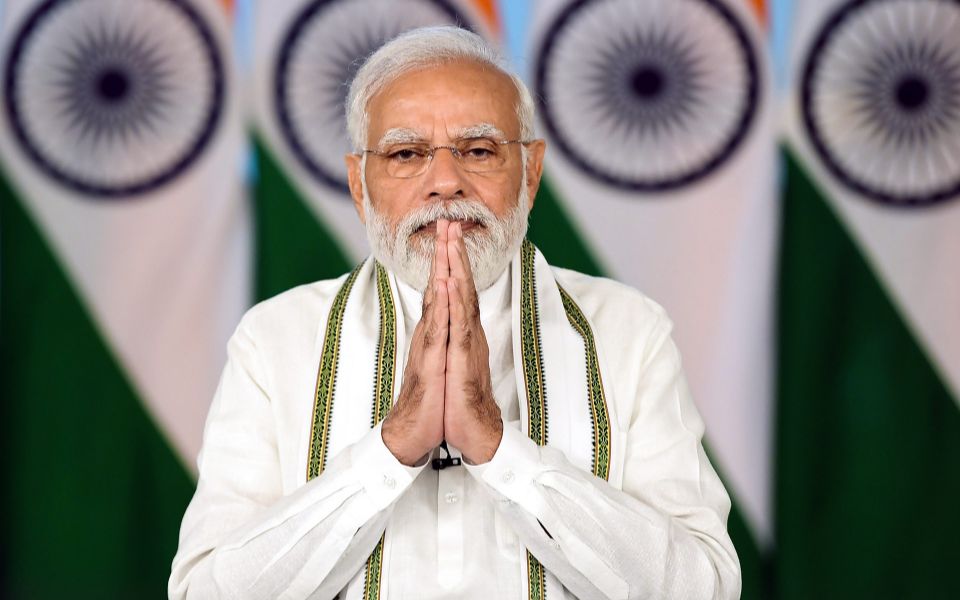
New Delhi (PTI): India has achieved a major milestone in wind energy, with the country's wind energy generation capacity exceeding 56 gigawatts, Prime Minister Narendra Modi said on Sunday.
In his monthly radio address 'Mann Ki Baat', Modi also said the country must save electricity and adopt clean energy.
“India recently achieved a major milestone in wind energy. India's wind energy generation capacity has now exceeded 56 gigawatts. In just the past year, nearly 6 gigawatts of new capacity have been added,” he said.
Underlining that solar and wind energy are essential for India's development, Modi said, “It is not just about the environment; it is about securing our future, and we all have a role to play in it.”
On April 22, Union Minister for New and Renewable Energy, Pralhad Joshi, said that India has recorded its best-ever year in wind energy capacity addition, with a historic 6.1 GW added during 2025-26.
India currently ranks fourth globally in wind energy, with more than 56.1 GW installed capacity and an additional 28 GW under implementation.
Emphasising the vast untapped potential of the sector, Joshi highlighted that India's wind energy potential at 150 metres hub height is estimated at nearly 1,164 GW.
He expressed confidence that with sustained efforts, the country will achieve 100 GW wind capacity by 2030 and 156 GW by 2036, contributing significantly to the net-zero target by 2070.
Joshi also underlined that wind energy plays a critical role in stabilising India's energy system, particularly due to its peak generation during evening and night hours, which aligns with high demand periods.
He noted that nearly 45 per cent of wind power generation occurs during peak demand hours, making it a vital complement to solar energy.