'We should try again': Punjab Assembly Speaker on Vajpayee's failed India-Pak peace initiative
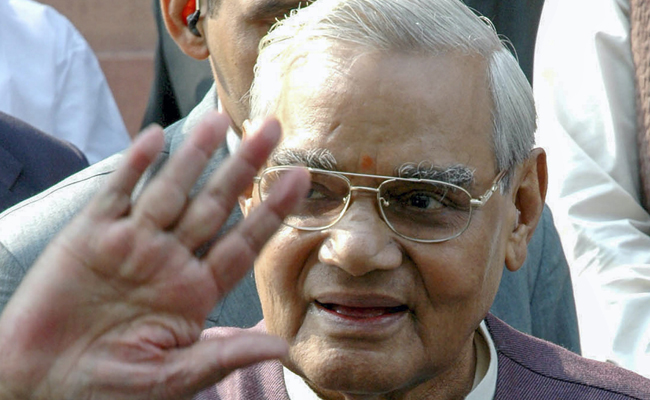
Lahore (PTI): "Even though the chance was missed, we should try again," says Punjab Assembly Speaker Malik Ahmad Khan when asked about Atal Bihari Vajpayee's 1999 ‘bus yatra’, a bold attempt by the then Indian prime minister to put India-Pakistan relations on the peace track.
Vajpayee took a bus ride to Lahore on February 19, 1999. He and Pakistan premier Nawaz Sharif signed the Lahore Declaration after a historic summit here. The agreement signalled a breakthrough, but just months later a Pakistani intrusion led to the Kargil War.
Wednesday is Vajpayee’s 100th birth anniversary.
"Vajpayee's visit to Lahore in 1999 was a defining moment. Even though the chance was missed, we should try again. With Prime Minister Narendra Modi, who follows Vajpayee's vision, leading India, and Shehbaz Sharif, Nawaz's brother, in charge in Pakistan, there is a real possibility of restarting the peace process," says Khan, who is a senior member of the Pakistan Muslim League-Nawaz (PML-N).
Khan says the future of the region depends on free trade and unrestricted movement between countries.
"Peace in the region is not just a good idea – it is necessary for growth and prosperity," the Punjab Speaker adds.
Another senior PML-N leader from Punjab, Mohammad Mehdi, describes Vajpayee's Lahore visit as historic. He believes the visit could have led to lasting peace if the Kargil conflict had not happened.
"The Western media paid a lot of attention to Vajpayee’s visit because it came just months after both countries became nuclear powers," Mehdi says, referring to nuclear tests conducted by India and Pakistan in May 1998.
"There was excitement, especially within PML-N ranks, when Vajpayee arrived in Lahore in February 1999. His speech, saying 'Pakistan is a reality, and both countries now need to move forward and leave the past behind,' gave hope to many," Mehdi recalls.
Unfortunately, the Kargil conflict happened soon after, and the peace efforts were unsuccessful, he says.
Mehdi says Jamaat-e-Islami (JI) held protests during Vajpayee’s visit, which many believe were organised by the military led by General Pervez Musharraf.
"Jamaat-i-Islami workers even attacked the Turkish ambassador’s car near Lahore Fort, mistaking it for an Indian delegation," he says.
Mehdi believes back-channel talks between Pakistan and India are still happening.
"Right now, relations between the two countries are at their lowest point. Neither country has an envoy in the other's capital. However, businessmen on both sides desperately want to restore ties to improve trade and use shorter routes through Pakistan to reach Central Asia and Europe," he says.
Political expert Brig (retd.) Farooq Hameed says Nawaz Sharif should have involved the powerful Pakistan Army in the peace process.
"The initiative failed because the military was not consulted, which led to the Kargil conflict and ended the peace process. If Nawaz Sharif had taken the military on board before Vajpayee’s visit, the chances of the peace talks being successful would have been higher."
Hameed says Nawaz has repeatedly shown interest in improving ties with India, including his desire to meet Prime Minister Narendra Modi after returning to Pakistan last year from a four-year self-imposed exile in London. However, he pointed out, that Nawaz's younger brother, Prime Minister Shehbaz Sharif, has not made any recent public statements indicating a similar desire.
"Nawaz should first consult Shehbaz, who enjoys the military establishment’s favour, to determine if he shares this vision for improved relations with India," he says.
He also notes the lack of progress after Indian Foreign Minister S Jaishankar visited Pakistan recently.
"Most Pakistanis are not anti-India. Unlike in India, politicians here do not need to criticise India to win elections," Hameed says.
However, terrorism remains a major obstacle to reconciliation, he says.
India has often accused Pakistan of supporting terrorism, while Pakistan now blames India for terror attacks in Balochistan.
Let the Truth be known. If you read VB and like VB, please be a VB Supporter and Help us deliver the Truth to one and all.
Bengaluru jail introduces biometric tracking system for prisoners
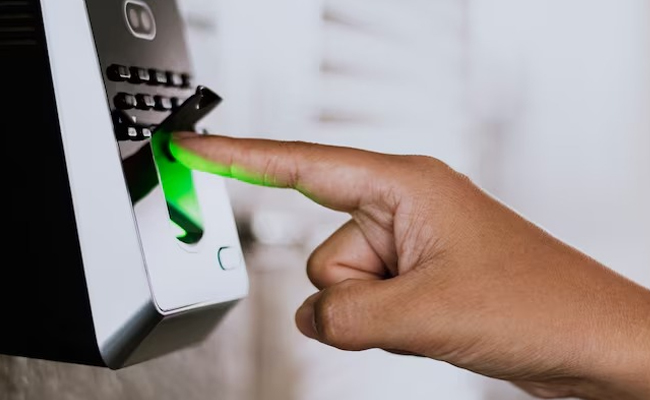
Bengaluru: In a bid to curb misconduct and illegal activities inside Parappana Agrahara Central Prison, prison authorities have introduced a new ‘Prisoners Tracking Movement System’ under which inmates will have to undergo biometric verification while entering every barrack.
According to jail officials, biometric systems have been installed across all major sections of the prison, including barracks, visitor rooms, hospital, canteen, kitchen, library, playground, handicraft units and bakery sections. Staff members have also been deployed at these locations.
Officials said inmates visiting the visitors’ room must now obtain a digital token after biometric verification. Details such as the prisoner’s name, identification number and entry time will be updated in the prison software system. This will help authorities maintain a complete digital record of inmates visiting and returning from meeting rooms.
Similar systems have also been introduced at entry points of the hospital, library and other barracks accessed for work-related purposes. Officials said the system will help identify prisoners involved in suspicious or illegal activities with other inmates and enable authorities to track how much time a prisoner spends at different locations inside the prison.
Authorities stated that AI-powered cameras were already being used inside the prison to monitor inmates as well as prison staff. Along with this, digital tracking of prisoner phone calls and a digital token system for visitor meetings have now been added to strengthen surveillance over inmate movement. Officials said the project has been implemented at a cost of around Rs 2.25 crore.
The prison department has also introduced a canteen usage tracking system to monitor prisoners’ spending patterns. Instead of direct cash payments, inmates can purchase bakery items and snacks using wallets or coupons issued within the prison system.
Officials said the digital system will record details including the buyer’s name, items purchased, quantity, date, time and remaining wallet balance. This will allow prison authorities to maintain complete expenditure records of inmates.