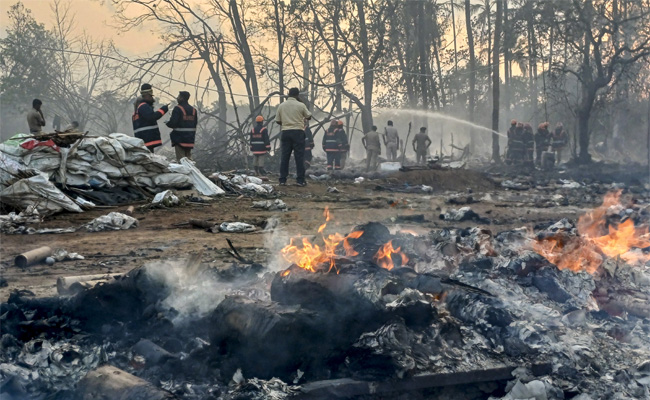
West Asia conflict: Gujarat cuts industrial gas use by 50 pc, domestic LPG supply unaffected
Ahmedabad (PTI): The Gujarat government has imposed a 50 per cent cut on industrial uses of gas amid concerns over the West Asia conflict, a state minister said on Tuesday, while assuring that domestic LPG distribution remains uninterrupted.
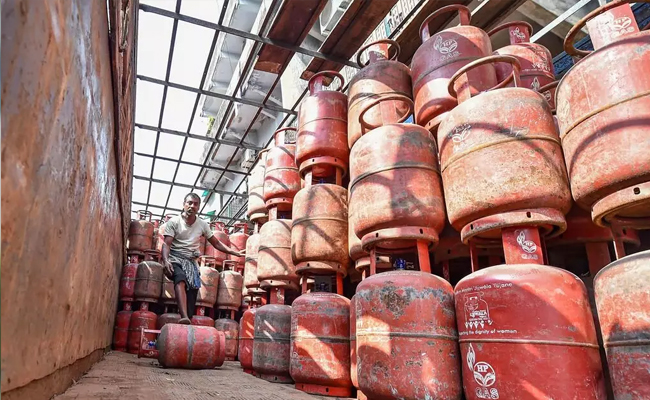
The state and the Centre were coordinating closely to ensure that households do not face any shortage of cooking gas cylinders, Gujarat Energy Minister Rushikesh Patel told reporters in Gandhinagar ahead of the assembly session.
Measures were being taken in line with periodic guidelines issued by the central government to prevent panic and ensure the steady availability of LPG for households, he said.
"The state government is constantly working to make sure that no household is left without a cylinder. We are in continuous contact with the central government regarding this," the minister stated.
ALSO READ: Oil ministry sets up panel as commercial LPG shortage hits hospitality sector
He said restrictions have been placed on certain industrial uses of gas to prioritise domestic consumption.
"We have imposed a 50 per cent cut in the gas supply to industries. For fertiliser and milk (processing), there is a cut of about 40 per cent in gas supply," Patel informed.
The decision was aimed at ensuring that domestic users get cooking gas without any disruption, he said.
"This is to ensure that there is no disruption for domestic gas users. The state government is committed to maintaining a regular and steady supply for households," he added.
Responding to a query about reports from Rajkot claiming that hotels and restaurants are getting messages about restrictions on commercial gas cylinders, Patel denied any such directive.
"There is nothing like that," the minister asserted.
"As far as commercial gas cylinders are concerned, there is currently no cut or restriction on them," he said.
The government's immediate focus is to ensure that domestic kitchens continue to function normally and that there is no disruption to household cooking, the minister said.
"To ensure that no individual faces difficulty in getting cooking gas, especially the gas used for domestic purposes, the state and central governments are working together," he added.
The oil ministry has constituted a committee to examine supply issues after a sudden shortage of commercial LPG cylinders alarmed the hospitality sector, with restaurant associations warning that eateries could shut down within days if supplies are not restored.
"For LPG supply to other non-domestic sectors, a committee of three Executive Directors (EDs) of Oil Marketing Companies (OMCs) have been constituted to review the representations for LPG supply to restaurants/hotels/other industries," the ministry said in a post on X.
India consumes about 31.3 million tonnes of LPG annually. As much as 87 per cent of this is in the domestic sector i.e. household kitchens, and the rest in commercial establishments such as hotels and restaurants.
Of this total requirement, as much as 62 per cent is met through imports. The US and Israel's attack on Iran and Tehran's retaliation have shut the Strait of Hormuz - the conduit through which India got 85-90 per cent of its LPG imports from countries like Saudi Arabia.
As alternate sources are being scouted, the limited supplies available meant the government prioritising supplies to the domestic sector, and in the process, the commercial establishments have suffered.
Earlier on March 6, an industry representative said that around 100 ceramic manufacturing units in Gujarat's Morbi have shut down due to disruption in gas supplies amid the ongoing West Asia conflict.
Let the Truth be known. If you read VB and like VB, please be a VB Supporter and Help us deliver the Truth to one and all.
KKR defeat LSG via Super Over
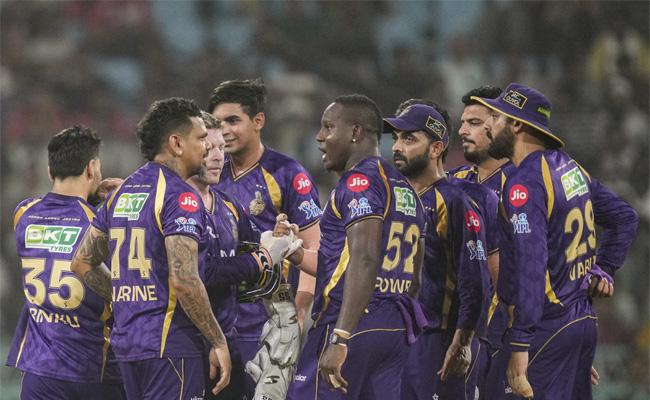
Lucknow (PTI): Kolkata Knight Riders edged Lucknow Super Giants via Super Overs in a battle between two bottom-placed teams in the IPL, here on Sunday.
Chasing a modest 156, LSG suffered a batting collapse and managed to tie the contest and take it to Super Over with No. 9 Mohammed Shami striking a last-ball six against a wayward Kartik Tyagi, who leaked 16 runs in the final over.
But Sunil Narine bowled a stunning Super Over conceding just one run and taking two wickets to give KKR an easy target.
Rinku Singh then finished the chase with a boundary off first ball from Prince Yadav.
Earlier the KKR were in deep trouble with 93/7 in 15 overs but Rinku smashed a sensational 83 not out from 51 balls including four sixes in a row in the final over to lift them to 155/7.
Cameron Green (34) was the only other batter to reach double-digit scores as KKR suffered a familiar batting meltdown with Mohsin taking his maiden fifer.
In reply, LSG continued their dismal show with the bat to succumb to their fifth loss in a row.
Brief Scores:
Kolkata Knight Riders 155/7; 20 overs (Rinku Singh 83 not out, Cameron Green 34; Mohsin Khan 5/23). Lucknow Super Giants 155/8; 20 overs (Rishabh Pant 42). KKR won via Super Over.