What are rare earth corridors announced in Union Budget, linking Kerala, TN, AP, Odisha
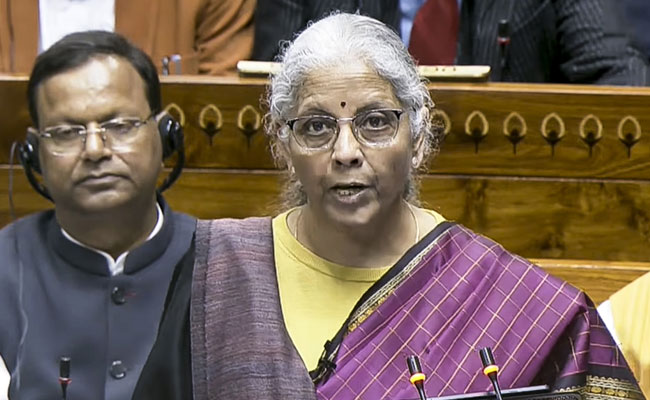
New Delhi: Finance Minister Nirmala Sitharaman has announced the creation of dedicated rare earth corridors as part of the Union Budget, a move aimed at strengthening India’s domestic manufacturing ecosystem and reducing dependence on imported critical minerals that are vital for modern technology.
Presenting the Budget, Sitharaman said the Centre will support mineral-rich states to establish dedicated corridors for rare earth elements, specifically linking Odisha, Kerala, Andhra Pradesh and Tamil Nadu. She said the proposal builds on the government’s scheme for rare earth permanent magnets, which was launched in November 2025.
“A scheme for rare earth permanent magnets was launched in November 2025. We now propose to support the mineral-rich states of Odisha, Kerala, Andhra Pradesh and Tamil Nadu to establish dedicated rare earth corridors,” the finance minister said in her Budget speech.
Rare earth elements are a group of minerals that play a critical role in many technologies that underpin modern life and future industries. They are used in electric vehicles, wind turbines, mobile phones, defence systems, advanced electronics and renewable energy equipment. Permanent magnets made from rare earth minerals are especially important for clean energy applications and high-end manufacturing, as they improve efficiency and performance.
The proposed rare earth corridors are meant to create a structured domestic network covering the entire value chain, from mining and processing to transportation and manufacturing. By linking mineral-rich regions through focused infrastructure and policy support, the government aims to improve supply chains, reduce logistical costs and make domestic production of rare earth-based components faster and more reliable.
The choice of Odisha, Kerala, Andhra Pradesh and Tamil Nadu is linked to the availability of rare earth deposits in these regions, particularly along coastal belts and mineral-rich zones. These states also have ports, industrial clusters and existing transport infrastructure, which can support processing, export and movement of materials within the country. The government believes concentrated investment in these regions can help India develop a strong and integrated rare earth ecosystem.
The corridor plan is closely connected to the rare earth permanent magnet scheme announced last year. That scheme was designed to encourage local manufacturing of magnets used in electric vehicles, renewable energy systems and electronics. However, without assured access to raw minerals, large-scale domestic production remains difficult. The corridors are expected to address this gap by ensuring a steady flow of rare earth materials from source to factory.
The finance minister said India must remain connected to global markets while reducing its dependence on imports in sensitive and strategic sectors. She added that policy reforms, controlled inflation and steady growth have helped maintain macroeconomic stability, even in a challenging global environment, and that the Budget aims to turn aspiration into achievement with a focus on young people, inclusion and long-term resilience.
Globally, rare earth supply chains are concentrated in a small number of countries, and disruptions can have serious consequences for clean energy, electronics and defence industries. By developing its own rare earth corridors, India is seeking to reduce vulnerability to global shocks and secure key inputs needed for future growth.
Let the Truth be known. If you read VB and like VB, please be a VB Supporter and Help us deliver the Truth to one and all.
Punjab elect to bowl against Chennai in IPL match
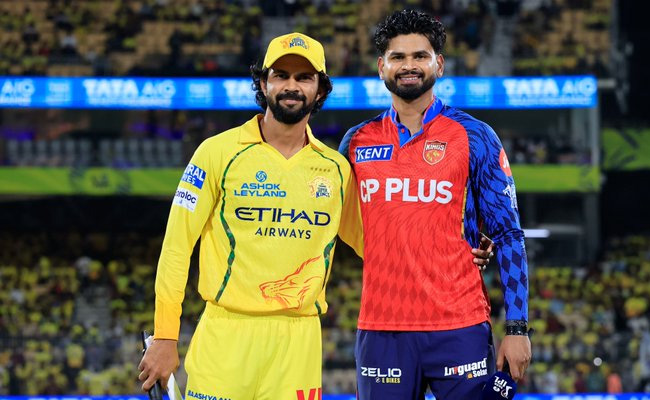
Chennai (PTI): Punjab Kings skipper Shreyas Iyer won the toss and opted to bowl against Chennai Super Kings in an Indian Premier League match here on Friday.
CSK made one change to their playing XI, bringing in Prashant Veer in place of Matt Short.
CSK had lost to Rajasthan Royals by eight wickets in the opening match while Punjab Kings defeated Gujarat Titans by three wickets.
Teams:
Chennai Super Kings: Sanju Samson (w), Ruturaj Gaikwad (c), Ayush Mhatre, Sarfaraz Khan, Shivam Dube, Kartik Sharma, Prashant Veer, Noor Ahmad, Anshul Kamboj, Matt Henry, and Khaleel Ahmed.
Punjab Kings: Prabhsimran Singh (w), Cooper Connolly, Shreyas Iyer (c), Shashank Singh, Nehal Wadhera, Marcus Stoinis, Marco Jansen, Xavier Bartlett, Vijaykumar Vyshak, Arshdeep Singh, and Yuzvendra Chahal.