What is an electoral bond?
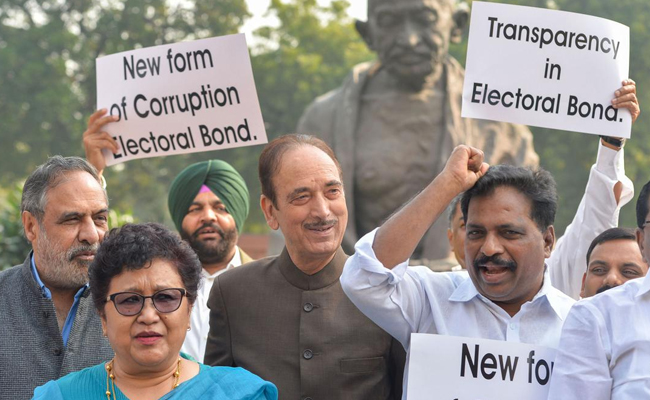
New Delhi (PTI): The Supreme Court on Thursday annulled the electoral bonds scheme for political funding, a much anticipated judgment with far-reaching ramifications. But what exactly are electoral bonds?
An electoral bond is a financial instrument for making donations to political parties as has been first pronounced by the Finance Minister in the Union Budget 2017-18.
According to the Electoral Bond Scheme, 2018, an electoral bond is issued in the nature of a promissory note, which shall be bearer in character. A bearer instrument is one which does not carry the name of the buyer or payee, no ownership information is recorded and the holder of the instrument (i.e. political party) is presumed to be its owner, explains Association for Democratic Reforms.
The scheme allows individuals -- who are citizens of India -- and domestic companies to donate these bonds issued in multiples of Rs 1,000, Rs 10,000, Rs 1 lakh, Rs 10 lakh, and Rs 1 crore to political parties of their choice.
These bonds have to be redeemed by the political parties within 15 days. A person being an individual can buy bonds, either singly or jointly with other individuals.
No limit exists on the number of electoral bonds that a person (including corporate entities) can purchase. The amount of bonds not encashed within the validity period of 15 days shall be deposited by the authorised bank to the Prime Minister's National Relief Fund.
The ADR pointed out that the scheme does not require political parties to mention the names and addresses of those contributing by way of electoral bonds in their contribution reports filed with the Election Commission annually.
Activists have questioned transparency in political party finances.
The bonds infringe the citizen's fundamental 'Right to Know'.
While electoral bonds provide no details to the citizens, the government can always access the donor details by demanding the data from the State Bank of India (SBI), the ADR pointed out.
"The ECI had stated on record that any donation received by a political party through an electoral bond has been taken out of the ambit of reporting and therefore, is a retrograde step and needs to be withdrawn," the ADR has said.
Let the Truth be known. If you read VB and like VB, please be a VB Supporter and Help us deliver the Truth to one and all.
Chadha, others wouldn't have left AAP had it followed 'right' path: Anna Hazare
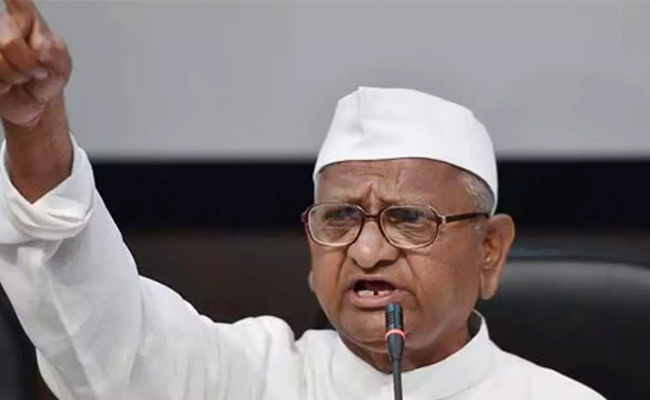
Mumbai (PTI): Social activist Anna Hazare has said Raghav Chadha and six other Aam Aadmi Party (AAP) Rajya Sabha members would not have quit the party had it followed the "right" path.
"Everyone has the right to hold an opinion in a democracy. They (Chadha and others) must have faced some trouble, which is why they left," Hazare told reporters on Friday in Ahilyanagar district of Maharashtra.
AAP Rajya Sabha members Raghav Chadha and Sandeep Pathak addressed a joint press conference in Delhi on Friday, announcing their exit from the Arvind Kejriwal-led party to join the BJP.
Chadha claimed that nearly two-thirds of AAP's Rajya Sabha members had quit the party and would function as a separate faction.
"It is their (AAP leadership’s) fault. Had that party followed the right way, they would not have left," Hazare said.
Hazare reiterated that Chadha and others must have faced difficulties within AAP, and that is why they left. "Had the party gone in the right direction, they would not have quit the party," he added.
"There must be some or the other reason (for their leaving AAP). In a democracy, every person has a view about where to stay and leave," Hazare said.
The Chadha-led exodus marks a significant setback for the Kejriwal-led party since its formation in 2012, which followed the momentum of Anna Hazare’s anti-corruption movement.