What is paramount: Nation or religion, asks Madras High Court
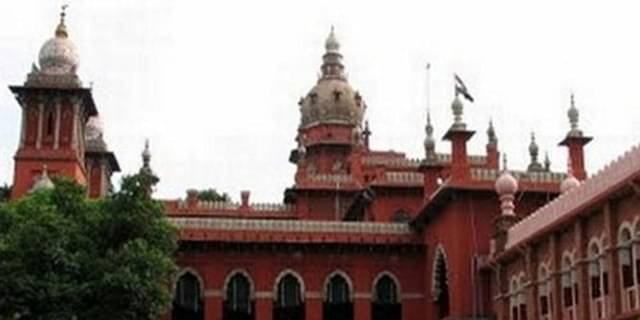
Chennai, Feb 10: Expressing deep concern over the growing tendency of certain forces arousing religious disharmony in the country, the Madras High Court on Thursday wondered as to what is paramount -- nation or religion.
In an observation that came in the backdrop of a raging debate over the hijab row in Karnataka, the first bench of Acting Chief Justice M N Bhandari and Justice D Bharatha Chakravarthi bemoaned that of late, certain forces have raised controversies relating to dress code and it is spreading all over India.
"It is really shocking, somebody is going for the 'hijab', some others for the 'topi' (cap) and a few others for other things. Is it one country or is it divided by religion or something like that. This is quite surprising," the bench added.
Pointing out the fact that India is a secular country, the ACJ said: "What is found from the current affairs is nothing but an effort to divide the country in the name of religion."
The ACJ made the observations while hearing a batch of PIL petitions filed by Rangarajan Narasimhan of Srirangam in Tiruchirapalli district.
In his PIL filed on Thursday, he prayed the court to order strict implementation of the dress code for devotees, disallowing non-Hindus from stepping into the temples across the state and a ban on commercial activities in the premises of the temples.
Display boards should be placed prominently at the entrance of the temples banning entry of non-Hindus and prescribing dress code, he said.
When there is no particular dress code, then how will the question of putting up display boards on the same arise, the bench wondered.
When the petitioner insisted for an order, the bench advised him to produce the evidence for his prayer. What part of the Agamas (rituals) refer to pants, dhotis and shirts, it asked.
Irked over the petitioner's relentless posture, the bench warned him of barring from appearing in-person before the court and directed him to use appropriate words and desist from quarrelling.
Tamil Nadu Advocate General R Shanmugasundaram informed the court that each and every temple is following its own custom and visitors belonging to other religions are allowed only up to the kodi maram' (flag mast).
He recalled that a division bench of Madras High Court had already set aside an order of a single judge prescribing a dress code as it was beyond the scope of the writ petition. It had triggered widespread outrage and debate, he pointed out.
Finally, the bench allowed the petitioner to file an affidavit with illustrations relating to the dress code.
Let the Truth be known. If you read VB and like VB, please be a VB Supporter and Help us deliver the Truth to one and all.
Congress using hijab issue to pacify minority anger, alleges Karnataka LoP R Ashoka
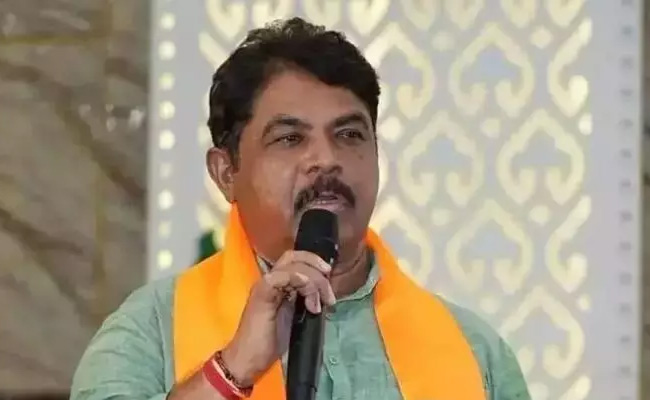
Bengaluru: Leader of Opposition in the Assembly R. Ashoka has accused the Congress government of using the hijab issue to placate what he described as discontent among minority voters after the Davanagere by-election.
In a post on X on Wednesday, Ashoka alleged that the state government, instead of addressing issues such as price rise, corruption, farmers’ distress and law and order, was attempting to retain its minority vote base by reviving the hijab issue.
Referring to the 2022 dress code introduced by the BJP government, which prohibited hijab in schools and colleges, Ashoka said the Karnataka High Court had upheld the policy and emphasised the importance of discipline in educational institutions.
He questioned the Congress government’s move to revisit the issue and asked whether setting aside the court-backed policy to benefit one community could be described as secularism.
Ashoka further alleged that while the government was willing to permit hijab, it continued to prohibit saffron shawls.
He accused the government of dividing students on religious lines rather than treating schools and colleges as spaces of equality.
Drawing a comparison with Mamata Banerjee’s government in West Bengal, Ashoka claimed that excessive appeasement politics had harmed the state and warned that the Congress in Karnataka could face a similar political response.
He said voters in Karnataka would teach the Congress a lesson for what he termed “vote-bank politics” and for compromising constitutional and judicial principles.