WhatsApp challenges new intermediary rules by Centre, moves Delhi HC: Sources

New Delhi, May 26: WhatsApp has moved Delhi High Court against the government on the new social media intermediary rules that would require messaging services to trace the originator of messages flagged, according to sources.
The move comes at a time when the new IT rules require social media companies to undertake greater due diligence, and make these digital platforms more accountable and responsible for the content hosted by them.
As per sources, WhatsApp has approached Delhi High Court on May 25 against the IT rules imposed recently that would require messaging services to trace the origin of particular messages sent on the service.
When contacted, a WhatsApp spokesperson said requiring messaging apps to trace chats is the equivalent of asking them to keep a fingerprint of every single message sent on WhatsApp.
This would break end-to-end encryption and fundamentally undermine people's right to privacy, the spokesperson said.
We have consistently joined civil society and experts around the world in opposing requirements that would violate the privacy of our users. In the meantime, we will also continue to engage with the Government of India on practical solutions aimed at keeping people safe, including responding to valid legal requests for the information available to us, the spokesperson said.
The new rules, announced on February 25, require large social media platforms like Twitter, Facebook, Instagram and WhatsApp to follow additional due diligence, including the appointment of a chief compliance officer, nodal contact person and resident grievance officer.
Non-compliance with rules would result in these social media companies losing their intermediary status that provides them exemptions and certain immunity from liabilities for any third-party information and data hosted by them. In other words, they could be liable for criminal action, in case of complaints.
'Significant social media intermediaries' - defined as those with over 50 lakh registered users - were given three months time to comply with the additional requirements.
Notably, the rules require significant social media intermediaries - providing services primarily in the nature of messaging - to enable identification of the "first originator" of the information that undermines sovereignty of India, security of the state, or public order.
This could have major ramifications for players like Twitter and WhatsApp.
Facebook and Google on Tuesday had said they are working towards meeting the compliance requirements for the new guidelines.
India is a large market for these digital platforms. As per data cited by the government, India has 53 crore WhatsApp users, 41 crore Facebook subscribers, 21 crore Instagram subscribers, while 1.75 crore account holders of microblogging platform Twitter.
Let the Truth be known. If you read VB and like VB, please be a VB Supporter and Help us deliver the Truth to one and all.
Sujit Nair raises concerns over speculation of DMK-AIADMK understanding to block TVK
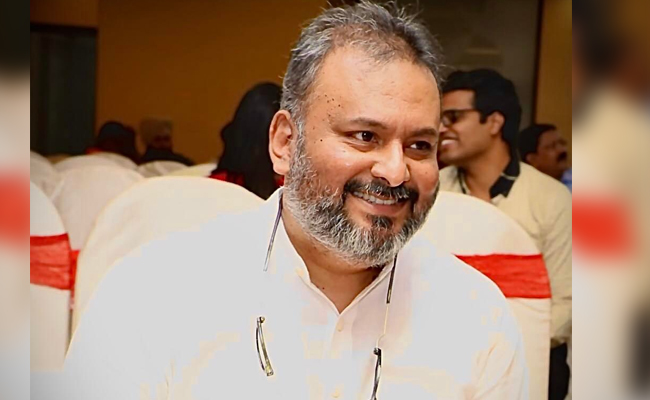
Chennai: Journalist and political commentator Sujit Nair has expressed concern over speculation that the Dravida Munnetra Kazhagam and the All India Anna Dravida Munnetra Kazhagam could explore a post-poll understanding to prevent Vijay-led Tamilaga Vettri Kazhagam from forming the government in Tamil Nadu.
In a social media post, Sujit Nair said the election verdict in Tamil Nadu reflected a clear public demand for political change and argued that the mandate should be respected irrespective of political preferences.
Referring to reports and political discussions surrounding a possible understanding between the DMK and AIADMK, he said he hoped such developments remained only speculative conversations and did not turn into reality.
Nair stated that if such an alliance were to take shape, it would raise serious questions about ideological politics in the country. He said TVK had emerged through a democratic electoral process and that the legitimacy to govern in a parliamentary democracy comes from the people’s verdict.
According to him, attempts to prevent an electoral winner from forming the government through unexpected political arrangements may be constitutionally valid, but many people could view them as politically opportunistic.
He further said that such a move could particularly affect the political image of the DMK, which has historically projected itself around ideology, social justice and opposition politics. Nair said that in ideological terms, the DMK appeared closer to TVK than to the AIADMK, and joining hands with its long-time political rival only to remain in power could weaken its broader political narrative.
He added that the same questions would apply to the AIADMK as well, as the party had spent decades positioning itself against the DMK and such an arrangement could create discomfort among its cadre and supporters.
Drawing a comparison with Maharashtra politics in 2019, Nair said he had expressed similar views when the Shiv Sena formed an alliance with the Indian National Congress and the Nationalist Congress Party after the Assembly elections.
He said post-poll alliances between long-standing political rivals often create a public perception that ideology and electoral mandates become secondary when political power equations come into play.
Nair also said such developments increase public cynicism towards politics and reinforce the belief among voters that ideology is often sidelined after elections.
He maintained that the Tamil Nadu verdict was emphatic and said respecting both the spirit and substance of the mandate was important for the credibility of democratic politics.