When Ajit Pawar had sinking feeling on board a helicopter in 2024 and started chanting God's name
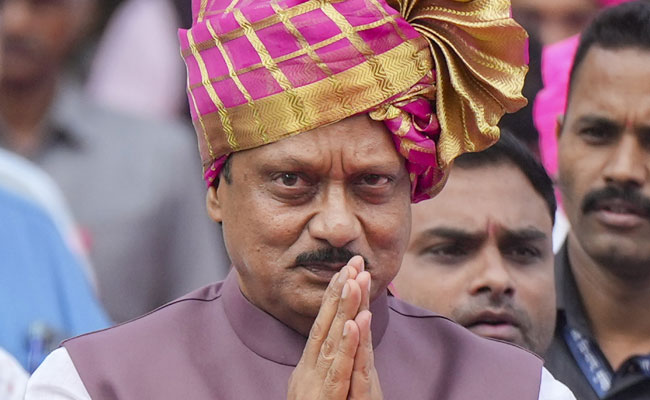
Nagpur (PTI): Maharashtra Deputy Chief Minister Ajit Pawar, who was killed in a plane crash on Wednesday, had shared an anecdote about the tense moments he experienced while flying in a helicopter to Gadchiroli with a couple of prominent politicians from the state amid bad weather in July 2024.
He had shared the experience at a public function in Gadchiroli, where he arrived in the helicopter from Nagpur with the then deputy CM Devendra Fadnavis and Industries Minister Uday Samant.
Although the anecdote was about the mid-air scare he experienced, Pawar had narrated it in his trademark humorous style. A video of Pawar's speech has now resurfaced on social media following his death.
He said although he was very nervous during the helicopter journey as nothing was visible outside due to a thick cloud cover, Fadnavis was unperturbed and told him that he had experienced mid-air scares six times earlier, and asked him to calm down, saying nothing bad would happen.
The incident had taken place on July 17, 2024 when the three leaders were heading to Gadchiroli from Nagpur for the foundation stone laying ceremony of Surjagad Ispat Pvt Ltd, a steel company.
Addressing the gathering at the event after their arrival, Pawar said, "When we started from Nagpur in the helicopter, it was fine at first. But later, when the helicopter entered the clouds, I looked this way and that way - there were clouds everywhere. And our Devendra Fadnavis was just sitting there, casually chatting."
"I told him (Fadnavis) - 'Look outside, we can't see anything, no trees, no ground, nothing. We are flying blindly through the clouds. Where are we even going?' But he calmly replied - 'Don't worry at all. I have experienced six such incidents so far. Whenever I am in a helicopter or a plane and an accident occurs, nothing happens to me. So, nothing will happen to you either."
"I thought to myself - 'My goodness, what is he saying? I already had a sinking feeling in my stomach! Today is Ashadhi Ekadashi (a holy day), so I was constantly chanting 'Panduranga, Panduranga' (God's name) in my mind. And here was this 'Maharaj' (Fadnavis) giving me advice," he said.
Pawar also said that as Fadnavis told him not to worry, he remained completely relaxed and nothing bad really happened.
"It is the good deeds of his (Fadnavis) elders that we reached here (safely)...Those good deeds helped us," he said.
"But friends, honestly, all of us were quite shaken. Uday Samant was sitting to my right, and he said, 'Dada, Dada, look! The ground is finally visible'. I said - 'Thank God, we can see the ground now!' Jokes apart, everyone must take care," he said.
Pawar (66) and four others were killed after a plane carrying them crashed in Baramati town in Maharashtra's Pune district on Wednesday morning.
Let the Truth be known. If you read VB and like VB, please be a VB Supporter and Help us deliver the Truth to one and all.
Karnataka launches India’s first digital grievance system for gig workers
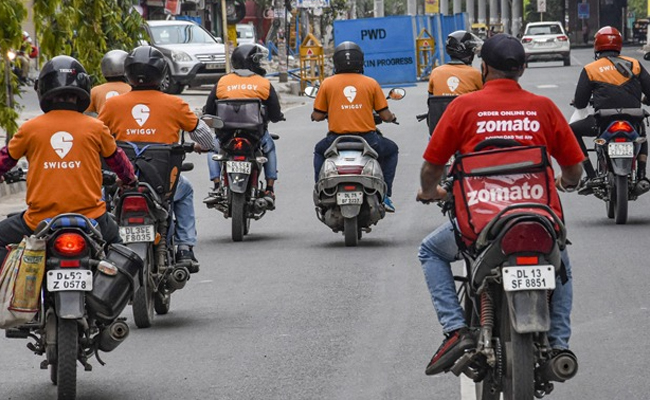
Bengaluru: In a first-of-its-kind initiative in India, the Karnataka government has launched a digital grievance redressal system for gig workers to provide structured support and protection to platform-based workers.
According to The Hindu, the system, developed by the Karnataka Platform-based Gig Workers’ Board in collaboration with the Department of e-Governance, allows workers to file complaints through the Integrated Public Grievance Redressal System (IPGRS).
Gig workers can raise issues related to pay, working conditions, and platform-specific disputes. Complaints will be routed to the Internal Dispute Resolution Committees (IDRCs) of respective platforms and are expected to be resolved within a defined timeframe. This is expected to bring transparency and legal recourse for a workforce that has so far operated without a formal dispute resolution framework.
Under The Karnataka Platform-Based Gig Workers (Social Security and Welfare) Act and Rules, every aggregator platform must constitute an Internal Dispute Resolution Committee (IDRC). Platforms such as Namma Yatri and Yulu have already integrated their IDRC contact details with the government portal.
Around 12 lakh gig workers have been identified in the state, and a unique identification system is being developed to remove duplicate entries. Officials said welfare schemes are also being designed based on type of work, working hours, and contribution.
Labour Minister Santosh Lad said that Karnataka, technology capital of the country, is leveraging this potential for worker welfare as well. “By launching this system, we are ensuring that the gig economy is no longer an informal space, but a structured one where every worker’s voice is heard,” he said.
“The schemes will vary based on the type of platforms. For example, cab rides are mostly undertaken by men whereas urban domestic activity is undertaken mostly by women. It may also be based on the contribution made, and the quantum of gig work done by a gig worker. Some gig workers work for more than eight hours while some may work on a few gigs. So, work load, nature of work, and time period of work could vary,” TH quoted G. Manjunath, Additional Labour Commissioner and CEO of the Board as saying.
“It has to be scientifically structured based on their effort and labour. We are working with experts, including academicians from Briston University, King’s College, and IISc, and other stake holders, including board members,” he said.
Officials added that aggregator platforms will be required to contribute 1 per cent towards worker welfare, with implementation beginning July 5.