White House briefly follows Twitter accounts of host country during presidential visit: Official
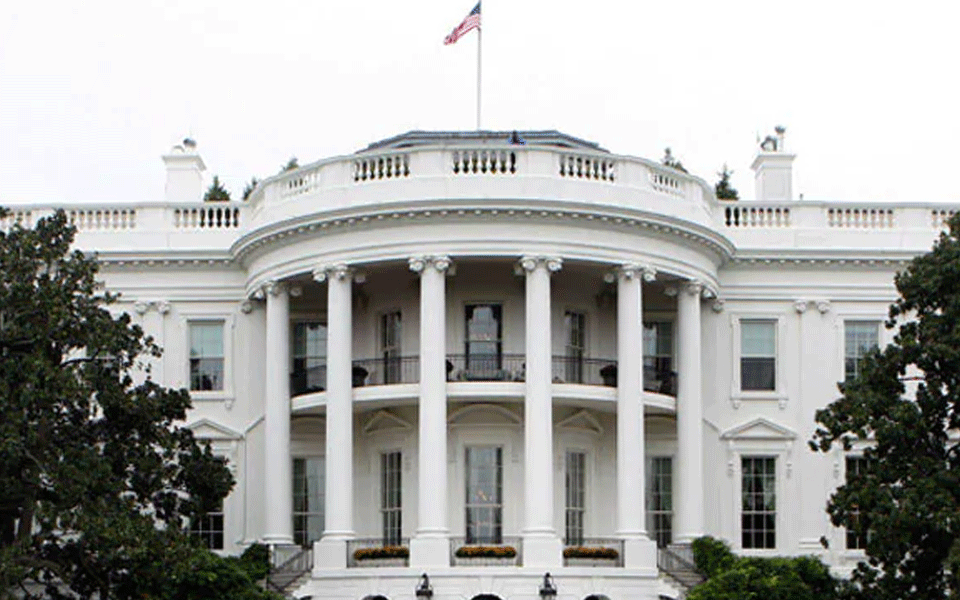
Washington: The White House Wednesday explained that its Twitter handle typically 'follows' the accounts of officials from host countries for a brief period during a presidential trip to retweet their messages in support of the visit.
During President Donald Trump's visit to India in the last week of February, the official Twitter handle of the White House -- @WhiteHouse -- had started 'following' the accounts of President Ram Nath Kovind, Prime Minister Narendra Modi, the Prime Minister's office, the Indian Embassy in the US, the US Embassy in India and the US Ambassador to India, Ken Juster.
Early this week, the White House 'unfollowed' all these six Twitter handles.
"The White House Twitter account normally follows senior US government Twitter accounts, and others as appropriate. For example, during the time of a presidential visit, the account typically follows for a short time, the host country's officials to retweet their messages in support of the visit," a senior administration official told PTI on the condition of anonymity.
The official was responding to a question on the reasons for the White House 'following' and then 'unfollowing' the Twitter handles of President Kovind, Prime Minister Modi, the PMO and the other Indian officials.
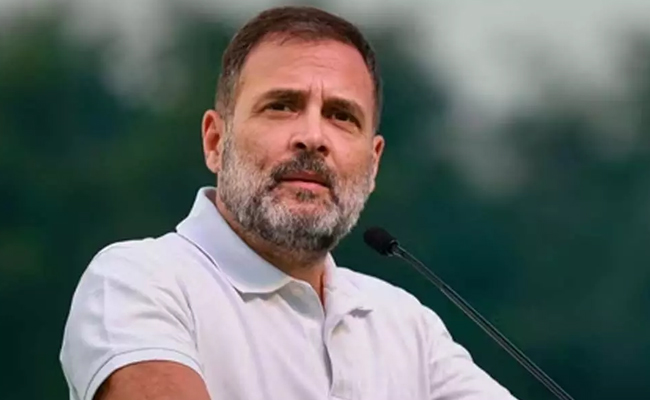
The White House 'unfollowing' the Twitter accounts of President Kovind and PM Modi drew reactions on social media in India. Senior Congress leader Rahul Gandhi said he was "dismayed" at the development.
"I'm dismayed by the "unfollowing" of our President & PM by the White House. I urge the Ministry of External Affairs to take note," he said in a tweet on Wednesday.
As of Wednesday, the White House had 22 million followers.
It has traditionally been following 13 accounts including that of President Donald Trump and his official Twitter handle, the First Lady, the Vice President, the Second Lady, the new Press Secretary Kayleigh McEnany, the National Security Council and the former White House Press Secretary, Stephanie Grisham, among others.
Let the Truth be known. If you read VB and like VB, please be a VB Supporter and Help us deliver the Truth to one and all.
Court can reject anticipatory bail but cannot direct accused to surrender: SC
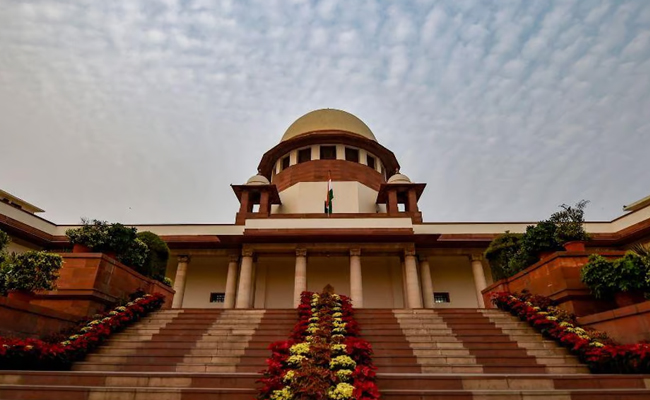
New Delhi (PTI): A court can reject anticipatory bail of an accused but it has no jurisdiction to direct him to surrender before the trial court, the Supreme Court has said.
A bench of Justices J B Pardiwala and Ujjal Bhuyan made the observation while hearing a plea filed by a man accused of cheating and forgery.
"If the court wants to reject the anticipatory bail, it may do so, but the court has no jurisdiction to say that the petitioner should now surrender," the bench said.
The Jharkhand High Court had rejected anticipatory bail plea of the accused and asked him to surrender and seek regular bail.
In this case, a complaint had been filed before a magistrate alleging offences under Sections 323 (voluntarily causing hurt), 420 (cheating), 467 (forgery of valuable security), 468 (forgery for purpose of cheating), 471 (using forged document) and 120B read with 34 of the IPC, in connection with a land dispute.
The high court had dismissed the second anticipatory bail application of the accused on the ground that no new circumstances were shown.
It had relied on its earlier order rejecting his first anticipatory bail plea, in which the court directed the petitioner to surrender before the trial court and seek regular bail in terms of the decision in Satender Kumar Antil v. CBI.
The top court said such a direction was wholly without jurisdiction and said that if a court chooses to reject anticipatory bail, it may do so, but it cannot compel the accused to surrender.