Who is Matheus Ferrero, Brazilian photographer whose image RaGa flagged in “vote chori” claim?
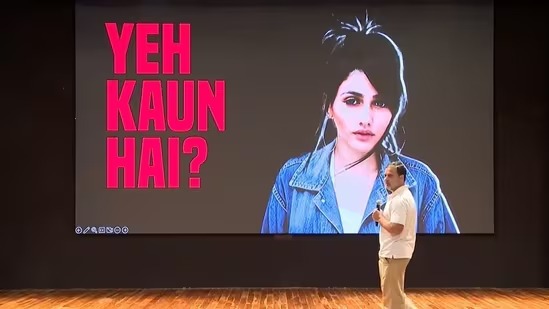
New Delhi: Congress leader Rahul Gandhi on Wednesday displayed a photograph he said appeared on multiple voter identity entries in Haryana and alleged large-scale fraud. The image shown during his “H-Files” briefing traces back not to a Haryana resident but to a portfolio shot by Brazilian photographer Matheus Ferrero, who posts freely licensed model images on stock sites. Rahul Gandhi said the same picture featured on several voter IDs, an example, he said, of how bogus entries were passed off as real voters.
What the image is, and who made it
The photograph in question appears on Matheus Ferrero’s online photography pages and on free stock-photo repositories (Unsplash, Pexels, IsoRepublic and others) where Ferrero uploads fashion and portrait images that are available for download and reuse. Ferrero is a Belo Horizonte–based photographer whose portfolio has been widely circulated on these platforms.
Is the woman in the photo identified?
News organisations that traced the picture say the model’s identity remains unknown. Reports note the image has been available on stock sites for years and widely circulated online; investigators and journalists have not been able to confirm that the woman is the same person named on any voter list, or that she ever visited Haryana. In short: the photograph is a stock image, not proof that a foreign national voted in the state.
What Rahul Gandhi alleged
Gandhi used the photo as one example in a broader charge that some 2.5 million votes in Haryana were “stolen” across several alleged methods duplicate voters, misuse of forms, bulk entries and more. He said the same picture appeared under different names and at multiple polling booths, arguing this showed a centralised operation to manipulate the rolls.
How authorities and media have reacted so far
Media checks have established that the image shown by Gandhi is available on Ferrero’s stock-photo pages. News outlets reporting on the claim have pointed out that stock images are commonly reused online and that a match between a stock photo and a voter ID image does not, by itself, prove who actually filled out or used a voter card. Election officials in the past have asked for formal proof when such allegations were made and have urged parties to submit signed declarations and precise evidence for verification. The Election Commission and state CEOs have in earlier episodes sought documentation before acting on such claims.
Let the Truth be known. If you read VB and like VB, please be a VB Supporter and Help us deliver the Truth to one and all.
Protesters clash with police during torch rally in Manipur
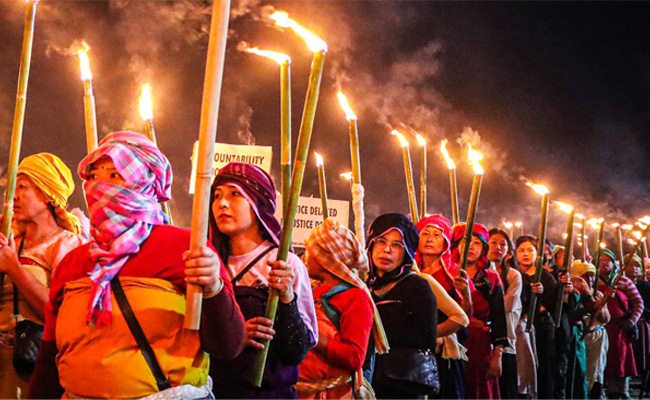
Imphal (PTI): People protesting the death of two children in a recent bomb blast in Manipur clashed with security forces during a torch rally in the state capital Imphal, police said.
Two children died in a bomb blast at Tronglaobi in Bishnupur on April 7. The Imphal Valley districts have been witnessing daily protests over the incident.
A seven-km-long torch rally was brought out from Mayai Lambi to Keishamthong in Imphal West district on Monday night, but the participants turned violent and clashed with the security forces, a police officer said.
Security forces fired several rounds of tear gas shells in Keishamthong area after hundreds of protesters defying curfew demanded they be allowed to proceed for another 200 metres towards Keisampat area, which is close to the Lok Bhavan and the BJP state office, he said.
ALSO READ: 5.2-magnitude quake jolts Manipur
Orders prohibiting the movement of any individuals outside their respective homes are in force in all the five valley districts from 5 pm to 5 am.
"Protesters pelted the security forces with stones and iron pellets from catapults, endangering the lives of the heavily outnumbered security forces," the officer said.
Manipur Police have, meanwhile, arrested 19 people for violating curfew and committing offences, including blocking roads and damaging public property, in the Greater Imphal area. They were nabbed from different parts of Imphal West district on Sunday, a police statement said.
In the Ukhrul district headquarters, a candlelight vigil was held on Monday night to honour the two Tangkhul Naga civilians who were killed in an ambush in TM Kasom area in the district on April 18.
Various civil society organisations from both the valley and hill areas strongly condemned the brutal killings, alleging that the victims were shot by Kuki militants using sniper rifles.