Who is Umer Ilyasi, the Man who hosted RSS Chief Mohan Bhagwat for closed-door meeting?
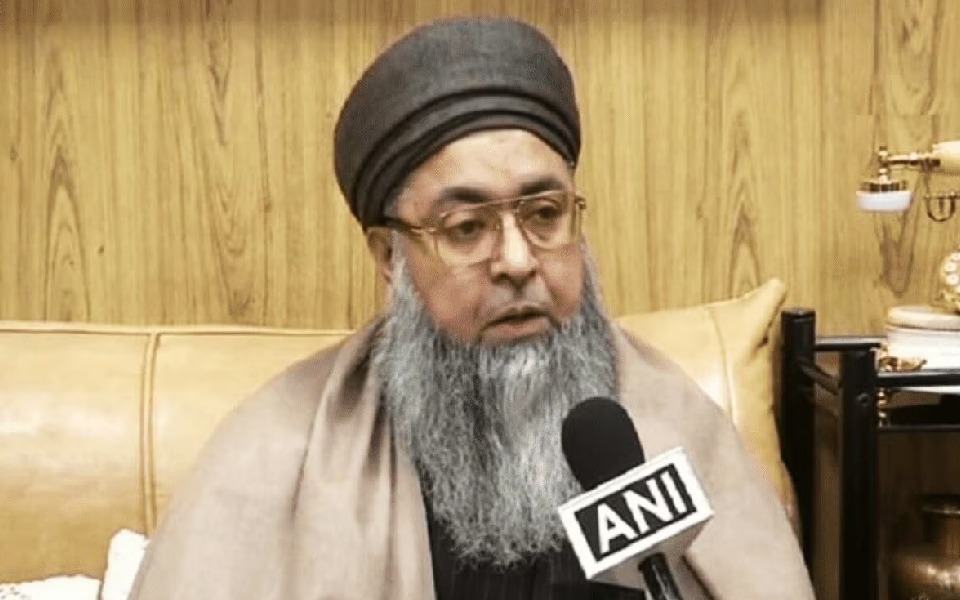
New Delhi: In a rare and widely discussed outreach, Rashtriya Swayamsevak Sangh (RSS) chief Mohan Bhagwat met over 50 Muslim religious leaders and scholars at Haryana Bhawan in New Delhi on Thursday. The three-and-a-half-hour meeting was hosted by Umer Ahmed Ilyasi, the Chief of the All-India Imam Organisation, and is being described by some as an effort to build bridges between India’s majority and minority communities.
But Ilyasi, who facilitated this high-profile interaction, is no stranger to public attention—or controversy. His political and religious statements over the years have drawn criticism from several quarters within the Muslim community, prompting fatwas, and frequent allegations of pandering to majoritarian narratives.
The meeting with Bhagwat, which included representatives from Deoband Madrasa, the Chief Imams of Gujarat and Haryana, and the Grand Muftis of multiple states, was framed as a trust-building initiative. “We may follow different faiths, but we are all Indians,” Ilyasi told IANS, describing the dialogue as a platform to promote national unity and social cohesion.
However, many observers have noted that this is not the first time Ilyasi has aligned himself with positions that are seen as diverging sharply from mainstream Muslim sentiments.
Statements That Stirred Reactions
In 2017, speaking to reporters in Indore, Ilyasi called for a nationwide ban on cow slaughter and demanded that the cow be declared a national animal. While he also condemned mob lynchings related to beef consumption suspicions, his support for a uniform cow protection law was received critically within sections of the Muslim community, where beef consumption remains culturally and religiously permissible.
His support for the ban on mosque loudspeakers during a 2022 interview with ANI was another instance that did not sit well with several Muslim clerics and organisations. Around the same period, he controversially linked the Karnataka hijab row to interference from “foreign bodies and terror groups like Al-Qaeda,” saying such events were attempts to “malign the country.”
In March 2025, on the occasion of Eid-ul-Fitr, Ilyasi released a video urging Muslims not to offer prayers on public roads, calling instead for discipline and restraint in religious observances. While the appeal may appear practical to some, others saw it as aligning with growing pressure from right-wing groups who object to public prayers by Muslims.
The backlash against Ilyasi’s public statements has been strong and visible. In January 2024, after his visit to the Ram Mandir ceremony in Ayodhya, a group of muftis issued a fatwa against him, demanding an apology. Ilyasi dismissed the criticism, stating bluntly that India is not an Islamic state and Sharia law does not apply here.
His earlier praise for Mohan Bhagwat in September 2022, calling the RSS chief the “Rashtra Pita” (father of the nation) and “Rashtra Rishi” (national sage), had sparked severe backlash and even death threats. Ilyasi publicly said that those who could not tolerate his stand “should perhaps go to Pakistan.”
While Ilyasi holds the position of Chief Imam of the All India Imam Organisation, critics point out that the organisation is not widely representative of India’s diverse and decentralised Muslim religious leadership. Many prominent Muslim groups, including those from Deoband and Barelvi backgrounds, have either distanced themselves from his remarks or remained silent on his engagements.
He has also made headlines in the past with statements that left many confused. In one interview, he controversially claimed that Muslims are descendants of Lord Krishna, a remark that drew sharp reactions across religious lines and lacked theological grounding.
The recent meeting with the RSS, timed with the Sangh Parivar’s centenary celebrations and the 50th year of Ilyasi’s organisation, signals a broader strategy at play. While the optics may suggest communal harmony, critics say such outreach efforts often come with political subtext, especially when facilitated by figures with a record of leaning into government-aligned narratives.
During the Thursday meeting, according to sources, no specific issues such as the Gyanvapi case or hijab row were discussed. Instead, themes like national integration, social unity, and ongoing dialogue between communities were explored. Ilyasi later stressed that the meeting was not a conclusion, but a beginning of sustained engagement.
In the current climate of increasing religious polarization, the role of clerics like Umer Ahmed Ilyasi is bound to provoke debate. For some, he remains a divisive figure, whose positions do not reflect the broader concerns of Indian Muslims.
Let the Truth be known. If you read VB and like VB, please be a VB Supporter and Help us deliver the Truth to one and all.
AIITA welcomes Karnataka’s ban on obscene songs in school events
Bhatkal: The Karnataka unit of the All India Ideal Teachers Association (AIITA) has welcomed the Karnataka government’s decision to strictly ban school children from dancing to obscene songs during educational and cultural programmes in government, aided, and private schools across the state.
AIITA Karnataka State President M. R. Manvi congratulated the government for taking what he termed an important step to preserve the sanctity of education.
“Such decisions to safeguard the dignity of school children and uphold the values of education are the need of the hour. This rule should not be limited to government schools alone but must be strictly implemented in all private educational institutions as well,” he said.
He further urged the government to address other concerns within school programmes.
“The government should not only prohibit obscene dances in the name of school anniversaries, but also ensure that plays and dialogues that incite religious hatred are avoided. Schools should be centres of harmony, not platforms for spreading hatred,” he added.
According to a recent circular issued by the Department of School Education and Literacy, obscene dances are adversely affecting the mental health and moral values of students.
In this regard, schools have been advised to use songs that promote nationalism, positive thinking, the greatness of Kannada culture, and value-based traditions instead of inappropriate content during programmes.
The circular also emphasises that students should be dressed in decent attire.
AIITA also backed the department’s warning that disciplinary action would be taken against head teachers if such guidelines are violated. The association has further demanded that district Deputy Directors of Public Instruction strictly monitor the implementation of these rules.