Why can’t Adityanath be prosecuted for hate speech, Supreme Court asks UP govt
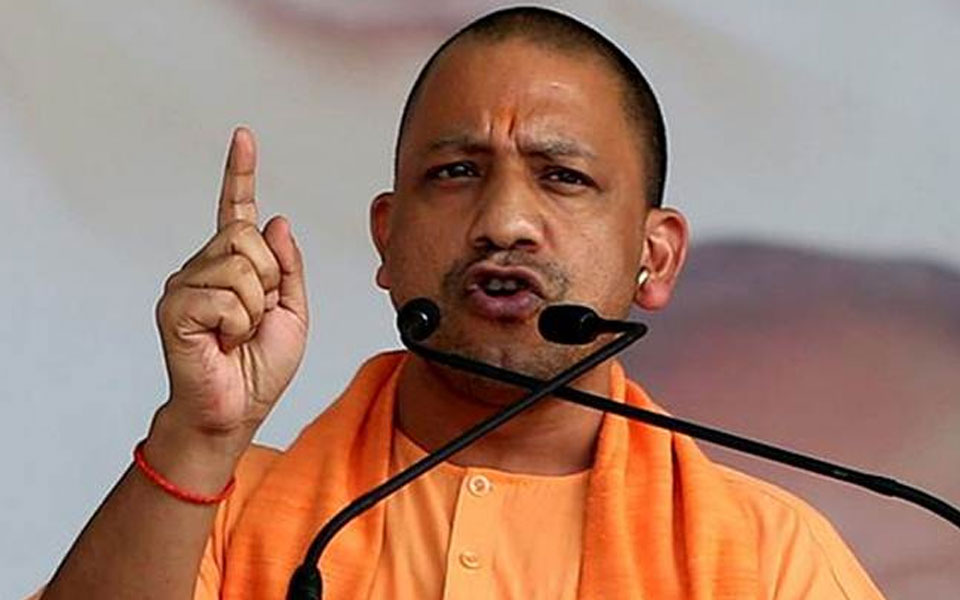
New Delhi, Aug 20 : The Supreme Court on Monday sought response from Uttar Pradesh government on a plea challenging an order of Allahabad high Court order which had dismissed a petition seeking prosecution of Chief Minister Yogi Adityanath in a hate speech case of 2007.
A bench of Chief Justice Dipak Misra, Justice A.M. Khanwilkar and Justice D.Y. Chandrachud issued notice to the state government and the District Magistrate of Gorakhpur and posted the matter after four weeks for hearing.
Petitioner Rasheed Khan has challenged the high court order which had upheld the Uttar Pradesh government's refusal to grant sanction to prosecute Chief Minister Yogi Adityanath.
Earlier this year, the Allahabad High Court had upheld a sessions court order which had quashed a magistrate's order taking cognizance of the chargesheet filed by the police in 2009.
The High Court had said that sessions court was right in holding that there was no prosecution sanction to initiate trial against the Chief Minister and others in the case.
In January 2017, the sessions court in Gorakhpur had quashed the magistrate court's cognisance order. The sessions court had said that there was no sanction to prosecute the accused, including Adityanath and others.
The Uttar Pradesh government had in May 2017 refused to grant the mandatory sanction for the prosecution of the Chief Minister. Several incidents of violence were reported in Gorakhpur on January 27, 2007, after the alleged hate speech of Adityanath.
Let the Truth be known. If you read VB and like VB, please be a VB Supporter and Help us deliver the Truth to one and all.
Election results prove Modi best for national security: R Ashoka
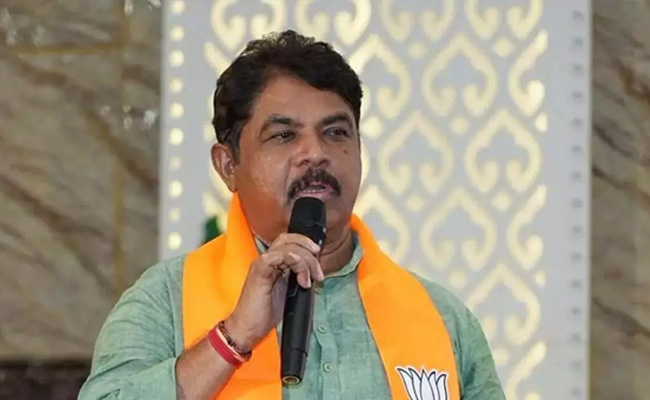
Bengaluru: Leader of Opposition in Karnataka Assembly R. Ashoka said the election results show that Narendra Modi is the most suitable leader for the country’s security.
Speaking to the media, he claimed that the political future of Mamata Banerjee and her government has come to an end. He alleged that around two crore people from Bangladesh were helped to enter the country with Aadhaar cards.
Ashoka said that even though elections were held in five states, the entire country’s attention was on West Bengal. He attributed this to what he described as misgovernance in the state.
He further said there were continuous political allegations and objections related to CBI matters, and added that such developments have now come to an end with the latest election outcome.