Why doesn't BJP appoint a Muslim as its president: Digvijaya on PM's jibe at Congress
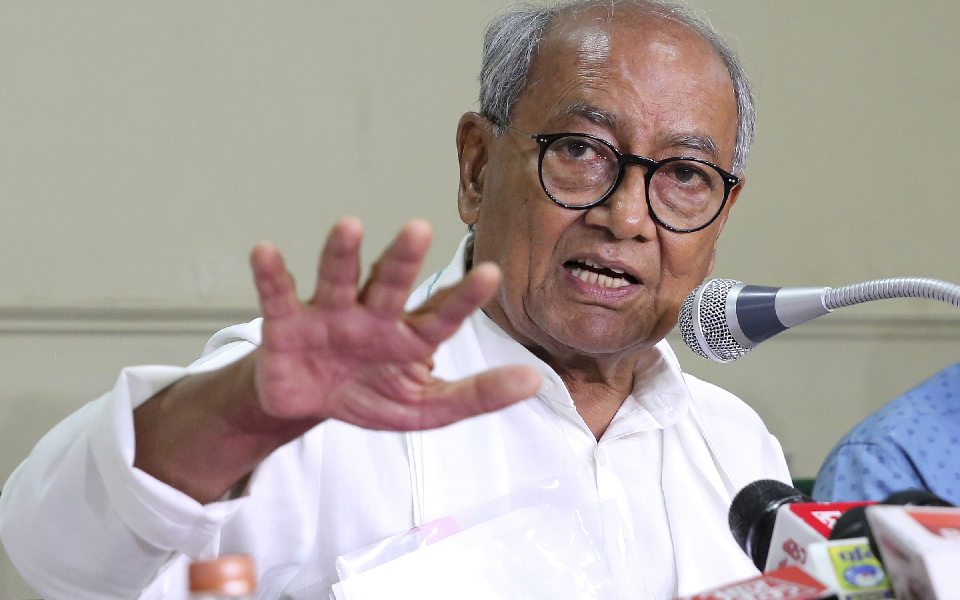
Bhopal, Apr 15 (PTI): Senior Congress leader Digvijaya Singh on Tuesday said the BJP should appoint a Muslim as its party president instead of suggesting his party to do so, and added that prominent leaders from the Muslim community held that position in the grand old party in the past.
He also alleged that a "disturbing trend" was being observed in the country wherein minority communities were being treated as enemies and falsely implicated by the BJP-led governments at the Centre and in states.
His statement comes a day after Prime Minister Narendra Modi said in Haryana that if the Congress really has sympathy for Muslims, it should appoint a Muslim as its president and give 50 percent tickets to people from the community.
When reporters asked Digvijaya Singh about the PM's remark, he said, "Muslims had earlier held the position of presidents (of Congress) and we are proud of it. If they (BJP) are so concerned, why don't they make a person from the Muslim community its party president?"
During the pre-Independence period, prominent Muslim leaders, including Maulana Abul Kalam Azad, Mukhtar Ahmad Ansari, Syed Hasan Imam and Nawab Syed Mohammed Bahadur, had served as Congress presidents.
When asked if he feels that a minority community was being targeted, Singh said, "A disturbing trend is taking place in the country where minority communities are being treated as enemies by the central government and in states ruled by the BJP's so-called double engine government."
"They are being falsely implicated, harassed and the constitutional provisions meant to protect their interests are being ignored. In April 2021, when riots broke out at several places, the Supreme Court had issued detailed guidelines on how states should act to control communal violence," the Rajya Sabha member said.
Those guidelines clearly outlined the steps governments must take to prevent such incidents, he said.
On a query about West Bengal Chief Minister Mamata Banerjee's statement that she will not allow the new Waqf law to be implemented in her state, Singh said, "...I want to say one thing, whoever spreads communalism in this country and whether it is radical Hindu, radical Muslim radical Sikh or any sect, action should be taken against them."
He alleged that Indian Secular Front was instigating the Muslim youth there.
"For 10 years (as Madhya Pradesh chief minister), I did not spare anyone spreading hatred towards other religions - be it Hindu, Muslim, Sikh or Christian. Because of that, not a single riot or incident of disturbance took place in Madhya Pradesh," he said.
Singh was the CM from 1993 to 2003.
On the issue of a Dalit groom not allowed to sit on a horse during a marriage ceremony in Indore district, Singh said it was a matter of shame for all that untouchability was still in vogue today.
"Yesterday, Chief Minister went to Dr Babasaheb Ambedkar's memorial and gave a long speech in which he talked about following the path as shown by Dr Ambedkar, but even today a groom from a Scheduled Caste cannot ride a horse and cannot enter the temple, this is a crime. Action should be taken against all those people who stopped his entry into the temple and objected to his sitting on a horse."
On the controversy surrounding BJP MLA's son forcibly entering a temple in Dewas district even after it was closed, Singh said even if the people associated with BJP do whatever they want, the police do not take any action against them.
Let the Truth be known. If you read VB and like VB, please be a VB Supporter and Help us deliver the Truth to one and all.
CM Siddaramaiah alleges ‘criminal conspiracy’ in Sringeri recount, vows legal action
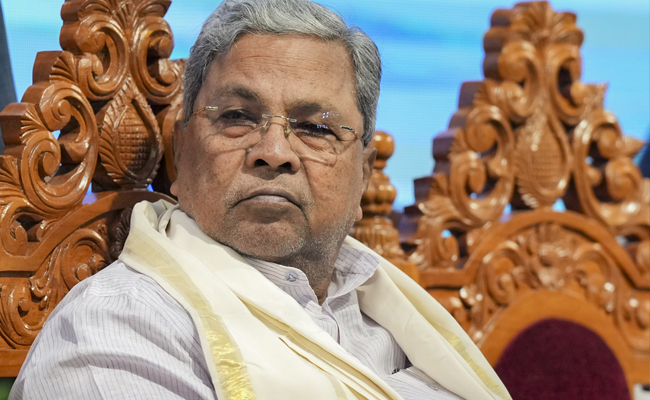
Bengaluru (PTI): Alleging a “criminal conspiracy” by BJP candidate D N Jeevaraj in the Sringeri Assembly poll recounting, Karnataka CM Siddaramaiah on Tuesday said the outcome was manipulated after valid postal ballot votes in favour of Congress leader T D Raje Gowda were tampered with during the recounting process.
Following a Karnataka High Court order on an election petition filed by Jeevaraj, challenging Raje Gowda’s election, the reverification and recounting were conducted on Saturday.
After the reverification and recount of postal ballots for the Sringeri Assembly constituency, votes polled in favour of Raje Gowda were reduced by 255, the returning officer said.
A report on the matter has been submitted to the Election Commission of India for further action, the officer added.
Congress leader Raje Gowda had won the 2023 Assembly polls from Sringeri by 201 votes, defeating his nearest rival Jeevaraj.
Addressing a press conference in Bengaluru, Siddaramaiah said the High Court had directed the recounting of postal ballots and that irregularities were noticed during the exercise conducted on May 2.
“This is a clear case of criminal conspiracy,” Siddaramaiah said, alleging that valid votes cast in favour of Raje Gowda were altered after being accepted by counting agents of all parties, including Congress, BJP, and JD(S).
He claimed that during the recounting of postal ballots, 255 votes were initially accepted as valid by all agents but were later tampered with by subordinate officials.
“There is a second mark on the votes polled in favour of Raje Gowda. They had accepted these as valid votes. Subsequently, another mark was made by officials. This is a clear case of criminal conspiracy,” he said.
When asked who was behind the alleged conspiracy, the CM replied, “It was hatched by Jeevaraj and others. It is planned.”
Siddaramaiah further alleged that the returning officer acted improperly by declaring the result despite the presence of an Election Commission observer during the recounting.
“Immediately after the counting, the returning officer announced the result. He should not have done so; this is against the law,” he said.
He pointed out that Raje Gowda had originally won by 201 votes, but after the recounting, the BJP candidate was declared the winner by 52 votes.
“The BJP has committed a criminal act of conspiracy. This is not vote chori but vote dacoity,” he alleged.
The CM said a police complaint had already been filed by Raje Gowda’s election agent, Sudhir Kumar, and emphasised the need for electoral integrity.
“We want transparency and free and fair elections. That is what our Constitution mandates,” he added.
Stating that the government would pursue legal remedies, Siddaramaiah said, “We are preparing an appeal challenging the returning officer’s announcement in a court of law.”
Responding to a separate query on elections in other states, the CM said there appeared to be an anti-incumbency factor in West Bengal, while results in Tamil Nadu were “surprising,” adding that Vijay’s party was emerging as the largest there.
Following the victory of party candidates in Bagalkote and Davanagere South, Siddaramaiah expressed confidence about future electoral prospects in Karnataka.
“Even in 2028, we will win the Assembly elections. We will come back,” the CM said.
Siddaramaiah added that he would order a forensic examination into the alleged tampering of postal ballots.