Why govt bought only 36 Rafale jets, asks Chidambaram
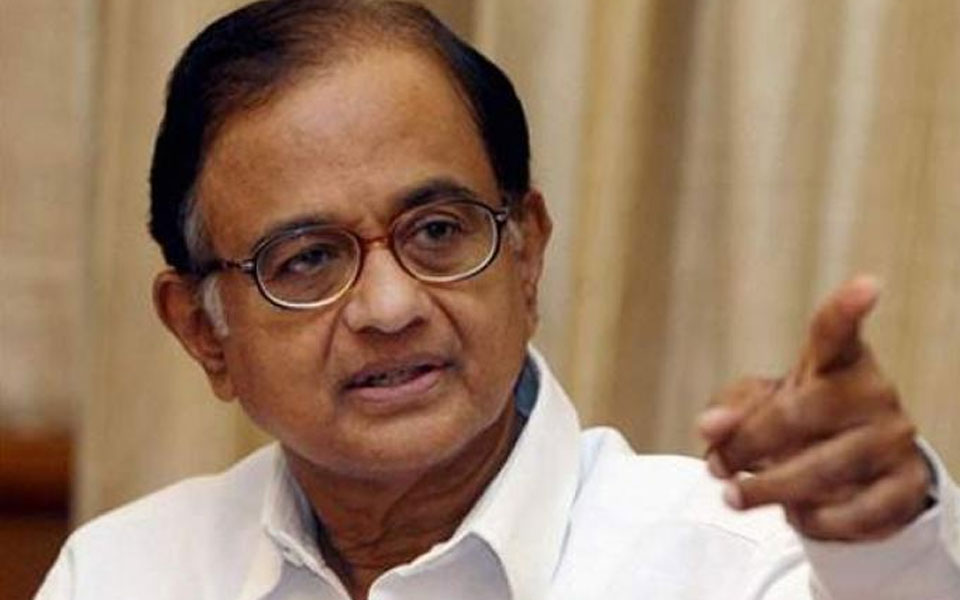
New Delhi, Jan 18 : Senior Congress leader P Chidambaram on Friday accused the government of compromising national security and asked why it bought only 36 Rafale fighter jets instead of 126 required by the Air Force.
His comments come in the wake of fresh revelations on the Rafale deal in a media report which claimed that Prime Minister Narendra Modi's decision to but 36 aircraft instead of the 126 asked for by the Air Force pushed the price of each jet up by 41.42 per cent.
"In the light of new facts and revelations in THE HINDU, the question gains greater urgency: why did the government buy only 36 Rafale aircraft instead of 126 aircraft required by the Air Force?," Chidambaram asked in a tweet.
"The Government has compromised national security by denying to the Air Force the 7 squadrons (126 aircraft) that it desperately needs," he said.
Congress leader Jyotiraditya Scindia also took to Twitter to demand answers from Modi on the increased cost of aircraft.
"The PM's unilateral decision to buy 36 Rafales resulted in a price escalation of 41.42% per jet. When will the prime minister answer? he asked.
Let the Truth be known. If you read VB and like VB, please be a VB Supporter and Help us deliver the Truth to one and all.
Rickelton's ton in vain as SRH beat MI by 6 wickets
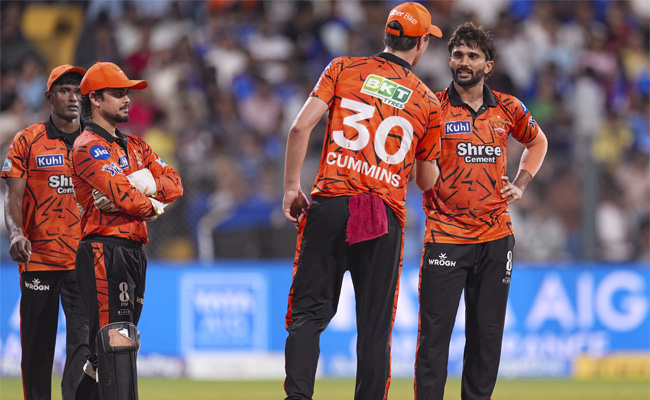
Mumbai (PTI): Ryan Rickelton's whirlwind unbeaten ton was overshadowed by Heinrich Klaasen's unbeaten 65 as Sunrisers Hyderabad defeated Mumbai Indians by six wickets in an IPL match here on Wednesday.
Chasing an imposing 244-run target, Travis Head (76 off 30) and Abhishek Sharma (45 off 24) shared 129 runs for the opening wicket to set the platform for SRH.
Klaasen (65 not out off 30 balls) then displayed his all-round hitting abilities to guide SRH home with the help of Nitish Kumar Reddy (21) and Salil Arora (30 not out off 10) in 18.4 overs.
Earlier, Rickelton's knock powered MI to 243 for five.
MI rode on a 93-run stand between Rickelton (123 not out off 55 balls) and Will Jacks (46 off 22) in 7.1 overs for the opening stand to power the side.
MI skipper Hardik Pandya scored a valuable 31 off 15 balls before being dismissed.
Praful Hinge (2/54), Eshan Malinga (1/29), Sakib Hasan (1/39) and Nitish Kumar Reddy (1/31) were the wicket-takers for SRH.
Brief Scores:
Mumbai Indian: 243 for 5 in 20 overs (Ryan Rickelton 123 not out; Praful Hinge 2/54).
Sunrisers Hyderabad: 249 for 4 in 18.4 overs (Travis Head 76, Heinrich Klaasen 65 not out; AM Ghazanfar 2/51).