Why is govt in 'hurry' to amend women's quota law, must call all-party meeting after polls: Kharge
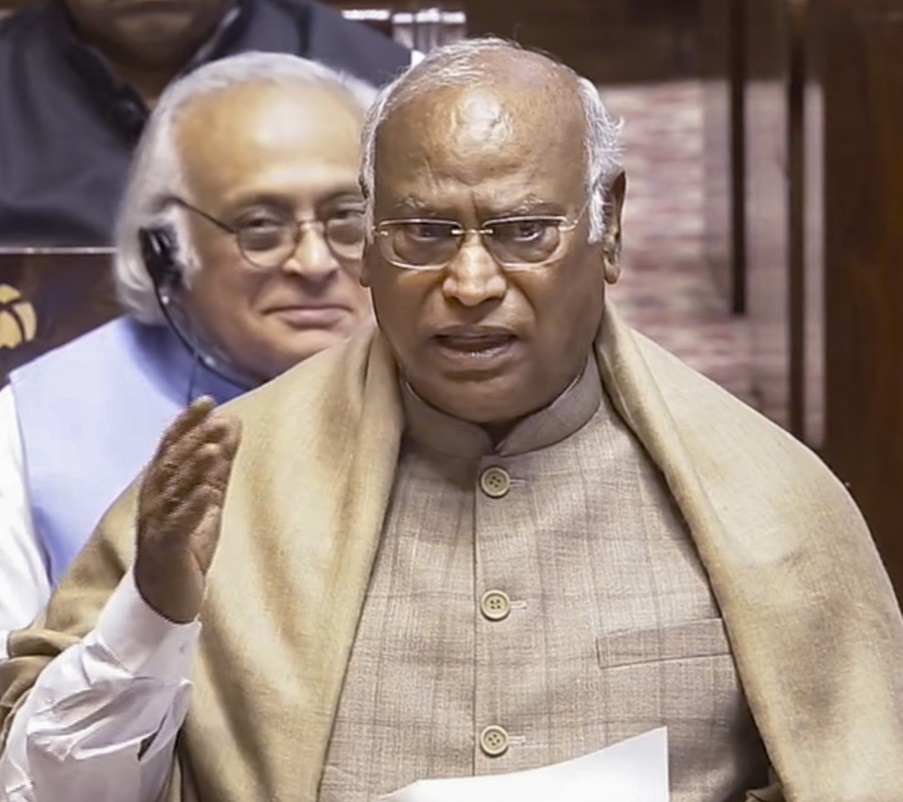
New Delhi, Mar 26 (PTI): Congress chief Mallikarjun Kharge wrote to Parliamentary Affairs Minister Kiren Rijiju on Thursday, asking why the government was in a "great hurry" to amend the women's quota law.
In his letter to Rijiju, Kharge also reiterated that an all-party meeting should be held on the matter after the current round of assembly elections is completed in April.
Kharge's letter came in response to one from the Union minister to the Congress chief seeking a meeting with the party on plans to amend the Nari Vandan Adhiniyam, 2023, for its implementation.
"I have just received your letter on 26th March 2026. Opposition parties have already written to you on 24th March 2026, suggesting that an all-party meeting be held after April 29th, 2026, to discuss the implementation of the Nari Shakti Vandan Adhiniyam, 2023," the Congress president said.
ALSO READ: India among 5 nations granted passage through Strait of Hormuz by Tehran
"I simply fail to understand why the government is in such great hurry to further amend a Constitutional Amendment Act, 30 months after it was initially passed. We are all extremely busy with the election campaign. That is the reason why we had suggested that the meeting be held after the election campaign is over," Kharge said.
This will, in no way, affect the implementation of the amended Nari Shakti Vandan Adhiniyam, 2023, from the 2029 Lok Sabha election onwards, he said.
"In fact, on 21st September, 2023, during the debate in the Rajya Sabha, I had myself demanded the immediate implementation of Nari Shakti Vandan Adhiniyam, 2023, but the government had not agreed with my demand. I once again request you to convene an all-party meeting any time after April 29, 2026," Kharge said.
Several opposition parties on Tuesday wrote to the government, asking for an all-party meeting to be convened to discuss the modalities of the implementation of the women's quota law.
In a letter to Rijiju, the opposition leaders had said the meeting should be held after the current round of assembly elections is completed in April.
ALSO READ: CBI conducts searches against Reliance Telecom, ex-directors in SBI fraud case
"You may recall that I had written to you on March 16, 2026, requesting that an all-party meeting chaired by the PM be convened at the earliest to discuss, as desired by you, the modalities and roadmap for the implementation of the Nari Vandan Adhiniyam, 2023," the letter written on Congress president Kharge's letterhead had said.
The letter had signatories from several opposition parties, except the Trinamool Congress.
It came after indications that the government was planning to bring bills to ensure that the women's reservation law is implemented before the completion of the delimitation exercise for Lok Sabha and assembly constituencies.
The opposition leaders, in their letter, said that the government was planning a further amendment to the Nari Shakti Vandan Bill passed in September 2023. The law is officially known as the Constitution (106th Amendment) Act.
Taking a swipe at Prime Minister Narendra Modi, the Congress had on Wednesday claimed that the "U-turn Ustad" now wants to implement the women's reservation law without completing the delimitation and census exercises by passing amendments at a "special two-day session" of Parliament in the next fortnight.
ALSO READ: Case registered against X platform over 'defamatory' AI video against PM, ECI
The opposition party had alleged that this was a "weapon of mass diversion" to change the narrative from the government's "foreign policy failures and setbacks and from the LPG and energy crisis facing the country".
Congress general secretary in charge of communications, Jairam Ramesh, had said the Modi government was also planning to increase the size of the Lok Sabha and the Vidhan Sabhas by 50 per cent, which also needed careful deliberation.
The provision to provide 33 per cent reservation to women in the Lok Sabha and state assemblies was brought by amending the Constitution in 2023, but it will come into effect after the completion of the delimitation exercise.
Let the Truth be known. If you read VB and like VB, please be a VB Supporter and Help us deliver the Truth to one and all.
Siddaramaiah stresses need to establish Supreme Court bench in South India
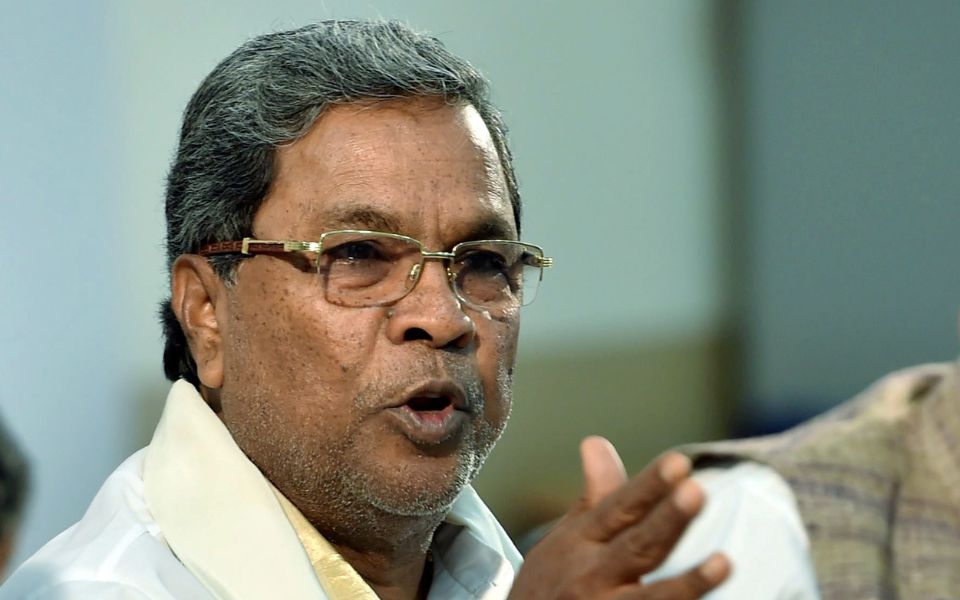
Bengaluru (PTI): Karnataka Chief Minister Siddaramaiah on Saturday stressed the need to improve accessibility to the highest court of the land, asserting that establishing a Supreme Court bench in South India would go a long way in ensuring justice.
Speaking at the 22nd Biennial State Level Conference of Judicial Officers with a theme 'Reimagining the Judiciary in the era of Artificial Intelligence', he said, the authority of a judge must never be overshadowed by the authority of an algorithm.
"Even as we explore these new frontiers, we must remain mindful of the enduring challenges facing our judiciary," the chief minister said.
"Pendency of cases continues to be a serious concern that affects the timely delivery of justice. While technology can provide tools to address this, it must be complemented by systemic reforms through strengthening infrastructure, increasing judicial capacity, and modernising court processes," Siddaramaiah said.
"There is also a strong and compelling need to improve accessibility to the highest court of the land. The establishment of a Supreme Court bench in South India would go a long way in ensuring justice," he said.
Chief Justice of India, Surya Kant, Supreme Court Judges B V Nagarathna and Aravind Kumar and Chief Justice of High Court of Karnataka Vibhu Bakhru were among those present.
The CM said, "We stand today at a defining juncture where law and technology are no longer separate domains, but interconnected forces shaping governance, rights, and the very nature of justice itself."
"Artificial Intelligence is emerging as a transformative force that challenges how we interpret evidence, how we understand facts, and how decisions are arrived at. It offers immense promise, aiding faster legal research, improved case management, and the possibility of reducing pendency through intelligent systems," he said.
"Yet, it also raises profound concerns. Algorithmic bias can undermine the guarantee of equality before law. Opaque systems may weaken the doctrine of reasoned decisions, which lies at the heart of our judicial process," he added.
Siddaramaiah said, Judicial independence, which is the cornerstone of our democracy, must be preserved not only from external pressures but also from subtle technological dependence.
"The authority of a judge must never be overshadowed by the authority of an algorithm," he said.
Pointing out that the emergence of AI-generated evidence presents new challenges for our legal system, the CM said, Deepfakes, synthetic data, and machine-generated content compel us to revisit established doctrines relating to admissibility, burden of proof, and authenticity.
"The courts will increasingly be called upon to determine what constitutes reliable evidence in a digital age. In doing so, we must ensure that truth remains grounded in verifiability and integrity, not merely in technological sophistication," he said.
Hoping that the judiciary will play a defining role in shaping the regulatory framework for artificial intelligence in India, he further said, "through well-established constitutional doctrines such as due process, proportionality, and the right to privacy, our courts will determine the contours within which AI must operate."
"The judiciary, therefore, is not only a user of technology but also the ethical compass that will guide its deployment in society," he added.
Noting that technology also offers meaningful opportunities to strengthen judicial processes, Siddaramaiah said, AI-assisted legal research may democratise access to precedents and reduce disparities in legal knowledge.
Siddaramaiah also said that blockchain technology holds promise in ensuring secure, tamper-proof judicial records. Stating that the intelligent case management systems can streamline court functioning and reduce delays, he said, "However, these innovations must be adopted with care, ensuring that efficiency does not come at the cost of fairness."
"In this transformation, the capacity of our judicial institutions becomes critical. Judges of the future must be equipped not only with legal acumen but also with a clear understanding of technological systems," he added.
Stating that the question is how artificial intelligence intersects with the fundamental principles of equality and social justice, the CM said, if not carefully designed and regulated, AI systems can replicate and even amplify existing social inequalities.
No algorithm can replace the human capacity for empathy, the wisdom that comes from lived experience, or the moral reasoning that defines judicial decision-making, he said, "Technology can assist, but it cannot replace the human conscience that lies at the heart of justice."
Siddaramaiah said, the Government of Karnataka remains committed to building robust judicial infrastructure, facilitating digital transformation, and creating an ecosystem where innovation and justice can progress together.