Why should TV news not be regulated by govt, asks Bombay High Court
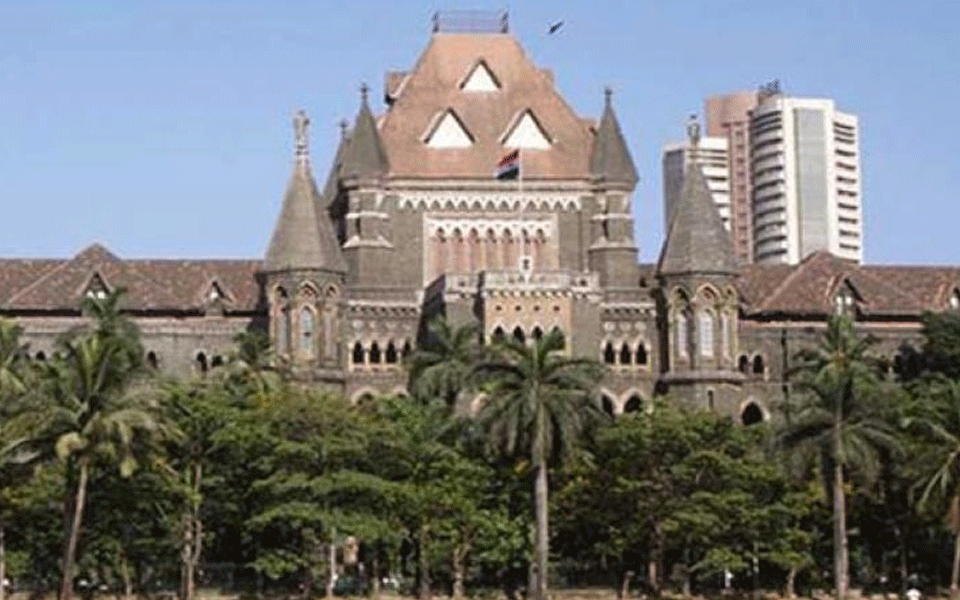
Mumbai: The Bombay High Court on Thursday said it was surprised to know that the government had no control over the electronic media and asked why television news should not be regulated by the state.
The observation was made by a bench of Chief Justice Dipankar Datta and Justice G S Kulkarni while hearing a bunch of petitions that sought various reliefs related to the case of the death of actor Sushant Singh Rajput, including a direction to restrain the press in its coverage of the case.
The bench impleaded the Union Ministry of Information and Broadcasting as a party in the matters.
It also directed the ministry to file a reply in court indicating the extent of state control that is exercised in respect of telecasting news, particularly such news that "may have serious ramifications".
The bench also made the Narcotics Control Bureau (NCB) and the Enforcement Directorate (ED), the central agencies that are currently probing issues related to the case, as parties.
This, after the one of the petitioners alleged that the agencies were "leaking" probe related information to the press and the public. The bench, however, refused to implead actor Rhea Chakraborty as respondent in the case.
"We do not see any reason to implead the proposed respondent number 12 (Chakroborty), an accused who is presently in judicial custody," it said.
The petitions, filed by activists, and eight retired senior police officers, allege, among other things that several TV channels were running a parallel probe into the case,and that they were running a malicious campaign against the Mumbai police through their current reportage in the case.
On September 3, another bench had heard the same pleas and had passed an order urging the press to show restraint while covering the developments of Sushant Singh Rajputs death case.
On Thursday, senior advocate Milind Sathe, who appeared for the former police officials, told the bench that despite the order, TV channels were continuing with their slander against the Mumbai police.
Sathe submitted transcripts from news broadcasts whereby, channels had insinuated that the Mumbai police had been assisting or shielding the accused, and the "drug mafia".
CJ Datta told advocate Sathe that he shouldn't be bothered by what a news anchor was saying.
He, however, added that the court hoped and trusted that "the spirit of the order dated September 3" would be kept in mind by TV news channels.
The Union government, meanwhile, pointed out that the petitioners should have approached the Press Council of India, a statutory body which regulates the print media, and the News Broadcasting standards Authority (NBSA) with its grievances against the TV news channels.
At this, the bench noted that the NBSA wasn't a statutory body.
"We are surprised that the state has no control over the electronic media. Why should it (TV news) not be regulated in case they may have serious ramifications," the bench said.
It directed all parties to file their replies, rejoinders etc within the next two weeks, adding that while the pleas remained pending, the NBSA was free to act upon any complaints received so far against such news.
Let the Truth be known. If you read VB and like VB, please be a VB Supporter and Help us deliver the Truth to one and all.
Confident we are going to win Kerala: Shashi Tharoor
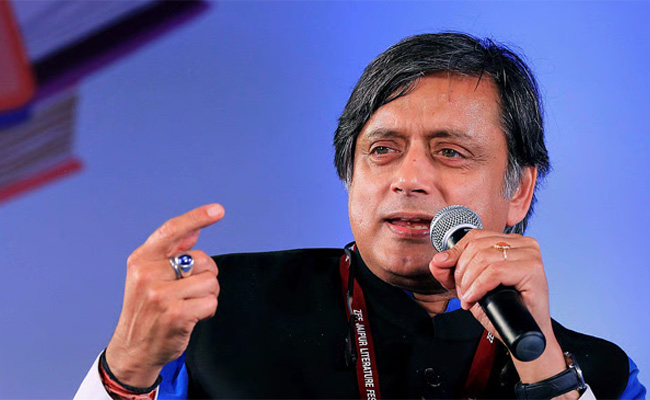
New Delhi (PTI): Congress leader Shashi Tharoor on Thursday expressed confidence in the victory of the United Democratic Front (UDF) in Kerala, saying the Congress-led alliance will win more than 75 seats out of the total 140 in the state.
Tharoor, who hails from Kerala, said he was not surprised to see the results of the exit polls, most of which predicted a victory for the UDF that has been out of power for 10 years in the state.
"We have been on the ground. I have campaigned in 59 constituencies across 12 districts out of 14. I was very confident we are going to win.
"Everything that I have picked up from not just my party colleagues and workers but also from other observers, media and others have always convinced me that we were going to score a comfortable win of above 75 seats. And all the (exit) polls have confirmed the same thing," he told reporters here.
The Thiruvananthapuram MP said he was not surprised to see the results of the exit polls but in general he was not a big fan of exit polls in India.
"Because ours is not purely a homogenous society. We have to take into account gender issue, caste issue, class issue, regional disparities. You never get a convincingly large enough sample to give an accurate poll and now there is the additional complication that we have heard about in West Bengal this year that many people are unwilling to answer the questions of the pollsters," he said.
The Congress leader said normally, it used to be below 10 per cent that people said that they would not answer.
"Even if you are a reputable exit pollster, in Bengal, one polling company has said 60 per cent of people refused to answer. So, what is the worth of a poll where 60 per cent of your respondents have not answered," he said.
Several exit polls on Wednesday predicted a comeback by the Congress-led UDF in Kerala after 10 years, dethroning the CPI(M)-led Left Democratic Front (LDF).
Polling for the 140-member Kerala assembly was held on April 9. Results of assembly elections in West Bengal, Tamil Nadu, Assam, Puducherry, besides Kerala, will be announced on May 4.