Why was Article 355 not invoked during Gujarat riots: Ex-Vice President Hamid Ansari
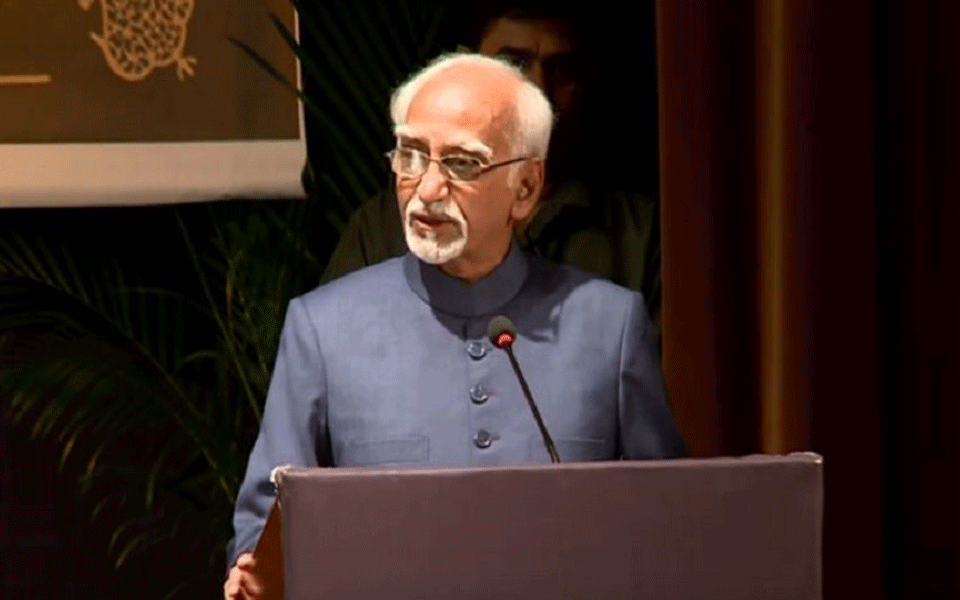
New Delhi, Oct 13: Referring to the 2002 Gujarat riots, former vice president Hamid Ansari Saturday asked why was Article 355 of the Constitution not invoked by the then Union government even when its defence minister was on the spot.
Ansari made the remarks during the launch of a book -- 'The Sarkari Mussalman' by Lt Gen. (retd) Zameer Uddin Shah, who had led the Army Division that quelled the Gujarat riots in the state.
The former vice president also said there were "no military solutions to insurgency" as normalcy can be restored only by winning the hearts and minds of people.
"'The initial reaction of the civil administration was tardy; curfew had been ordered but not enforced; no attempt were made to convene peace committees and attitude of police was partisan'," Ansari quoted some of the observations from Shah's book on the riots.
But, the former vice president observed, that the book was silent "about the role of the political leadership".
"If the civil and police administration fails to respond to a massive failure of law and order, where does the responsibility rests in a democratic and parliamentary system," he asked.
"Why was Article 355 of the Constitution that makes it a duty of the Union to protect a state against internal disturbance not invoked even when the Centre had the benefit of Raksha Mantri on the spot?" he asked.
Article 355 pertains to 'duty of the Union to protect states against external aggression and internal disturbance'.
The reportage of Gujarat happenings in the national and international media was extensive and even the NHRC took note of it, he said.
"In an interview to a Malayalam weekly in 2005, former president K R Narayanan had revealed his remonstrations with the government and observed, and I quote (Narayanan) -- 'Military was sent but not given the power to shoot. And, there was a conspiracy involving the central and the state government behind the Gujarat riots'," he said.
The book has kicked up a controversy, alleging that transport and other logistics support "arrived a day later" for the army troops that had landed in Ahmedabad after communal riots broke out in the state.
Lt Gen. Shah, at the function, said he had met then Gujarat chief minister Narendra Modi and then defence minister George Fernandes at the CM's residence at 2 AM on March 1 and sought transport and logistics support.
"But, the transport rolled in only on March 2," he alleged, adding "hundreds of officers from my formation can speak on that, and there are war diaries of the battalion".
However, Jasim Mohammad, director of Forum for Muslim Studies and Analysis, Aligarh, has countered the claims made by Shah in his book about the role of the then Gujarat government.
"Shah's claims in the book about the then Gujarat government is wrong. He had met Prime Minister Narendra Modi in March 2016, where I was also present and Shah sahab had praised Modi for providing support to the Army in 2002 as the chief minister," Mohammad claimed, adding, "how can these both things be true at the same time".
On Friday, Mohammad had even written a letter to Ansari, urging him not to attend the book release function.
Let the Truth be known. If you read VB and like VB, please be a VB Supporter and Help us deliver the Truth to one and all.
Sujit Nair raises concerns over speculation of DMK-AIADMK understanding to block TVK
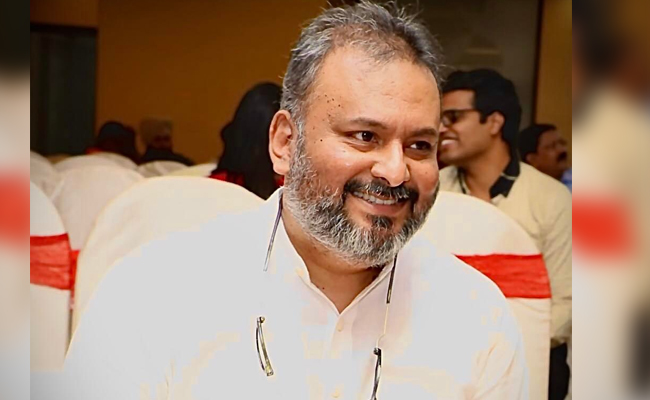
Chennai: Journalist and political commentator Sujit Nair has expressed concern over speculation that the Dravida Munnetra Kazhagam and the All India Anna Dravida Munnetra Kazhagam could explore a post-poll understanding to prevent Vijay-led Tamilaga Vettri Kazhagam from forming the government in Tamil Nadu.
In a social media post, Sujit Nair said the election verdict in Tamil Nadu reflected a clear public demand for political change and argued that the mandate should be respected irrespective of political preferences.
Referring to reports and political discussions surrounding a possible understanding between the DMK and AIADMK, he said he hoped such developments remained only speculative conversations and did not turn into reality.
Nair stated that if such an alliance were to take shape, it would raise serious questions about ideological politics in the country. He said TVK had emerged through a democratic electoral process and that the legitimacy to govern in a parliamentary democracy comes from the people’s verdict.
According to him, attempts to prevent an electoral winner from forming the government through unexpected political arrangements may be constitutionally valid, but many people could view them as politically opportunistic.
He further said that such a move could particularly affect the political image of the DMK, which has historically projected itself around ideology, social justice and opposition politics. Nair said that in ideological terms, the DMK appeared closer to TVK than to the AIADMK, and joining hands with its long-time political rival only to remain in power could weaken its broader political narrative.
He added that the same questions would apply to the AIADMK as well, as the party had spent decades positioning itself against the DMK and such an arrangement could create discomfort among its cadre and supporters.
Drawing a comparison with Maharashtra politics in 2019, Nair said he had expressed similar views when the Shiv Sena formed an alliance with the Indian National Congress and the Nationalist Congress Party after the Assembly elections.
He said post-poll alliances between long-standing political rivals often create a public perception that ideology and electoral mandates become secondary when political power equations come into play.
Nair also said such developments increase public cynicism towards politics and reinforce the belief among voters that ideology is often sidelined after elections.
He maintained that the Tamil Nadu verdict was emphatic and said respecting both the spirit and substance of the mandate was important for the credibility of democratic politics.