Why you should read the News: The importance of staying informed

In our ultra-modern era, where information is disseminated at breakneck speeds, consuming news is more crucial than ever for individuals. News can be accessed through newspapers, internet articles, or news apps. Keeping up with current events influences how one perceives the world in general.
You can stay informed about what's going on in your community, country, and around the world by reading the news. Making decisions on social concerns, politics, or economic trends becomes much easier with it. It enables individuals to engage in substantive debates that could advance societal discourse.
Regular reading of news, articles on current affairs tends to refine critical thinking and analytic skills among readers. It also helps in judging information, distinguishing between authentic and questionable sources, and considering several perspectives. All these critical thinking abilities are vital in this sensationalized, deceptive environment. This therefore prompts a review of the reliability of news sources that are read.
A healthy democracy absolutely requires intelligent individuals. Keeping up with the news provides you with the knowledge necessary to actively engage in public life. The platforms of political candidates and policies are something you should be aware of whether you plan to vote, participate in town hall meetings, or advocate for social change. This assists you in making decisions that align with your priorities and values.
The social media environment we live in allows material to proliferate quickly without any quality control. Therefore, engaging with news organizations that have an excellent track record would be beneficial and give someone the chance to stay out of danger. Avoiding such lies would be made easier by using critical thinking to identify which headlines are provocative and, more crucially, by avoiding dramatic reporting and unconfirmed content. Reading the news involves fact-checking as well; resources and websites devoted to fact-checking can help discern between what is true and what is untrue.
News both in print and digital platforms provides a forum for a range of opinions and viewpoints. One usually gains some understanding of various cultures, philosophies, and experiences of people around the world from reading news, stories from available authentic sources. Exposure to such things increases empathy and broadens one's perspective, promoting inclusive thinking and a better grasp of the intricacies of society.
There are few ways readers can understand how to navigate through the sea of false information
Recognize which news portals, amid an abundance of information, you can trust. Look for credible news portals that operate with journalistic ethics. Observe their editorial standards, the credentials of reporters they are hiring, and how open they are about sourcing their news. You will be sure of the accuracy and verifiability of the information you are reading, if it comes from reliable portals.
Economic news has impacts on financial and professional decisions. Trending market and employment can really help when making the right financial decision in regards to a stock purchase or even a property buy. You are also able to seamlessly adjust to employment trends or sector changes knowing the current state of the economy.
Reading the news exposes you to the wide vocabulary and the diversity of writing styles. That would sharpen your language skills as a well-articulate speaker and writer. Good communication is indispensable in any occasion, whether personal or professional, which makes you able to communicate your ideas as well as thoughts with lucidity.
Local news brings you closer to your community, and this creates a sense of ownership. The understanding of local events, initiatives, and issues can help you to contribute positively to the surroundings through engagement with your neighbors. If you know about everything, from big community events to supporting the local businesses, then that makes for a pretty connected community.
The news must be read in search of truth. It is in the process of remaining informed that one learns to feel responsible towards communities and society at large, ensuring one is contributing positively toward the discussions and actions that are based on truth and not misinformation.
Reading the news is one way to make time for daily news but with emphasis on verification and credible source, so arm yourself to critically think and cope with fast-pace change in your world. Therefore, read a newspaper, scan the news section in an app, or listen to a podcast on the radio-you will do just fine.
Let the Truth be known. If you read VB and like VB, please be a VB Supporter and Help us deliver the Truth to one and all.
CEC orders immediate arrest of those involved in post-poll violence in Bengal: Official
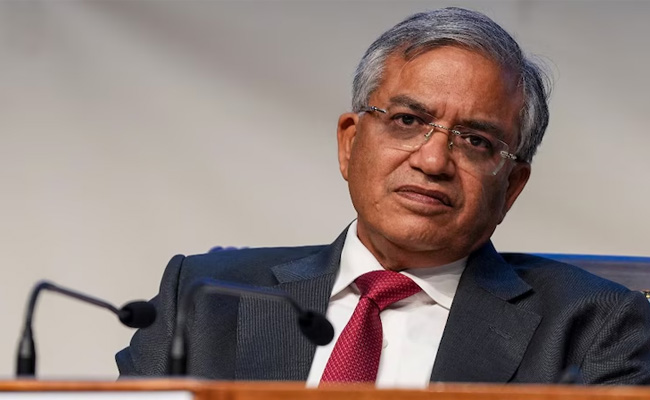
Kolkata (PTI): Chief Election Commissioner Gyanesh Kumar directed the authorities concerned to immediately arrest those involved in post-poll violence and vandalism in West Bengal, an official said on Wednesday.
The Election Commission's directive came after two persons were killed in alleged incidents of post-poll violence in the state on Tuesday, besides scores of party offices being ransacked.
The CEC issued instructions to the West Bengal chief secretary, director general of police, Kolkata police commissioner and directors general of central armed police forces, along with all district magistrates, superintendents of police and other officials, to maintain continuous patrolling in sensitive areas, he said.
"Those responsible for inciting violence and carrying out acts of vandalism must be arrested immediately," the official said, quoting the CEC's instruction.
The chief election commissioner also stressed the need for swift and firm enforcement of the law, he added.
This directive came amid concerns over law and order in parts of the state, with the Election Commission closely monitoring the situation, he added.
"We have been asked to remain on high alert and ensure that any attempt to disturb peace is dealt with firmly," a senior police officer said.
The state authorities have intensified vigil across districts, with coordinated efforts between the police and central forces to prevent any untoward incident, he added.
The assembly elections were held in West Bengal in two phases - April 23 and 29. The counting of votes took place on May 4.
The BJP sealed a landslide victory with 207 seats in the 294-member assembly, ending the TMC's uninterrupted 15-year rule in the state.