Will always support uniforms in schools; no hijab or other dresses: CT Ravi
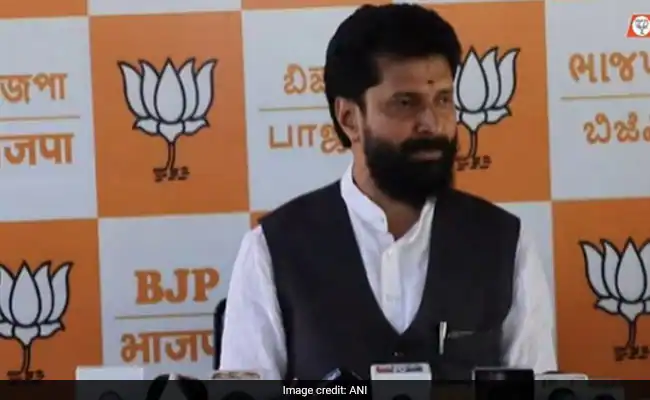
New Delhi, Oct 13: The BJP on Thursday asserted that it will always be opposed to students wearing hijab or any dress other than uniforms in schools, and said religious freedom cannot be used to promote "separatism".
Soon after the Supreme Court gave a split verdict on the ban on hijabs in Karnataka educational institutions, BJP national general secretary C T Ravi, a senior party leader from the state, said it will not be appropriate for him to comment on the judgement.
But he will always speak against the "separatist mindset" that, he claimed, promotes the use of Muslim headscarf in schools.
"Uniform in schools is meant to promote uniformity among students. I believe that separatism is promoted in the garb of issues like promotion of burqa or hijab. This mindset was the reason behind India's partition. This separatism progressively morphs into extremism which can be a source of terrorism," he claimed.
Rules mandating wearing uniform in Karnataka schools have been in force since 1965, he said.
Citing popular protests in Iran, an Islamic country, against the mandatory use of hijabs, he claimed that religion freedom in India cannot mean promotion of "separatist" designs.
He added that the issue is not about wearing or not wearing hijab but what to wear in schools. And there should be no hijab or other dresses in schools but only uniforms, he said.
Following the split verdict, the two-judge Supreme Court bench referred the matter to the chief justice of India for constituting a larger bench.
While Justice Hemant Gupta dismissed the appeals against the March 15 verdict of the Karnataka High Court that had refused to lift the ban and held that hijab is not part of "essential religious practice" in Islamic faith, Justice Sudhanshu Dhulia allowed the pleas and observed that it is ultimately a "matter of choice".
During the arguments in the top court, a number of counsel appearing for the petitioners had insisted that preventing Muslim girls from wearing the hijab to the classroom will put their education in jeopardy as they might stop attending classes.
The counsel appearing for the state had argued that the Karnataka government order that kicked up a row over hijab was "religion neutral".
Insisting that the agitation in support of wearing hijab in educational institutions was not a "spontaneous act" by a few individuals, the state's counsel had argued in the apex court that the government would have been "guilty of dereliction of constitutional duty" if it had not acted the way it did.
Let the Truth be known. If you read VB and like VB, please be a VB Supporter and Help us deliver the Truth to one and all.
Caste census will form basis for future policy decision, says CM Siddaramaiah
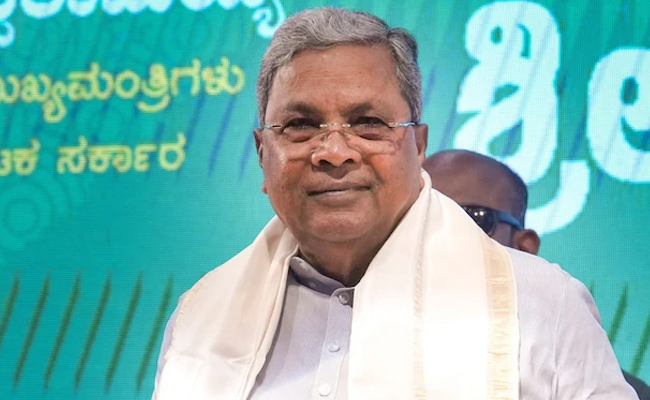
Mysuru (Karnataka) (PTI): Karnataka Chief Minister Siddaramaiah on Wednesday said that the ongoing caste census would form the basis for future policy decisions, asserting that the exercise was crucial to advancing social justice in the state.
Addressing a gathering at the Siddarameshwara Jayanti celebrations here, he said caste enumeration was being carried out for the first time since 1931 and would be followed by deliberations once the report is submitted.
"At present, a caste census (Jaati Sameekshe) is underway. After the report comes, we will discuss it and take necessary decisions," Siddaramaiah said.
He underlined the government’s commitment to equality, stating, "We are committed to social justice. No one should face injustice. Even if not 100 per cent, we will strive to ensure 99 per cent justice."
Referring to measures aimed at addressing intra-caste disparities, the chief minister said the government had already implemented internal reservation based on revised classifications.
"We have gone beyond the Nagamohan Das report and implemented internal reservation… now it has been revised to 5.25 per cent, 5.25 per cent, and 4.5 per cent. This has been approved by the Cabinet," he said.
Siddaramaiah said the broader objective was to ensure equitable distribution of resources and opportunities, while reiterating that policy interventions would be guided by constitutional principles.
"Our objective is equal share and equal life for all," he said.
He also emphasised the role of education in eliminating inequalities, particularly among marginalised communities, and said empowerment was essential to dismantle entrenched caste hierarchies.
"Only when people gain such empowerment can caste divisions be eradicated. Education is essential for this," he added.
The CM said the government would examine demands raised by various communities and take decisions based on feasibility, while ensuring that benefits reached all sections without discrimination.