Will deal with issue of immunity of lawmakers if criminality attached to acts: SC
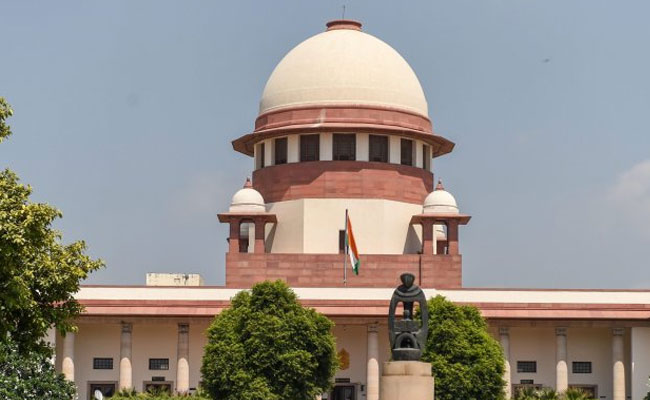
New Delhi (PTI): A seven-judge bench of the Supreme Court on Wednesday said it will deal with the issue of whether immunity granted to lawmakers is available if there was criminality attached to their acts.
The bench headed by Chief Justice D Y Chandrachud commenced hearing to reconsider the apex court's 1998 verdict granting MPs and MLAs immunity from prosecution for taking bribes to make a speech or vote in Parliament and state legislatures.
"We have to deal with the immunity as well and decide a narrow issue -- can the immunity (to the lawmakers) be attached when there is element of criminality," a constitution bench headed by Chief Justice D Y Chandrachud said.
Solicitor General Tushar Mehta, at the outset, said that possibly the controversy can be narrowed down in view of the fact that the offence of bribery is complete when a bribe is given and accepted by the lawmaker.
Now whether the lawmaker performs the criminal act is irrelevant for the question of criminality and it is a question under the Prevention of Corruption Act, rather under Article 105 which deals with the immunity available to the lawmakers, the law officer said.
The bench, referring to the 1998 judgement, said it was held that irrespective of the criminality, immunity is available to the lawmakers.
"We will ultimately have to deal with the issue of immunity," said the bench which also comprised justices A S Bopanna, M M Sundresh, P S Narasimha, J B Pardiwala, Sanjay Kumar and Manoj Misra.
Nearly 25 years after the JMM bribery scandal rocked the country, the apex court had on September 20 agreed to reconsider its 1998 judgment, saying it was an important issue having a significant bearing on "morality of polity".
A five-judge bench of the apex court had decided to refer the issue to a larger seven-judge bench.
The top court had in its 1998 five-judge constitution bench verdict delivered in the PV Narasimha Rao versus CBI case held that parliamentarians have immunity under the Constitution against criminal prosecution for any speech made and vote cast inside the House as per Article 105(2) and Article 194(2) of the Constitution.
Article 105(2) of the Constitution stipulates that no member of Parliament shall be liable to any proceedings in court in respect of anything said or any vote cast in Parliament or any committee thereof. A similar provision exists for MLAs under Article 194(2).
In 2019, a bench headed by then chief justice Ranjan Gogoi, which was hearing an appeal filed by Sita Soren, JMM MLA from Jama and daughter-in-law of party chief Shibu Soren, who was an accused in the JMM bribery scandal, had referred to a five-judge bench the crucial question, noting it had "wide ramification" and was of "substantial public importance".
Sita Soren was accused of taking bribes to vote for a particular candidate in the Rajya Sabha election in 2012. She had contended that the constitutional provision granting lawmakers immunity from prosecution, which saw her father-in-law being let off the hook in the JMM bribery scandal, be applied to her.
The three-judge bench had then said it will revisit its verdict in the sensational JMM bribery case involving Shibu Soren, a former Jharkhand chief minister and ex-union minister, and four other party MPs who had allegedly accepted bribes to vote against the no-confidence motion challenging the survival of the P V Narasimha Rao government in 1993.
The Narasimha Rao government, which was in a minority, survived the no-confidence vote with their support.
The CBI registered a case against Soren and four other JMM Lok Sabha MPs but the Supreme Court quashed it citing the immunity from prosecution they enjoyed under Article 105(2) of the Constitution.
Sita Soren had appealed against the Jharkhand High Court order of February 17, 2014 refusing to quash a criminal case lodged against. The CBI had accused her of accepting bribes from one candidate and voting for another.
Let the Truth be known. If you read VB and like VB, please be a VB Supporter and Help us deliver the Truth to one and all.
Power struggle in ruling Cong has 'created massive confusion' in Karnataka: BJP leader Ashoka
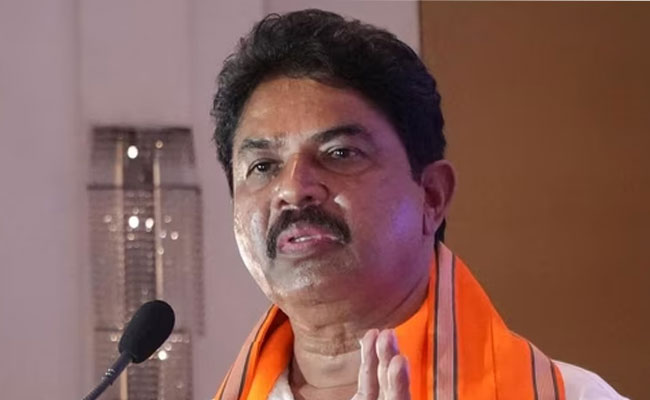
Bengaluru (PTI): BJP leader R Ashoka on Friday claimed that the ongoing power struggle between Chief Minister Siddaramaiah and his deputy D K Shivakumar has created massive confusion in Karnataka.
He remarked that the proverb “when two people fight, the third one benefits” has come true, as AICC President Mallikarjun Kharge is also now making efforts to become Chief Minister.
Speaking to reporters here, Ashoka said the entire government has turned into a house of confusion due to the alleged power tussle.
Kharge’s new statement has only added to the chaos, he said.
Congress chief Mallikarjun Kharge had on Friday said that no date has been fixed yet to discuss possible leadership change in Karnataka.
This came a day after Kharge said there was no change of CM in Karnataka "for now" and that the leadership issue in the state would be resolved soon.
The BJP leader said that Kharge too has aspirations and that he was cheated earlier.
"Perhaps he has received a green signal from the Congress high command to become CM. Everyone is already saying Kharge should become CM. Kharge himself has declared, “I am ready to become CM.” Despite many attempts in the past, he never became CM. Now he is trying to seize the opportunity," the Leader of Opposition in the state assembly said.
According to him, the situation in Congress has perfectly become a case of “two people fighting, third one benefits.”