Will examine veracity of evidence against five rights activists: SC
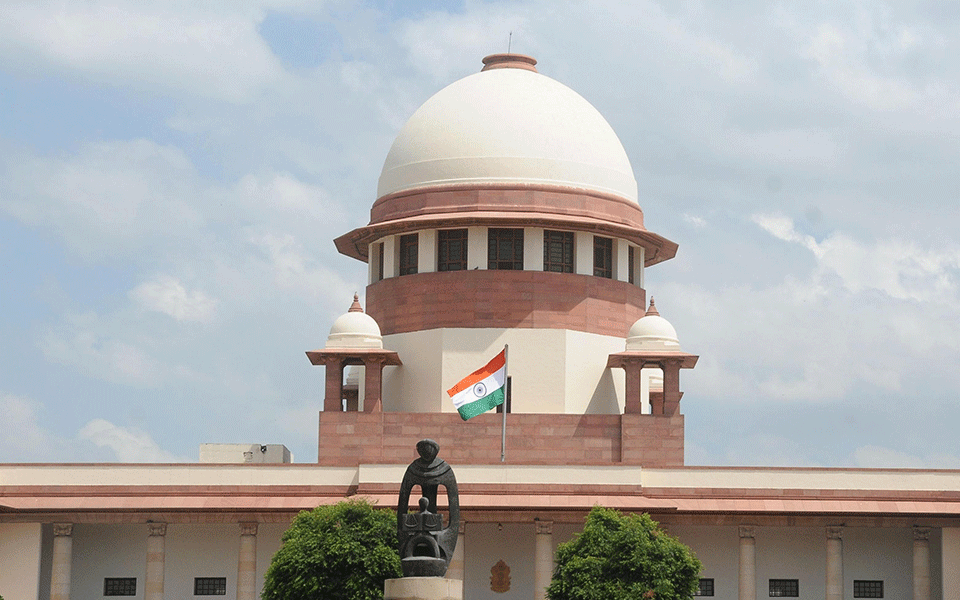
New Delhi, Sep 17 : The Supreme Court on Monday said it will examine the veracity of material gathered by police against five rights activists arrested on charges of links with the outlawed Communist Party of India-Maoist.
Ordering the matter to be heard on Wednesday, a bench of Chief Justice Dipak Misra and Justices A.M. Khanwilkar and D.Y. Chandrachud said: "First of all, we must look into the material. We will see the record, what are the allegations, and see if there is something real. We will quash if it is a cooked-up or clumsy story."
The court told the senior counsel Abhishek Manu Singhvi: "We are protecting your liberty... your formulation on law, we will hear you on Wednesday."
In the course of the hearing, Chief Justice Misra said: "The best way to deal with it (is that) the interim order (of house arrest) will remain. All the cases will be transferred to one court."
However, this course of action was lost as the hearing took a different turn in the course of arguments by Singhvi.
The hearing saw the Centre opposing a plea by historian Romila Thapar and activist Maja Daruwala against the arrests by contending that Naxalism was not just a problem bedeviling one state but also other states in the country.
Citing the procedure and asserting that the matter be heard by a competent court, Additional Solicitor General Maninder Singh said that if it did not happen every matter may start coming to the top court.
Earlier, Additional Solicitor General Tushar Mehta, appearing for Maharashtra, told the court that he will show the material to demonstrate that the five accused -- Sudha Bhardwaj, Varavara Rao, Gautam Navlakha, Vernon Gonsalves, Arun Ferreira -- were arrested not for airing dissent but for "activities prejudicial to the interest of the State".
As the apex court said that it will examine the veracity of the material, Mehta said that five accused can't say thereafter that they have a (judicial) remedy.
"They can't have two remedies. Let them withdraw their respective pleas before different courts, they can't have two remedies."
Singhvi informed the court that nothing had happened in those petition, ever since the matter came before the top court and that hearings on them have been deferred.
Mehta reiterated his objection as to how could strangers -- Romila Thapar and Maja Daruwala -- petition the top court to challenge the arrests.
At this, CJI Misra said: "We are not concerned about the locus of the case. I have not even uttered these words."
Senior counsel Anand Grover asserted that "they (police) have not followed the procedure under the law".
Grover said that it was no more a case of strangers moving the court as two of the five accused have filed their affidavits in the court.
Pressing for an "independent and comprehensive inquiry", the petitioners' counsel Singhvi said that he wanted to show the court some of the shocking material relied upon by the Maharashtra Police to proceed against the five activists who were arrested on August 28.
The Chief Justice said they will have to move a separate petition for an independent probe.
Referring to two FIRs filed in the case (0 of 2018 and 4/2018), Singhvi said that a part of play by German playwright and poet Bertolt Brecht calling upon the people to rise for their rights -- that was used in Bhima-Koregaon event - is the foundation of an FIR.
He told the court about the volte face by the Maharashtra government, wherein in response to the first FIR (0 of 2018) they blamed activists of a right-wing outfit for violence on the peaceful Dalit procession at Bhima-Koregaon village but in the case of second FIR (4/2018) backtrack on it.
Singhvi said that after the Bhima-Koregoan violence on January 1, a committee had submitted its inquiry report. The Pune police did not accept it and later even disowned it.
Describing the evidence as "fabricated", Singhvi said that police had accused the five activist of receiving a letter from one Comrade Prakash, forgetting that he is lodged in jail after his conviction in a case.
Alleging that canard is being spread about the arrested activists, Singhvi said that in the 25 cases against poet Varavara Rao, he was either acquitted or the cases withdrawn or quashed.
In case of Vernon Gonsalves, he was acquitted in 17 of the 18 cases. In one case, an appeal is pending. Ferreira was acquitted in all 11 cases, the counsel said.
Let the Truth be known. If you read VB and like VB, please be a VB Supporter and Help us deliver the Truth to one and all.
CM Siddaramaiah alleges ‘criminal conspiracy’ in Sringeri recount, vows legal action
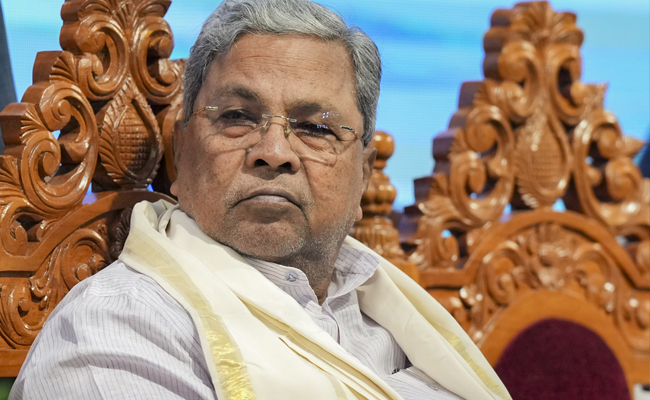
Bengaluru (PTI): Alleging a “criminal conspiracy” by BJP candidate D N Jeevaraj in the Sringeri Assembly poll recounting, Karnataka CM Siddaramaiah on Tuesday said the outcome was manipulated after valid postal ballot votes in favour of Congress leader T D Raje Gowda were tampered with during the recounting process.
Following a Karnataka High Court order on an election petition filed by Jeevaraj, challenging Raje Gowda’s election, the reverification and recounting were conducted on Saturday.
After the reverification and recount of postal ballots for the Sringeri Assembly constituency, votes polled in favour of Raje Gowda were reduced by 255, the returning officer said.
A report on the matter has been submitted to the Election Commission of India for further action, the officer added.
Congress leader Raje Gowda had won the 2023 Assembly polls from Sringeri by 201 votes, defeating his nearest rival Jeevaraj.
Addressing a press conference in Bengaluru, Siddaramaiah said the High Court had directed the recounting of postal ballots and that irregularities were noticed during the exercise conducted on May 2.
“This is a clear case of criminal conspiracy,” Siddaramaiah said, alleging that valid votes cast in favour of Raje Gowda were altered after being accepted by counting agents of all parties, including Congress, BJP, and JD(S).
He claimed that during the recounting of postal ballots, 255 votes were initially accepted as valid by all agents but were later tampered with by subordinate officials.
“There is a second mark on the votes polled in favour of Raje Gowda. They had accepted these as valid votes. Subsequently, another mark was made by officials. This is a clear case of criminal conspiracy,” he said.
When asked who was behind the alleged conspiracy, the CM replied, “It was hatched by Jeevaraj and others. It is planned.”
Siddaramaiah further alleged that the returning officer acted improperly by declaring the result despite the presence of an Election Commission observer during the recounting.
“Immediately after the counting, the returning officer announced the result. He should not have done so; this is against the law,” he said.
He pointed out that Raje Gowda had originally won by 201 votes, but after the recounting, the BJP candidate was declared the winner by 52 votes.
“The BJP has committed a criminal act of conspiracy. This is not vote chori but vote dacoity,” he alleged.
The CM said a police complaint had already been filed by Raje Gowda’s election agent, Sudhir Kumar, and emphasised the need for electoral integrity.
“We want transparency and free and fair elections. That is what our Constitution mandates,” he added.
Stating that the government would pursue legal remedies, Siddaramaiah said, “We are preparing an appeal challenging the returning officer’s announcement in a court of law.”
Responding to a separate query on elections in other states, the CM said there appeared to be an anti-incumbency factor in West Bengal, while results in Tamil Nadu were “surprising,” adding that Vijay’s party was emerging as the largest there.
Following the victory of party candidates in Bagalkote and Davanagere South, Siddaramaiah expressed confidence about future electoral prospects in Karnataka.
“Even in 2028, we will win the Assembly elections. We will come back,” the CM said.
Siddaramaiah added that he would order a forensic examination into the alleged tampering of postal ballots.