Will PM Modi have courage to fight from Kerala or Tamil Nadu, asks Shashi Tharoor
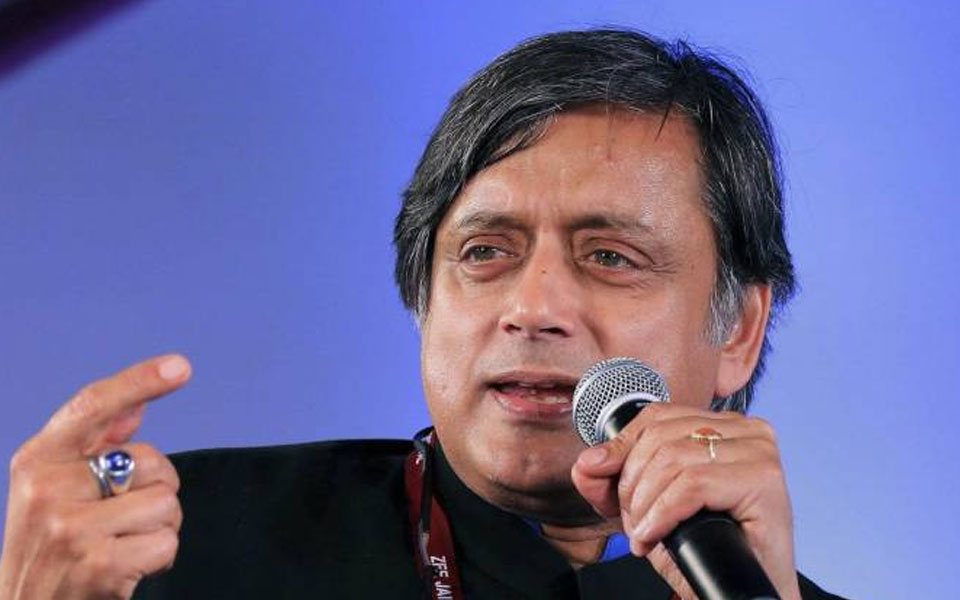
New Delhi: Rahul Gandhi's decision to contest from Wayanad shows he has the confidence to win from both north and south India, senior Congress leader Shashi Tharoor said Sunday and asked whether Prime Minister Narendra Modi would have the courage to fight from a seat in Kerala or Tamil Nadu.
With Gandhi contesting the Lok Sabha polls from Kerala's Wayanad constituency, there is palpable excitement across the southern states that the next prime minister could be elected from the the region, Tharoor told PTI in an interview.
Tharoor also slammed Modi and the BJP for suggesting that Gandhi chose Wayanad to "run away" from majority dominated areas, saying the ruling party has repeatedly resorted to peddling bigotry. It was dismaying that this was coming from the prime minister, he added.
"By reinforcing his role as a torchbearer for the BJP's bigotry, Mr Modi has disregarded the principled position that a prime minister of India must be a prime minister for all Indians," he told PTI from Thiruvananthapuram.
Addressing a rally in Wardha in Maharashtra, the prime minister had said the opposition party was "scared" to field its leaders from constituencies where the majority dominates.
Tharoor claimed Gandhi's decision to contest from Wayanad comes at a time of "unprecedented strain" on the spirit of cooperative federalism that has held the country together since its Independence in 1947.
Under the BJP-led Centre, he alleged, relations between the southern states and the federal government have "steadily deteriorated" over a number of issues such as threats to the economic security of the south as well as the future of its political representation.
In that context, Gandhi has made a bold statement of intent to suggest he can be the bridge that repairs the growing north-south divide within the country, Tharoor said, adding that it also signals that the Congress chief has the confidence to win elections in both the north and the south.
"Can Narendra Modi make such a claim? Would he have the courage to fight for a seat in Kerala or Tamil Nadu?" the former diplomat turned politician asked.
His remarks come after Gandhi, who is fighting the Lok Sabha elections from his traditional bastion Amethi in Uttar Pradesh, on Thursday also entered the poll fray in Wayanad by filing his nomination papers from the constituency in Kerala.
Tharoor, who himself is seeking a third straight Lok Sabha term from Thiruvanathapuram, cited the "incredibly warm and rousing reception" Gandhi received in Wayanad and said it was reflective of the genuine spirit of celebration that has seized the south.
Asked if the message of support for the people of south India that Gandhi wanted to convey by contesting from Wayanad was well received, Tharoor said, "I think it certainly has and today as a result of his decision there is a palpable excitement across the southern states that the next prime minister of the country could be elected from the south."
Quoting Gandhi's statement that "south India feels hostility from Narendra Modi" and he wanted to send a message of support to the people there, Tharoor said a sense of confidence and reassurance is spreading across the region, including in Kerala and neighbouring Karnataka and Tamil Nadu.
Asked if the move could create a 'Rahul wave' in the south, Tharoor said, "In Kerala, it has had an invigorating effect among our workers particularly those working on the ground and we are already seeing a ripple effect of this 'wave' spreading across neighbouring Karnataka and Tamil Nadu.
" arguably, the implications of his decision have not just been prompted by a strategic choice to energise the Congress workers, but by a larger sense of duty and commitment," the former Union minister added.
Discussing the BJP's criticism of the move and the PM remarks at the Wardha rally, Tharoor said for the country to have a prime minister with such "well documented and blatant disregard for minorities" is one of the "greatest tragedies" of the five years of the present ruling dispensation.
It is also a severe blemish" on the record of the illustrious men and women who have held the post before him, he said.
"But for all this bigotry, the BJP has still not managed to open their account in Kerala and their chauvinistic ideals have been repeatedly rejected by the people of the state," the 63-year-old leader said.
According to him, Kerala's educated and inclusive electorate is once again going to offer "the same boot" to the BJP's hopes in the state.
Tharoor asserted the Congress chief will be one of the rare leaders in the country who enjoys a clear and demonstrated popularity in both the south and the north if he wins from both Amethi and Wayanad.
And, most important, the south will be galvanised by the fact that its concerns are unlikely to be ignored by such a leader, one who will walk into Parliament on the back of their support," he said.
Asked if Gandhi's fighting from south also boost his credentials as a prospective prime minister, Tharoor answered in the affirmative.
Gandhi's decision to contest from the south is part of a larger outreach to the southern states and to demonstrate his electability among the voters of the south, he said. At the same time, the Congress president is also reiterating the party's historic commitment towards an inclusive India, the author-politician said.
Let the Truth be known. If you read VB and like VB, please be a VB Supporter and Help us deliver the Truth to one and all.
EC role, Hindu vote consolidation among factors for BJP win in Bengal polls: J-K CM Omar
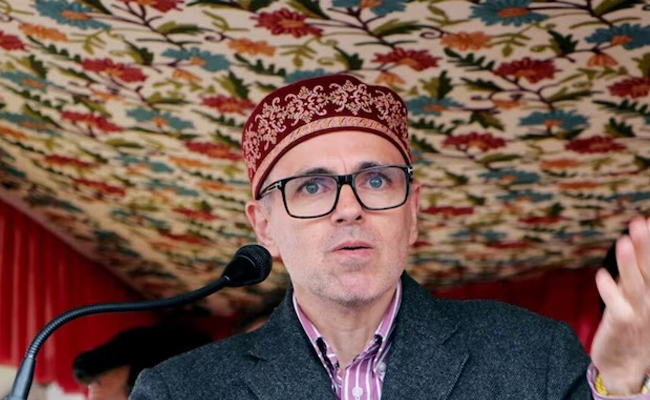
Srinagar (PTI): Jammu and Kashmir Chief Minister Omar Abdullah on Tuesday attributed the BJP's West Bengal win to a "significant role" played by the Election Commission (EC), alongside a consolidation of Hindu votes and a fractured minority mandate.
Abdullah also said the INDIA bloc needs to define its role in the political landscape of the country and make it clear whether the opposition alliance was limited to the parliamentary elections or extended to the state elections as well.
Talking to PTI Videos, Abdullah hinted that the EC has compromised its neutrality by conducting the Special Intensive Revision (SIR) in West Bengal and linked it to the BJP's gains in the state, claiming large-scale deletion of legitimate voters.
On the performance of the BJP in the just concluded assembly elections, Abdullah said the saffron party has almost nothing to show in southern states.
"So then you look at West Bengal and Assam. Yes, the BJP improved its tally in Assam. There are various reasons for that. You know as well as I do, what those are. West Bengal, I think we need to look at the results very carefully," he said.
"The easiest explanation for the West Bengal result is the serious curtailing of voter list," Abdullah said.
"Voters found their names deleted. People who served in uniform and fought for this country on the borders, who were considered Indian citizens all their lives, were suddenly held to a higher standard and not allowed to vote. Something is not right," he said.
While alleging that the EC played a "significant part" in the results, the chief minister admitted the outcome was multifaceted and noted a consolidation of over 60 per cent of the Hindu vote towards the BJP and a "significant fracture" in the minority vote, particularly in seats where Muslims constitute over 50 per cent of the population.
"There is no doubt that the role of the Election Commission played a significant part in the results but we will also have to look at the other factors," he said.
He said the results of West Bengal cannot be compared to those in other states. "The situation was unique to West Bengal. The SIR that was done, the way in which the voter lists were changed, the sort of minute scrutiny that the Election Commission subjected West Bengal to, the role of the central investigative agencies.
"All of these are situations that at least in recent electoral history of India are unique to West Bengal. So to suggest that we can learn lessons from West Bengal and implement them in other parts of the country, I think would not be correct," he said.
Abdullah had recently said that if the West Bengal results throw a surprise, the role of EC will come under scrutiny.
However, during Tuesday's interview, the chief minister said he still maintains that electronic voting machines (EVMs) do not lead to vote theft.
"What we saw in West Bengal...I know there are a lot of people who believe that the EVMs themselves are flawed. I am not a proponent of that conspiracy theory.
"But I do believe that the Election Commission has done itself no favours in the way in which it has gone about both the process of delimitation and the process of finalisation of electoral rolls," he said and cited the example of delimitation exercise in Jammu and Kashmir or Assam.
"These are clear examples of how the process was done to benefit one party or in the case of Jammu and Kashmir, one party and its allies. And the results speak for themselves. You created seven new seats in Jammu and Kashmir and out of those six seats were won by the BJP. You redrew assembly constituencies to benefit one particular party or its allies. And the same is true for West Bengal as well," he said.
Referring to the INIDA bloc, he said the election results were no new message for the alliance.
"We need to decide what the INDIA bloc is for. Is it only for Parliament or for state elections as well?" he asked.
"What happened in West Bengal is unfortunate. The Congress and TMC fought against each other. Now the Congress agrees with Mamata Banerjee that 100 seats were stolen, but the fact is they fought each other," he said.
Despite the friction, Abdullah reaffirmed the "pre-eminent position" of the Congress within the opposition alliance, dismissing the idea of any other party assuming the mantle.
"The Congress is the only party other than the BJP with a pan-India presence. All of us acknowledge this," he stated.
"To suggest someone else can assume a leadership role would be incorrect. Kharge Sahib is the president of the Congress, and by virtue of that, he assumes leadership of the INDIA bloc meetings. That is the way it should be," the chief minister said.
Abdullah said any 'Common Minimum Programme' would depend on whether the opposition alliance decides to fight state assembly elections collectively, noting that he would share his specific views with the bloc internally rather than through the media.