With world’s 4th largest rail network, India flags off first Railway University
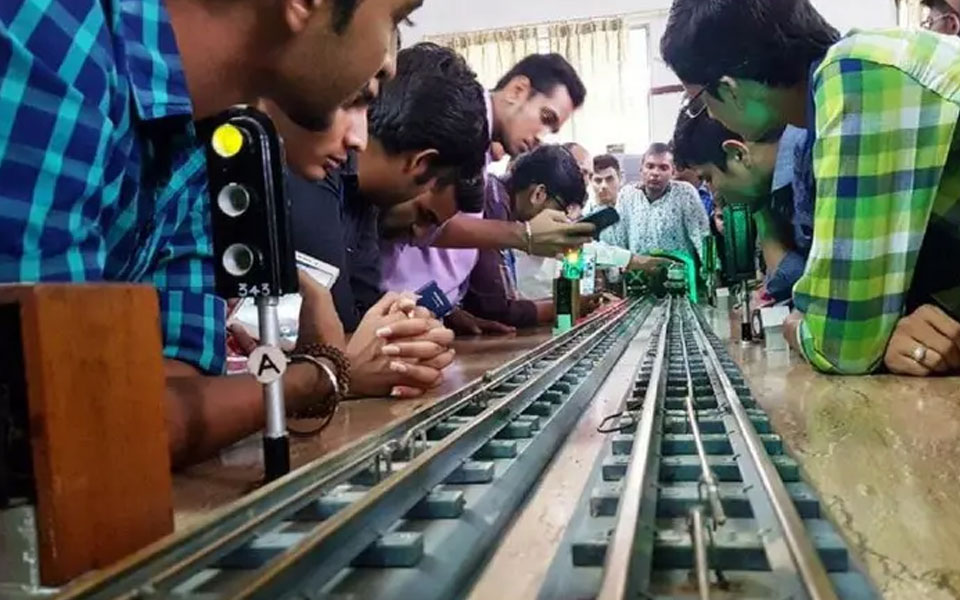
New Delhi, Dec 31: India is now home to its first Railway University, the National Rail and Transportation Institute (NRTI), based in Vadodara, Gujarat.
Formally dedicated to the nation the university offers multi-disciplinary education, research and training with a spotlight exclusively on the transportation sector. The NRTI is specifically established to create a resource pool of best-in-class professionals for the transportation sector, especially the railways.
According to Piyush Goyal, Minister of Railways and Coal, government of India, “Indian Railways has embarked on a transformational journey through the introduction of new trains, high speed trains, dedicated freight corridors, modern stations, and other technological advancements”.
Goyal says the modernization of Indian Railways will therefore require a modern approach to employment and training.
“The NRTI will contribute to boosting the economy through skilling of manpower, fostering innovative entrepreneurship, and promoting efficiency in movement of people and goods. Additionally, it will also help contribute to other flagship programs such as Make in India, Skill India and Start Up India,” says Goyal.
Largest rail network globally
Currently the world’s seventh largest commercial employer with over 1.3 million employees, Indian Railways has emerged as the fourth largest rail network globally.
Boasting about 115,000 km of track length across about 7,500 stations, Indian Railways transports more than a billion tons of freight traffic per year and carries 8.4 billion passengers every year. Given the massive size of Indian Railways, coupled with its growth trajectory in the context of needs, a Railway University is but a necessity.
Recognized by the University Grants Commission as a ‘Deemed-to-be-University’ the National Rail and Transportation Institute will pave the way to innovation and promoting greater engagement with the academic community in Railways.
It is the first-of-its-kind university with a vision to develop a cadre of young graduates who are empowered problem-solvers with an actionable understanding of the transportation ecosystem.
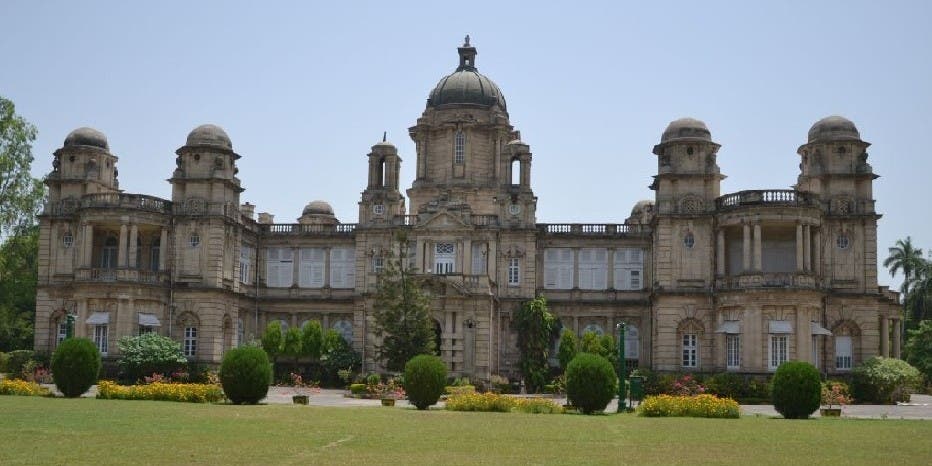
The National Academy of Indian Railways palace houses the Railway University. (Supplied)
Ashwani Lohani, the first Chancellor of the National Rail and Transportation Institute, in a statement observed, “With a vision to be world-class right from its inception, NRTI has incorporated the latest experiential teaching methodology, a holistic industry-integrated curriculum, high-quality faculty and student-centric practices that are comparable to the best around the world”.
“In a unique first, Indian Railways and associated establishments will open their facilities and infrastructure to the students and faculty of NRTI as live labs where they can learn and gain live experience. The Institute has also forged academic partnerships with some of the top global universities which will provide opportunities to the students and faculty of NRTI for exchange, joint research and learning.”
E. Sreedharan, popularly known as “Metro Man” of India, visited NRTI recently and offered his advice.
Courses for the maiden academic year
For the inaugural academic year, which commenced in September 2018, the University offers only two courses – BBA in Transportation Management which is a specialized program focused on management practices in the context of the transportation sector and BSc in Transportation Technology highlighting on technology and its application in the field of transportation.
The NRTI is focused on developing global and national partnerships with top universities and organizations from across the world. This will enable access to the latest pedagogy and program design, and prevailing transportation related domain knowledge, innovations and research developments.
NRTI has adopted an interdisciplinary approach for research of transport systems – it is bringing together academicians, scientists and engineers from various backgrounds, and plans to leverage its academic and industry partnerships and collaborations.
First batch into first semester
The first batch of 103 students from 20 states in two fully-residential undergraduate courses is already into first semester at the 55-acre lush campus which houses the Pratap Vilas Palace (Vadodara) built in 1914 AD and originally belonged to the Gaekwads of Vadodara.
The palace is home to National Academy of Indian Railways, which functions as the apex training institute for the officers of all departments of Indian Railways in general and Accounts, Personnel, Stores and Medical departments in particular. The campus resonates with the calls of peacocks and migratory birds in its verdant environs.
As part of upcoming plans it will begin the Master’s program from the 2019-20 academic year onwards. NRTI intends to have five schools offering programs across Engineering, Management, Law and Public policy, Humanities, Planning and Design domains.
Courtesy: english.alarabiya.net
Let the Truth be known. If you read VB and like VB, please be a VB Supporter and Help us deliver the Truth to one and all.
AIITA welcomes Karnataka’s ban on obscene songs in school events
Bhatkal: The Karnataka unit of the All India Ideal Teachers Association (AIITA) has welcomed the Karnataka government’s decision to strictly ban school children from dancing to obscene songs during educational and cultural programmes in government, aided, and private schools across the state.
AIITA Karnataka State President M. R. Manvi congratulated the government for taking what he termed an important step to preserve the sanctity of education.
“Such decisions to safeguard the dignity of school children and uphold the values of education are the need of the hour. This rule should not be limited to government schools alone but must be strictly implemented in all private educational institutions as well,” he said.
He further urged the government to address other concerns within school programmes.
“The government should not only prohibit obscene dances in the name of school anniversaries, but also ensure that plays and dialogues that incite religious hatred are avoided. Schools should be centres of harmony, not platforms for spreading hatred,” he added.
According to a recent circular issued by the Department of School Education and Literacy, obscene dances are adversely affecting the mental health and moral values of students.
In this regard, schools have been advised to use songs that promote nationalism, positive thinking, the greatness of Kannada culture, and value-based traditions instead of inappropriate content during programmes.
The circular also emphasises that students should be dressed in decent attire.
AIITA also backed the department’s warning that disciplinary action would be taken against head teachers if such guidelines are violated. The association has further demanded that district Deputy Directors of Public Instruction strictly monitor the implementation of these rules.