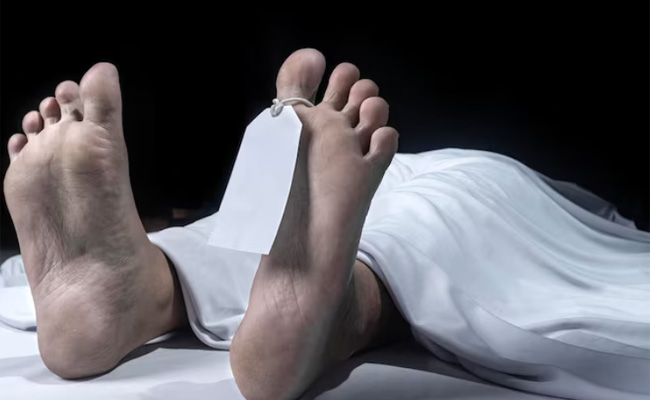
Woman medico murder: Docs continue to stay away from duty in Kerala
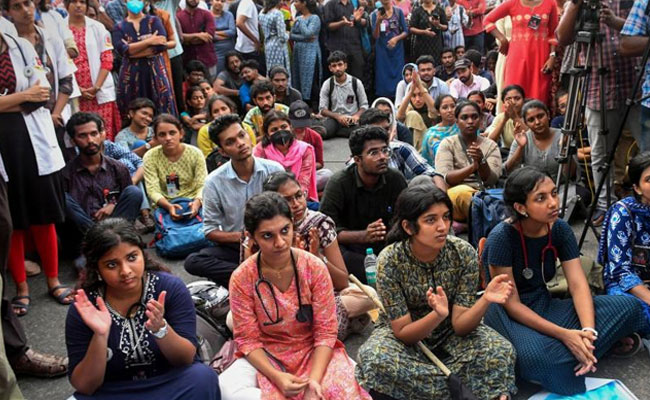
Thiruvananthapuram (PTI): Intensifying their protests against the murder of a young doctor by a drug addict in Kollam district, Doctors on Thursday demanded a new legislation for the protection of hospitals with immediate effect.
Majority of doctors have not reported to work in hospitals across the state for the last 24 hours as various organisations including the Indian Medical Association (IMA) have called for the protest.
The Kerala Government Medical Officers' Association (KGMO) also announced a strike today.
Intensive Care Units ( ICUs) and casualties would be exempted from the stir, but the Out Patient (OP) services in the state hospitals would be affected due to the agitation, the outfits said.
The protesting outfits also wanted the government to declare the hospitals as special protection zones in the wake of increasing incidents of attacks on doctors on duty.
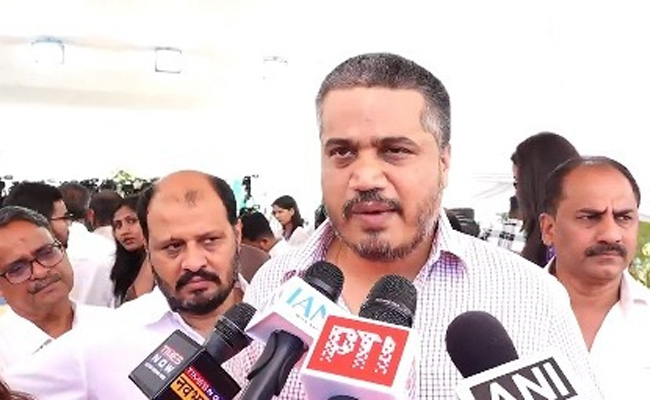
Meanwhile, hundreds of people from various walks of life including ministers, MLAs paid their last respects to the deceased doctor, Vandana Das at her residence in Muttuchira in Kottayam, where the mortal remains are kept for public homage.
State Health Minister Veena George and Leader of Opposition V D Satheesan was among those who paid respects.
The 23-year-old doctor was stabbed to death on Wednesday by a man whose leg wound she was dressing at a hospital in Kollam district where he was brought after an alleged fight with his family members.
Dismayed over the killing of the young doctor, the Kerala High Court said the incident was an outcome of police and government failure and sought a report regarding the incident from the state police chief who was also asked to be present virtually when the matter is taken up on Thursday morning.
Let the Truth be known. If you read VB and like VB, please be a VB Supporter and Help us deliver the Truth to one and all.
CCTVs in police stations: SC asks amicus to convene meeting on utilisation of funds
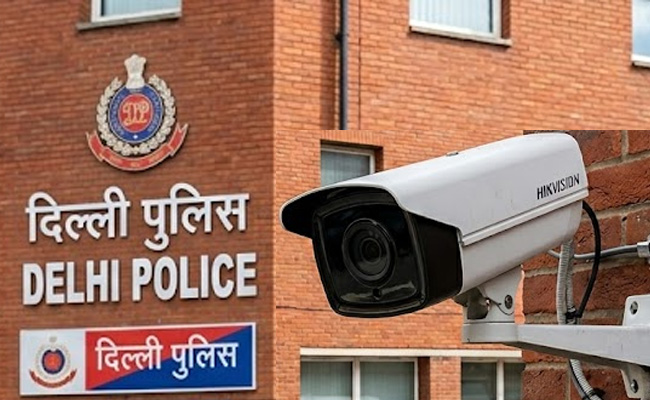
New Delhi (PTI): The Supreme Court on Tuesday said that a meeting be convened on May 6 to deliberate on the aspect of utilisation of funds by the states on installation of CCTVs in police stations across the country.
A bench of Justices Vikram Nath and Sandeep Mehta asked senior advocate Siddhartha Dave, who is assisting it as an amicus curiae in a suo motu matter concerning lack of functional CCTVs in police stations, to hold a meeting on May 6 with the Centre, all states and Union Territories.
"We are of the view that a meeting be convened by the amicus, as done earlier, in which the home secretary of the central government or his nominee not below the rank of joint or additional secretary and the home secretary of states/Union Territories will participate," the bench said.
The issue cropped up after the amicus flagged the aspect of utilisation of funds by the states.
Dave told the bench that in UTs, the Centre gives 100 percent funds while in hilly states, the central government gives 90 percent funding.
He said in remaining states, the Centre gives 60 percent while the rest 40 percent funding is by the respective state.
"Why don't we get responses of the states only on utilisation of funds?" the bench said.
The top court suggested that the amicus can convene a meeting with the Centre, states and UTs on the issue.
It posted the matter for hearing on May 13 and said that a report be submitted before it.
On April 7, the Centre told the top court that all issues concerning installation of CCTVs in police stations would be sorted out within two weeks.
Attorney General R Venkataramani had told the bench that he was taking stock of the issue and a lot of things were happening.
On February 26, the apex court directed the Centre and others to participate in a meeting to deliberate upon the feasibility, modalities and implementation framework of the issues, including creation of a centralised dashboard and standardisation of CCTV infrastructure in police stations.
The top court had earlier directed registration of a suo motu case over the lack of functional CCTVs in police stations after taking cognisance of a media report.
The apex court had in 2018 ordered the installation of CCTV cameras across police stations to check human rights abuses.
In December 2020, the top court directed the Centre to install CCTV cameras and recording equipment at the offices of investigating agencies, including the Central Bureau of Investigation (CBI), the Enforcement Directorate (ED) and the National Investigation Agency (NIA).
It said that states and UTs should ensure that CCTV cameras were installed at every police station, at all entry and exit points, main gate, lock-ups, corridors, lobby and reception, as well as in areas outside the lock-up rooms so that no part was left uncovered.
The top court said that CCTV systems must be equipped with night vision and have audio as well as video footage.
The court made it mandatory for the Centre, states and the UTs to purchase such systems which allow storage of data for at least one year.