Woman reaches Taj Mahal with kanwar, tries to offer 'Gangajal'
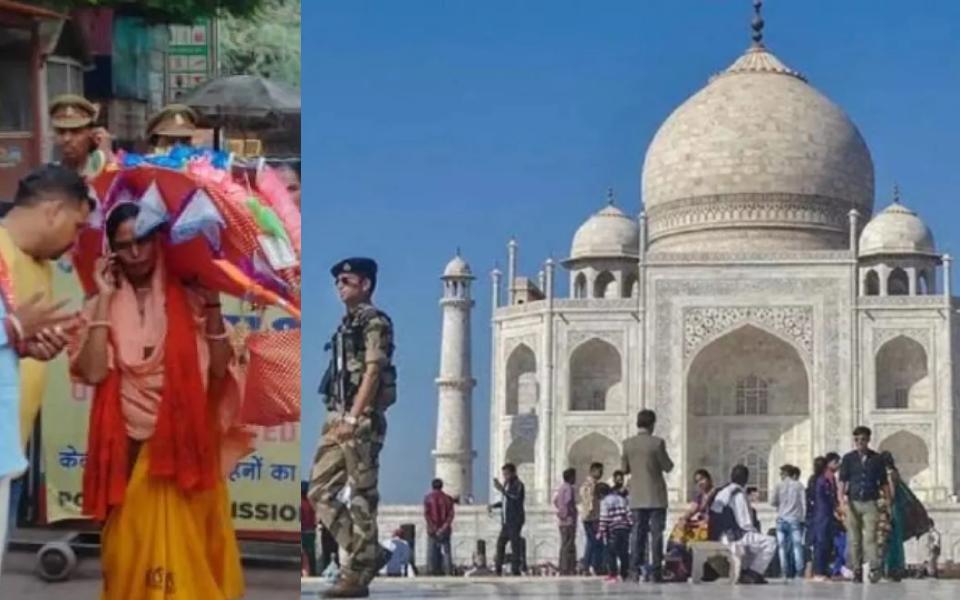
Agra, Jul 29: A member of a right-wing group carrying kanwar on her shoulders tried to enter the Taj Mahal to offer 'Gangajal' on Monday, with the group claiming that the monument was a Lord Shiva temple called 'Tejo Mahalaya'.
However, she was stopped by the policemen of 'Taj Suraksha' deployed at the barrier of the west gate of the Taj Mahal.
She was stopped at the barrier of the west gate and was not able to enter the Taj Mahal, Assistant Commissioner of Police (ACP), Taj Suraksha, Syed Areeb Ahmad told PTI.
"After some time, she decided on her own to offer the 'Gangajal' at the Rajeshwar temple," Ahmad added.
Meenu Rathore, who claimed herself to be the district president of the Akhil Bharat Hindu Mahasabha in Agra, insisted police officials to allow her to offer the 'Gangajal' in "Tejo Mahalaya".
She further claimed that Lord Shiva came in her dreams and asked her to offer the 'Gangajal' at the monument.
"I came to Tejo Mahalaya to offer the 'Gangajal'. Lord Shiv called me in my dreams and I brought kanwar to offer at Tejo Mahalaya. But, they (policemen) have stopped me from going ahead," Rathore said.
Sanjay Jaat, spokesperson of the Akhil Bharat Hindu Mahasabha, said, "It is our right to offer the 'Ganga Jal' in Taj Mahal as Taj Mahal is 'Tejo Mahalaya', a temple of Lord Shiva. She brought kanwar from Soron ji in Kasganj and reached Agra after two days."
Let the Truth be known. If you read VB and like VB, please be a VB Supporter and Help us deliver the Truth to one and all.
Centre launches national childhood diabetes screening, treatment framework
New Delhi (PTI): The Union Health Ministry on Sunday released a guidance document providing a framework for screening, diagnosis, treatment and long-term management of childhood diabetes.
According to the ministry, the document, for the first time, establishes a structured and standardised national framework, positioning India among a select group of countries that have integrated childhood diabetes care into the public health system.
The "Guidance Document on Diabetes Mellitus in Children" was released at the National Summit on Best Practices in Public Healthcare Service Delivery, concluded on May 1-2.
According to a statement by the ministry, the framework aims to ensure universal screening of all children from birth to 18 years through community and school-based platforms for early identification of diabetes.
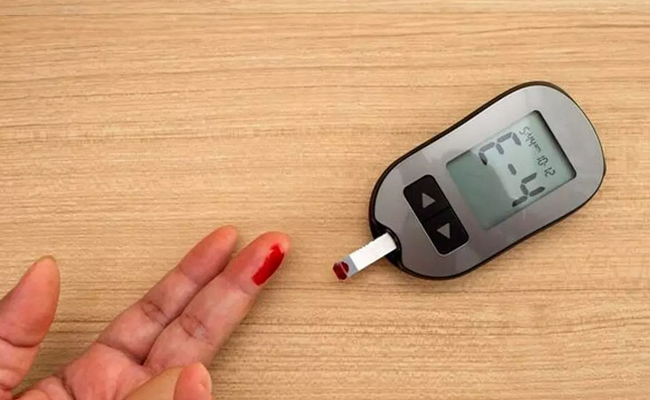
Suspected cases will undergo immediate blood glucose testing and be referred to district-level health facilities for confirmatory diagnosis and treatment, it said.
A key feature of the initiative is the provision of a comprehensive free-of-cost care package at public health facilities, including screening, diagnostic services, lifelong insulin therapy, glucometers, test strips and regular follow-up care.
The initiative seeks to reduce the financial burden on families and ensure uninterrupted treatment for children diagnosed with diabetes.
The document also lays down an integrated continuum of care linking community-level screening with district hospital-based management and advanced care at medical colleges to ensure seamless follow-up and treatment.
To strengthen early detection, the guidance promotes the "4Ts" awareness framework -- Toilet, Thirsty, Tired and Thinner -- to help parents, teachers and caregivers recognise early warning signs of type 1 Diabetes.
Besides clinical protocols, the document focuses on family and caregiver empowerment through structured training on insulin administration, blood glucose monitoring, emergency response and daily disease management.
The statement stated the initiative is expected to reduce mortality through early detection, prevent complications and improve the quality of life of affected children while strengthening the public health system's capacity to manage non-communicable diseases among children.