Women to be recruited in military police crop, says Def Min terming the decision as 'historic'
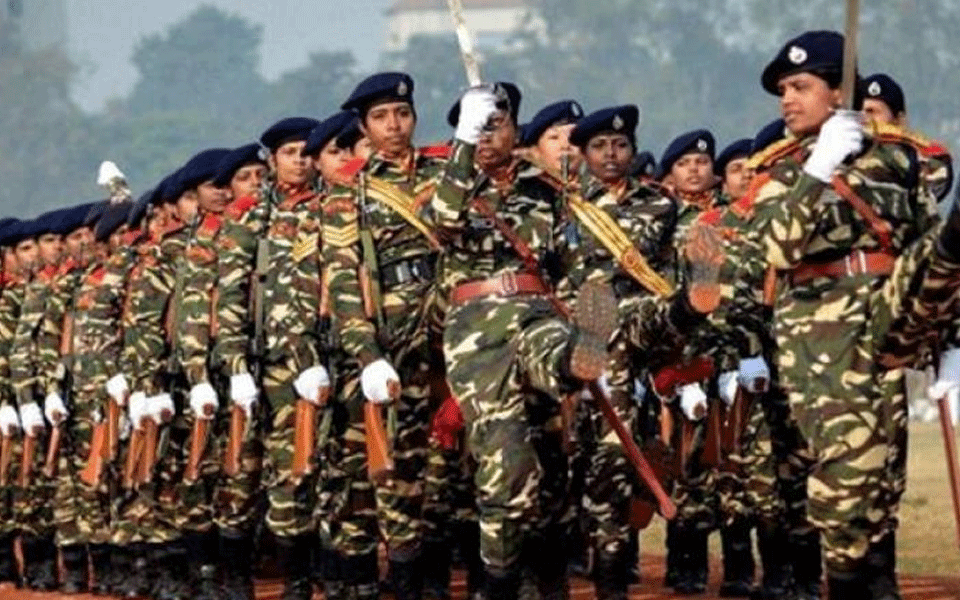
New Delhi, Jan 18: Defence Minister Nirmala Sitharaman Friday said the government has taken a "historic" decision to induct women in the military police with an aim to enhance their representation in the armed forces.
Women will be inducted in a graded manner to eventually comprise 20 per cent of total Corps of Military Police, the official handle of the defence minister tweeted.
Their role would range from probing rape and molestation cases to assisting the Army wherever required.
"To improve representation of women in our armed forces Smt @nsitharaman takes a historic decision to induct women for the first time in PBOR (Personnel Below Officer Rank) role in Corps of Military Police
"The women will be inducted in graded manner to eventually comprise 20% of total Corps of Military Police," the handle tweeted.
Last year, Army Chief Gen Bipin Rawat said the process to allow women in combat role, currently an exclusive domain of men, was moving fast and initially women will be recruited for positions in military police.
Accordingly, the Army chalked out induction of approximately 800 women in military police with a yearly intake of 52 personnel per year.
Currently, women are allowed in select areas such as medical, legal, educational, signals and engineering wings of the Army.
The role of the military police includes policing cantonments and Army establishments, preventing breach of rules and regulations by soldiers, maintaining movement of soldiers as well as logistics during peace and war, handling prisoners of war and extending aid to civil police whenever required.
Earlier this month, in a written response to a question in the Rajya Sabha, Minister of State in the Defence Ministry Subhash Bhamre the Army has 3.80 per cent of its workforce as women, the Air Force has 13.09 per cent and the Navy six per cent.
Let the Truth be known. If you read VB and like VB, please be a VB Supporter and Help us deliver the Truth to one and all.
Rickelton's ton in vain as SRH beat MI by 6 wickets
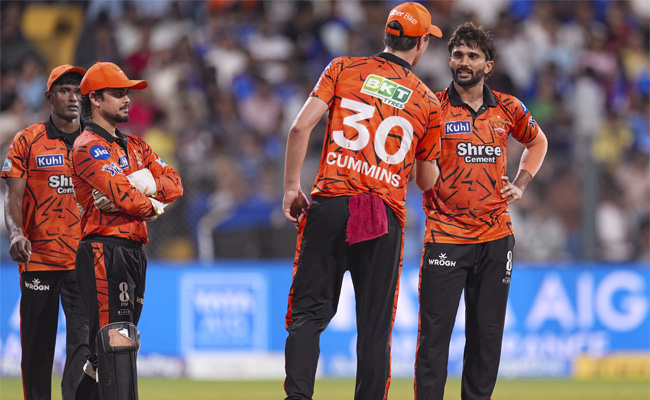
Mumbai (PTI): Ryan Rickelton's whirlwind unbeaten ton was overshadowed by Heinrich Klaasen's unbeaten 65 as Sunrisers Hyderabad defeated Mumbai Indians by six wickets in an IPL match here on Wednesday.
Chasing an imposing 244-run target, Travis Head (76 off 30) and Abhishek Sharma (45 off 24) shared 129 runs for the opening wicket to set the platform for SRH.
Klaasen (65 not out off 30 balls) then displayed his all-round hitting abilities to guide SRH home with the help of Nitish Kumar Reddy (21) and Salil Arora (30 not out off 10) in 18.4 overs.
Earlier, Rickelton's knock powered MI to 243 for five.
MI rode on a 93-run stand between Rickelton (123 not out off 55 balls) and Will Jacks (46 off 22) in 7.1 overs for the opening stand to power the side.
MI skipper Hardik Pandya scored a valuable 31 off 15 balls before being dismissed.
Praful Hinge (2/54), Eshan Malinga (1/29), Sakib Hasan (1/39) and Nitish Kumar Reddy (1/31) were the wicket-takers for SRH.
Brief Scores:
Mumbai Indian: 243 for 5 in 20 overs (Ryan Rickelton 123 not out; Praful Hinge 2/54).
Sunrisers Hyderabad: 249 for 4 in 18.4 overs (Travis Head 76, Heinrich Klaasen 65 not out; AM Ghazanfar 2/51).