Women's reservation must be implemented without being made contingent on delimitation: CM
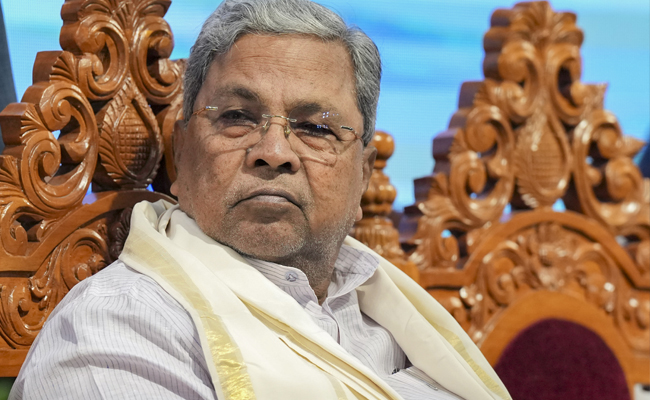
Bengaluru (PTI): Karnataka Chief Minister Siddaramaiah on Wednesday said that the Women's Reservation Bill is a long-overdue reform that must be implemented immediately within the existing framework, without being made contingent on delimitation.
Terming the delimitation as the political re-engineering at the cost of southern states, Deputy Chief Minister D K Shivakumar said that these states will stand united, speak in one voice, and defend the true spirit of federalism.
The leaders' statements came a day before the Constitutional Amendment Bill with provisions on women's reservation implementation and delimitation was tabled in the Lok Sabha.
"You are right in highlighting the larger implications of the proposed delimitation approach and the concerns it raises for southern states. We wholeheartedly support the Women's Reservation Bill - it is a long-overdue reform that must be implemented immediately within the existing framework, without being made contingent on delimitation," Siddaramaiah said in a post on 'X'.
He was replying to his Telangana counterpart A Revanth Reddy's post on 'X' with a letter, urging the former to unitedly resist moves to push a pro rata model to increase Lok Sabha seats, which would be highly detrimental and inimical to the interests of southern states.
"Any exercise that reshapes political representation must be undertaken with utmost care. The Union Government must engage all states in a transparent and consultative process, and ensure that fairness, federal balance, and consensus guide this critical decision," Siddaramaiah added.
Shivakumar said that this is not a delimitation, but political re-engineering "at the cost of southern states".
"The proposal to increase Lok Sabha seats from 543 to 850 will systematically reduce the voice of the South, while rewarding unchecked population growth elsewhere. This is nothing but punishing progress and good governance," he posted on 'X'.
Clarifying that Congress fully supports women's reservation and in fact, it was party's top leader Sonia Gandhi's vision and commitment that brought this dream to the national agenda, the Deputy CM said, "We demand that it be implemented without linking it to delimitation or seat expansion."
"I urge the Union Govt to not hide behind women's empowerment to push a deely unfair political agenda. Rushing such a massive restructuring of India's democracy during elections, without transparency or consultation, is deeply suspicious and unacceptable," he said.
Asserting that India's strength lies in balance not domination, and in fairness, not manipulation, Shivakumar said, "The Southern states will stand united, speak in one voice, and defend the true spirit of federalism."
"We will not allow the South to be politically marginalised."
Let the Truth be known. If you read VB and like VB, please be a VB Supporter and Help us deliver the Truth to one and all.
How can govt move amendments to women law before notifying principal Act: Opposition in LS
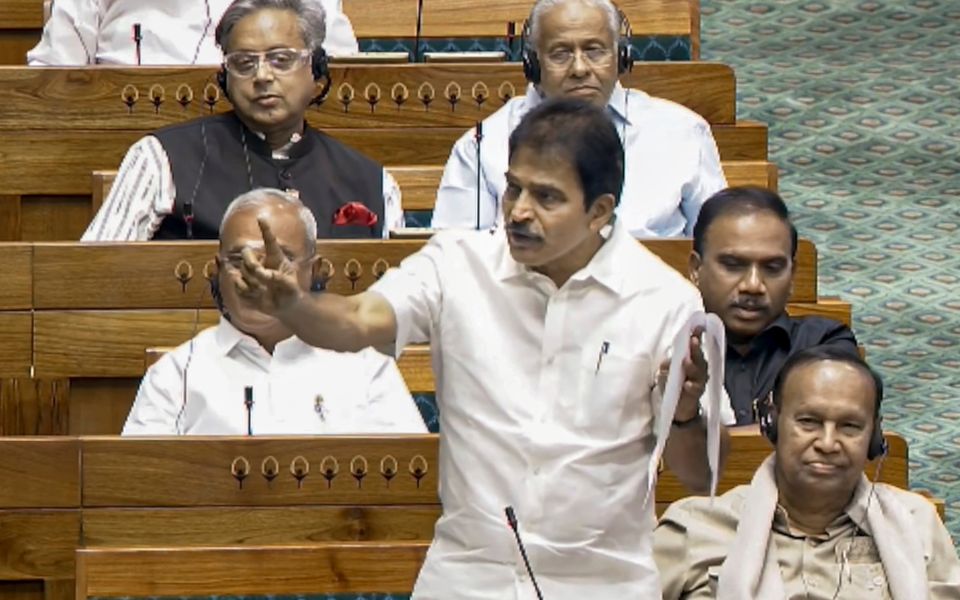
New Delhi (PTI): Opposition members in the Lok Sabha on Friday questioned the government's decision to move a bill to amend the 2023 women quota law before bringing the principal Act into force.
Soon after laying of parliamentary papers, K C Venugopal rose to point out a law ministry notification issued last night around 10 pm to bring into force the 2023 women's reservation law with effect from April 16, much after a bill to amend the Act was introduced and discussed in the House.
DMK's Kanimozhi also flagged the issue, wondering the logic in discussing an amendment after notifying the principal Act.
Opposition members sought a clarification from law minister Arjun Ram Meghwal who was present in the Lok Sabha.
"The Nari Shakti Vandan Adhiniyam passed in September 2023 has come into force with being published in the Gazette only at 9.55 pm last night.
"It is shocking that the government brought amendments to a Constitutional provision that was not even published in the gazette! This shows the government’s unprepared and lackadaisical approach to serious lawmaking," Venugopal later posted on X.
He said this is also yet another evidence that the treasury benches look at the Parliament as no more than a rubber stamp, not bothered about the procedures and protocol necessary for a fair legislative process.
An official has earlier explained that bringing the law into force was essential as its proposed amendment will not have come into effect without that.
The constitution amendment Bill became a law but did not become part of the Constitution as the government did not bring it into force.
If a law does not come into force, how can its proposed amendment be implemented. Hence, it was brought into force with effect from April 16, the official explained.