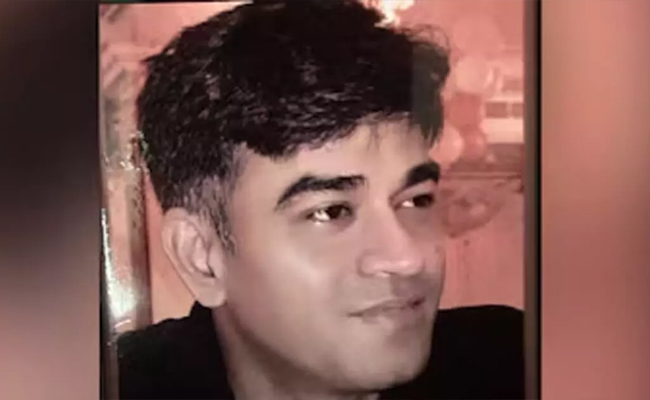
Won't name successor in my lifetime: Mayawati removes nephew Akash from key BSP posts
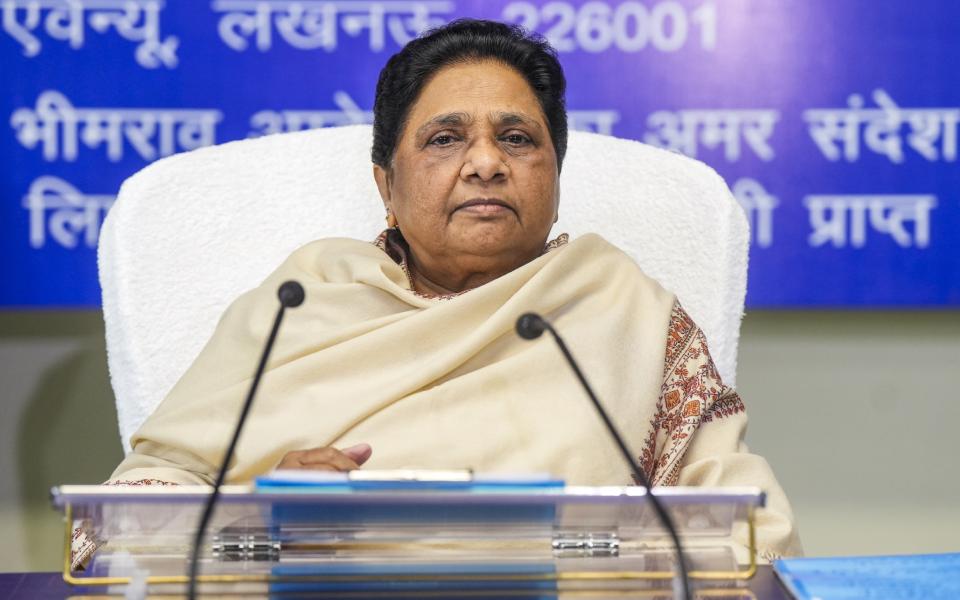
Lucknow, Mar 2 (PTI): BSP chief Mayawati on Sunday removed her nephew Akash Anand from all party posts, appointing his father Anand Kumar and Rajya Sabha MP Ramji Gautam as national coordinators in his place, and said she would not name a successor in her lifetime.
The party is supreme and relations can come later, said the former Uttar Pradesh chief minister, who had sacked Akash Anand last year only to later reinstate him and appoint him her political successor.
Removing Akash Anand from all party posts, Mayawati hit out at his father-in-law Ashok Siddharth and said he had divided the Bahujan Samaj Party (BSP) into two groups and tried to weaken it, according to a party statement.
He also ruined the political career of Akash Anand, she said.
Mayawati last month expelled Siddharth from the BSP on charges of factionalism and anti-party activities.
She said she would not name a successor in her lifetime.
The party and the movement are supreme and relations like brother, sister and their children come later, she added.
Mayawati appointed her brother Anand Kumar and Ramji Gautam as national coordinators to oversee party affairs across India.
Appreciating Anand Kumar, who is also the BSP's national vice-president, she said he always worked with devotion for the party.
"Be it paperwork, Income Tax, court issues, all are handled by Anand Kumar, who quit his government job. He also looked after (BSP founder) Kanshi Ram when he was ill," she said.
Anand Kumar decided to marry his children into non-political families so that no one tries to damage the party like Siddharth did, she said.
The meeting was held to strengthen the BSP at all levels, expand its base with all sections of society and address organisational shortcomings, the BSP said in a statement.
During the meeting, Mayawati underlined the need to counter rising inflation, poverty, unemployment and backwardness, and alleged that these were being ignored by the government.
She also criticised the budgets of both the central and the Uttar Pradesh governments, saying they were "unrealistic" and detached from ground realities.
Government policies have failed to improve the lives of millions of poor, labourers, Dalits and backward communities, she said.
"India continues to be a country of the poor despite being called a rich nation," she said.
Reiterating the BSP's commitment to upholding the ideals of BR Ambedkar, Mayawati said her party would continue to work for the uplift of marginalised communities, according to the statement.
The meeting also outlined preparations for the birth anniversary celebrations of Kanshi Ram on March 15.
Party workers from various regions will pay tributes at designated memorial sites, including the Kanshi Ram Memorial in Lucknow and the Dalit Prerna Sthal in Noida.
Targeting the Samajwadi Party (SP), Mayawati said the party faced a humiliating defeat in the Milkipur assembly bypoll even when the BSP did not contest the election and asked whom the SP would blame for its loss.
"The SP and the BJP are two sides of the same coin. Only the BSP can defeat the BJP and other casteist parties with its Ambedkarwadi policy," she said.
Let the Truth be known. If you read VB and like VB, please be a VB Supporter and Help us deliver the Truth to one and all.
Sujit Nair raises concerns over speculation of DMK-AIADMK understanding to block TVK
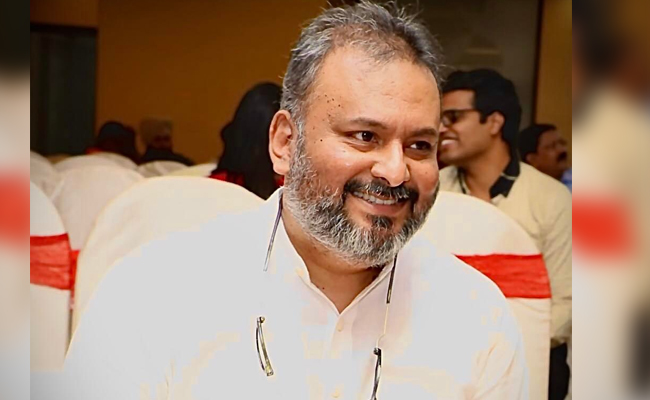
Chennai: Journalist and political commentator Sujit Nair has expressed concern over speculation that the Dravida Munnetra Kazhagam and the All India Anna Dravida Munnetra Kazhagam could explore a post-poll understanding to prevent Vijay-led Tamilaga Vettri Kazhagam from forming the government in Tamil Nadu.
In a social media post, Sujit Nair said the election verdict in Tamil Nadu reflected a clear public demand for political change and argued that the mandate should be respected irrespective of political preferences.
Referring to reports and political discussions surrounding a possible understanding between the DMK and AIADMK, he said he hoped such developments remained only speculative conversations and did not turn into reality.
Nair stated that if such an alliance were to take shape, it would raise serious questions about ideological politics in the country. He said TVK had emerged through a democratic electoral process and that the legitimacy to govern in a parliamentary democracy comes from the people’s verdict.
According to him, attempts to prevent an electoral winner from forming the government through unexpected political arrangements may be constitutionally valid, but many people could view them as politically opportunistic.
He further said that such a move could particularly affect the political image of the DMK, which has historically projected itself around ideology, social justice and opposition politics. Nair said that in ideological terms, the DMK appeared closer to TVK than to the AIADMK, and joining hands with its long-time political rival only to remain in power could weaken its broader political narrative.
He added that the same questions would apply to the AIADMK as well, as the party had spent decades positioning itself against the DMK and such an arrangement could create discomfort among its cadre and supporters.
Drawing a comparison with Maharashtra politics in 2019, Nair said he had expressed similar views when the Shiv Sena formed an alliance with the Indian National Congress and the Nationalist Congress Party after the Assembly elections.
He said post-poll alliances between long-standing political rivals often create a public perception that ideology and electoral mandates become secondary when political power equations come into play.
Nair also said such developments increase public cynicism towards politics and reinforce the belief among voters that ideology is often sidelined after elections.
He maintained that the Tamil Nadu verdict was emphatic and said respecting both the spirit and substance of the mandate was important for the credibility of democratic politics.