World Cup Final: Softer provision of UAPA invoked against arrested students: J-K Police
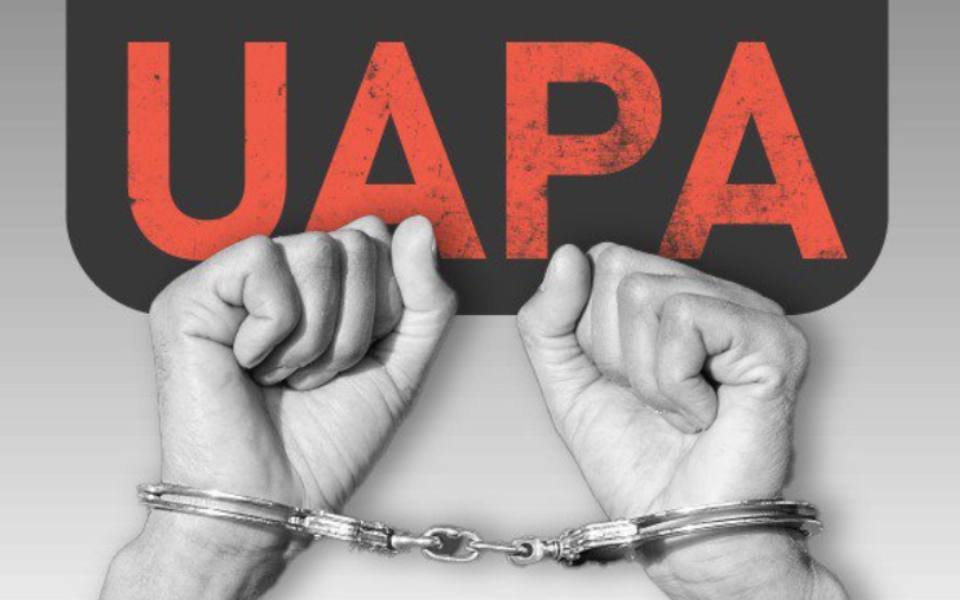
Srinagar, Nov 28: After it faced flak from a section of politicians, the Jammu and Kashmir Police on Tuesday defended booking under UAPA seven university students who had raised objectionable slogans after the Indian cricket team's in the World cup final, saying it had invoked a "softer provision" of the anti-terror law.
Several politicians, including the former J-K chief ministers Mehbooba Mufti and Omar Abdullah, have condemned the action by police, alleging that it will disaffect the youths with such an extreme punishment.
In a statement on Tuesday, police said that the boys have been booked under section 13 of Unlawful Activities Prevention Act, or UAPA, and added "in contrast to other provisions of the Act, it is a softer provision of the Act."
Section 13 of the UAPA deals with the inciting or advising of any unlawful activity and is punishable with seven years' jail.
The students have also been slapped with provisions of 505 and 506 which deal with public mischief and criminal intimidation of the Indian Penal Code, under which, if convicted, the jail term can go up to five years.
Police said the incident was not merely about raising pro-Pakistan slogans. "...these slogans, as has usually been the case with a select few bullies, were aired to intimidate those who disagreed and also to identify and vilify those who choose to keep a distance." The incident came on the back of separatist and terrorist networks, they said.
The statement also defended police action saying the youths' aim was neither about airing personal preference of a particular sporting team, nor about dissent or freedom of expression.
"It is about terrorising others who may be nourishing pro India feelings or anti Pakistan feelings or disagreeing. There were written complaints to evidence this," it statement said.
Police said the FIR was lodged on the basis of a written complaint and sections were invoked as per the contents of the complaint.
Flaying the police action, Abdullah said the move goes against the assurance given by Prime Minister Narendra Modi who had announced in 2021 that it was time to end 'Dilli ki duri' as well as 'Dil ki duri' with Jammu and Kashmir.
"I don't agree with what these students did. But having said that I also do not agree with the way police have handled this case. This will not decrease 'dil ki duri' as envisaged by the Prime Minister," Omar said, adding, police must remember their "softer version" would destroy the careers of the students.
PDP president Mehbooba Mufti condemned the police action, terming the youths' arrest "shocking."
She said UAPA is used to book terrorists, but the government was using it to arrest the youths, journalists, and students.
"Disconcerting and shocking that cheering for a winning team too has been criminalised in Kashmir. Normalising slapping of draconian laws like UAPA on journalists, activists and now students reveals the ruthless mindset of the establishment towards youngsters in JK," Mufti said in a post on X.
Senior CPI (M) leader M Y Tarigami termed the action deplorable and students' sloganeering a simple act of celebration.
"It is highly deplorable to invoke UAPA, an act supposedly meant to combat terrorist activities, against students for the simple act of celebrating sports events. This not only reflects the recurring misuse of the act but also signifies unprecedented curbs on expression. Sport should be viewed as a recreational activity and must not be politicised," Tarigami said.
JK Students Association has urged Union Home Minister Amit Shah and Jammu and Kashmir Lieutenant Governor Manoj Sinha to drop UAPA charges slapped against the students, seeking mercy on humanitarian grounds.
"This punishment could ruin their futures. The UAPA charges will have serious consequences on the academic and future career of the students and should be withdrawn," the union said.
Let the Truth be known. If you read VB and like VB, please be a VB Supporter and Help us deliver the Truth to one and all.
Karnataka School Edu Dept prohibits children from being made to dance to obscene songs
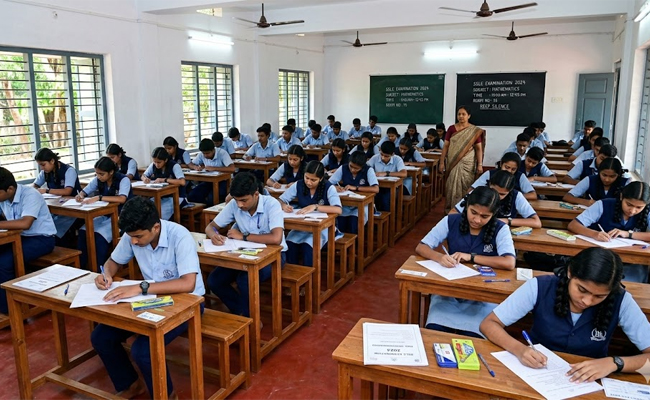
Bengaluru (PTI): The Karnataka School Education Department has issued a circular strictly prohibiting children from being made to dance to obscene songs in educational and cultural programmes.
It stated that such dances would negatively impact students' mental health and moral values. It will create indiscipline and harm the sanctity of education.
"All the Deputy Directors (Administration) of the state's School Education Department have been asked to take strict measures to prevent children or students from dancing to obscene songs in all government, aided and unaided schools in the state," the office of the commissioner of the School Education Department said in a recent circular.
"If it is found that children are being made to dance to obscene songs, appropriate action will be taken against the headmaster or management of such school," it added.
The department also listed certain measures in this regard, which include: strictly prohibiting children from being made to dance to obscene songs during educational and cultural programmes; selecting songs that are inspiring, positive, instilling national pride in children and reflecting the greatness, dignity, values, culture, and morality of the state.
Stating that the school headmaster and management are responsible for selecting songs and dances for cultural programmes, it said, they should also ensure that students wear decent clothes in dance or cultural programmes.