Xiaomi's allegations of coercion baseless, afterthought: ED

New Delhi, May 7: The Enforcement Directorate on Saturday rejected as "baseless" the allegations that the statements of Xiaomi India officials, the wholly-owned subsidiary of Chinese mobile manufacturing company Xiaomi, were recorded "under coercion", saying the charges were an afterthought.
The federal agency was responding to certain news reports that said Xiaomi alleged in a recent filing before the Karnataka High Court that its top executives were threatened with "physical violence and coercion" during their questioning by ED investigators in Bengaluru.
The Enforcement Directorate (ED) issued a statement saying it was "a professional agency with strong work ethics and there was no coercion or threat to the officers of the company at any point of time".
"The allegations that the statement of the officials of Xiaomi India was taken under coercion by ED is untrue and baseless."
"The officials of Xiaomi India deposed their statements before ED under FEMA voluntarily in the most conducive environment on various occasions," the agency said.
It said the statements were deposed by them on the basis of documents and information provided by the company during the course of investigation.
"Their statements corroborate with the written replies submitted to ED and the material on record," the agency said.
The development comes in the backdrop of ED passing an order on April 29 to seize Xiaomi India's funds worth over Rs 5,551 crore over the alleged violation of the Indian foreign exchange law (Foreign Exchange Management Act).
The Karnataka High Court earlier this week stayed this ED order.
The agency added that the statement of Xiaomi global vice president Manu Kumar Jain was recorded on four occasions, April 13, April 14, April 21 and April 26 while that of chief financial officer (CFO) Sameer B S Rao was recorded on six occasions.
Rao's statement were recorded on March 25, April 14, April 19, April 21, April 22 and April 26, it said.
"However, no complaint was filed by them at any point of time during recording of statements at various occasions."
"Last statement of the officials of the company was recorded on 26.04.2022 and the seizure order was passed on 29.04.2022. It appears that allegation now made after passage of substantial time is an afterthought," it said.
The agency said the allegations of Xiaomi are "baseless and far from the facts."
Xiaomi is a tader and distributor of mobile phones in the country under the brand name of MI.
Let the Truth be known. If you read VB and like VB, please be a VB Supporter and Help us deliver the Truth to one and all.
Congress using hijab issue to pacify minority anger, alleges Karnataka LoP R Ashoka
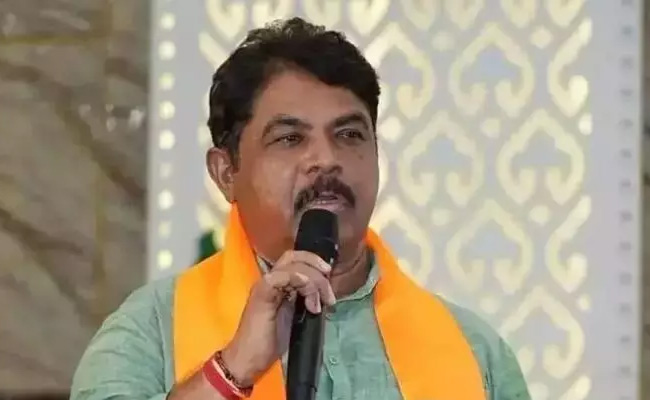
Bengaluru: Leader of Opposition in the Assembly R. Ashoka has accused the Congress government of using the hijab issue to placate what he described as discontent among minority voters after the Davanagere by-election.
In a post on X on Wednesday, Ashoka alleged that the state government, instead of addressing issues such as price rise, corruption, farmers’ distress and law and order, was attempting to retain its minority vote base by reviving the hijab issue.
Referring to the 2022 dress code introduced by the BJP government, which prohibited hijab in schools and colleges, Ashoka said the Karnataka High Court had upheld the policy and emphasised the importance of discipline in educational institutions.
He questioned the Congress government’s move to revisit the issue and asked whether setting aside the court-backed policy to benefit one community could be described as secularism.
Ashoka further alleged that while the government was willing to permit hijab, it continued to prohibit saffron shawls.
He accused the government of dividing students on religious lines rather than treating schools and colleges as spaces of equality.
Drawing a comparison with Mamata Banerjee’s government in West Bengal, Ashoka claimed that excessive appeasement politics had harmed the state and warned that the Congress in Karnataka could face a similar political response.
He said voters in Karnataka would teach the Congress a lesson for what he termed “vote-bank politics” and for compromising constitutional and judicial principles.