Former RSS man Yashwant Shinde reiterates his claims of RSS involvement in bomb blasts
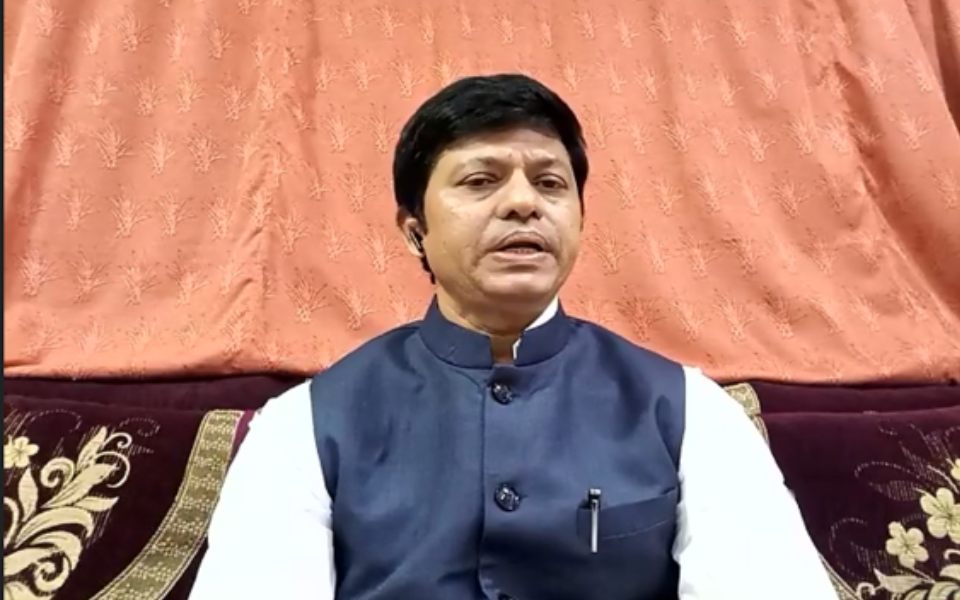
New Delhi/Mumbai – Yashwant Shinde, a former full-time worker (pracharak) of the Rashtriya Swayamsevak Sangh (RSS), has been trying for years to reveal what he claims is the involvement of senior right-wing leaders in a series of bomb blasts that rocked Maharashtra between 2003 and 2008. Despite the gravity of his allegations, a special CBI court in Nanded dismissed his affidavit, refusing to make him a witness in the 2006 Nanded blast case. But Shinde hasn't backed down.
In a detailed interview to The Wire, Shinde has reiterated his claim that several bombings—including those in Parbhani, Jalna, and Purna—were not isolated incidents, but part of a broader conspiracy planned by individuals within the RSS, Vishva Hindu Parishad (VHP), Bajrang Dal and Bharatiya Janata Party (BJP). He says these acts of violence were aimed at polarising voters along communal lines ahead of the 2004 general elections.
The affidavit filed by Shinde in 2022 pertained to the Nanded bomb blast that occurred on the night of April 4-5, 2006. The blast took place at the residence of Laxman Rajkondwar, allegedly an RSS worker, killing his son Naresh and another man named Himanshu Panse, said to be a VHP activist. According to the CBI, which took over the case from the Maharashtra Anti-Terrorism Squad, the two were assembling the bomb that was possibly meant to target a mosque in Aurangabad.
In his affidavit, Shinde had asked to be made a witness in the case and claimed to have prior knowledge of the training camps and individuals involved. He said that in the years leading up to the Nanded blast, he was told by a senior VHP worker about a terror training camp that aimed to “carry out blasts across the country”.
The CBI opposed his application and the court ultimately rejected his plea. But Shinde insists that his statements are valid under Section 311 of the Code of Criminal Procedure, which allows a court to summon a witness at any stage of the trial. He claims his attempts to become a witness have been blocked due to political pressure.
After the rejection of his affidavit, Shinde spoke extensively in interviews with The Wire. He claimed that the blasts between 2004 and 2008 were not carried out by fringe elements, but by people embedded in mainstream right-wing organisations. He named senior RSS leader Indresh Kumar and VHP leader Milind Parande as masterminds behind the operations.
Shinde alleged that the idea of planning bombings was first shared with him around the year 2000 and was later executed by a group based in Nanded. He said this group had carried out attacks in Jalna, Purna, and Parbhani and had also conducted reconnaissance of a mosque in Aurangabad.
“The bomb being made in Nanded went off in 2006, killing people. But before that, they had already carried out attacks in three places. Their goal was to incite large-scale communal violence ahead of the 2004 elections,” he told The Wire.
He also claimed that several individuals involved in the planning were trained in making bombs and arms. He identified two men—Rakesh Dhawade and Ravi Dev (who allegedly operated under the alias Mithun Chakravarty)—as key figures in these training camps. According to Shinde, Dhawade was also named in the Malegaon and Purna-Jalna cases.
One such bomb-making training camp, Shinde said, was held in Sinhagad Talathi, Pune. He recalled attending it with 20–25 others from Maharashtra. “At that camp, I warned several people that this would destroy the country. Their plan was to kill thousands of Hindus and Muslims to create a narrative,” he alleged.
In a series of four interviews over the course of September 2022, Yashwant Shinde, had spoken to Sagar, a staff writer at The Caravan. Shinde had explained how he was trained to carry out covert operations in Pakistan and conduct bombings across India that could be blamed on Muslims. In 2003 and 2004, he alleged, his fellow trainees bombed mosques in the Maharashtra towns of Jalna, Purna and Parbhani. Others who allegedly helped facilitate the conspiracy have been tied to a bombing campaign that killed more than one hundred and twenty people over five years. Most of Shinde’s claims line up with the details of these cases in media reports and court records. It is not possible to fully verify Shinde’s claims unless they are tested against evidence such as phone records, training-camp registers, forensics reports and crime scene videos and photographs, which can only be accessed by investigative agencies. Many of these allegations were mentioned in an affidavit that Shinde submitted to a district court at Nanded, in which he asked to be made a witness in the 2006 Nanded bombing case.
According to Shinde, investigative agencies and sections of the judiciary have played a role in covering up the alleged conspiracy. “Judge Dhamecha was under pressure. His face looked hopeless,” he said, referring to court proceedings related to the case. “Then they brought another judge, Marathe, who rejected two petitions from inside his cabin.”
He also alleged that influential people were being shielded while lower-level operatives were being scapegoated. “They are calling others masterminds just to break the chain leading to top leaders like Indresh Kumar and Milind Parande,” Shinde claimed.
Despite the serious nature of his allegations, Shinde said he was denied any security. “I filed a petition, and still, I got no protection. They can have me killed anywhere. Meanwhile, they increase the security of someone like Kangana Ranaut.”
Shinde says he joined the RSS in 1994, inspired by the situation in Jammu and Kashmir. Over the years, he rose through the ranks, even becoming the Mumbai unit head of the Bajrang Dal in 1999. His affidavit also references an incident from 1995, where he was arrested under the Public Safety Act for allegedly attacking then Jammu and Kashmir Chief Minister Farooq Abdullah. He says this act earned him credibility within the RSS ecosystem.
But over time, Shinde says he grew disillusioned. “If I had never left Mumbai, I’d probably still be a blind follower. But I travelled, worked in different places, and saw what was really going on. That’s when I realised the truth.”
He now says that the Sangh has deviated from its original path. “Dr. Hedgewar’s vision was to build strong individuals and good citizens. That’s not what’s happening today. The ideals and the reality are miles apart.”
Shinde told his lawyer that he kept quiet for years due to threats to his life. “He said his conscience no longer allows him to stay silent,” Advocate Sangameshwar Delmade told The Wire. Shinde added that he had even written to top RSS leaders, including Mohan Bhagwat, asking them to take action against those involved. “Nobody listened. So I’ve come before the court and the public,” he said.
While Shinde is not a prosecution witness, his revelations remain significant, especially as many of his claims align with details already reported in the media and court documents. However, without proper investigation and access to crucial evidence like call records, camp registers and forensic reports, the truth behind his allegations may remain buried.
For now, his voice is one of the few from within the Sangh who has come out publicly, insisting that what happened during those years was not patriotism, but a misuse of faith and power for political ends.
Watch full video here:
Let the Truth be known. If you read VB and like VB, please be a VB Supporter and Help us deliver the Truth to one and all.
Riyan Parag likely to be fined 25 percent of match fees for vaping inside dressing room
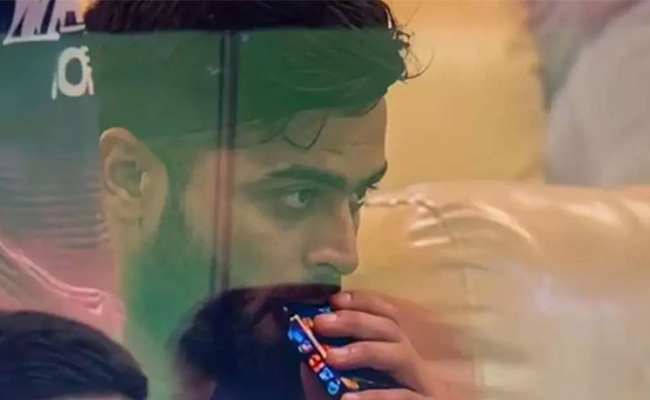
New Delhi (PTI): Rajasthan Royals captain Riyan Parag is set to be fined 25 per cent of his match fee for bringing the game into "disrepute" after being caught vaping on camera during the IPL game against Punjab Kings in Mullanpur.
Parag's actions during the Royals' chase on Tuesday night drew condemnation on social media.
PTI has learned that on field umpires Tanmay Srivastava and Nitin Menon had not reported the matter to match referee Amit Sharma right after the game. They only did that after seeing visual proof and Sharma found Parag guilty for a code of conduct breach as per the IPL guidelines.
The Level 1 offences carries 25 per cent deduction from match fees and one demerit point.
"He is set to be fined a portion of his match fees and a demerit point for a Level 1 offence," said an IPL source.
The Indian government had banned e-cigarettes back in 2019, prohibiting their production, sale and distribution. As per the law, the offender faces imprisonment up to one year and/or a Rs one lakh fine for a first time offence.
"Article 2.21 of IPL Code of Conduct is intended to cover all types of conduct that bring the game into disrepute and which is not specifically and adequately covered by the specific offences set out elsewhere in this Code of Conduct, including Article 2.20," the IPL Code of Conduct states.
"By way of example, Article 2.21 may (depending upon the seriousness and context of the breach) prohibit, without limitation, the following: (a) public acts of misconduct; (b) unruly public behaviour; and (c) inappropriate comments which are detrimental to the interests of the game.
"When assessing the seriousness of the offence, the context of the particular situation, and whether it was deliberate, reckless, negligent, avoidable and/or accidental, shall be considered.
"Further, the person lodging the Report shall determine where on the range of severity the conduct lays (with the range of severity starting at conduct of a minor nature (and hence a Level 1 Offence) up to conduct of an extremely serious nature (and hence a Level 4 Offence)."
Since it is a Level 1 offence there was no need for a hearing.
Parag, who has not had the best of times with the bat this IPL, was seen inhaling an e-cigarette, also known as vaping, in the dressing room during the live broadcast of their game against Punjab Kings. Royals won the game to end Kings' unbeaten run in the tournament.
This is not the first controversy to hit the Royals this season. Earlier this month, team manager Romi Bhinder was fined Rs one lakh for breaching PMOA protocol after being found using his phone in the dugout.
IPL and BCCI officials involved in the conduct of the IPL termed it as a careless act in the age of social media and prying TV cameras.
Royals next host Delhi Capitals at home on Friday night.