Young dairy farmer loses 12 cattle to suspected poisoning in Kerala
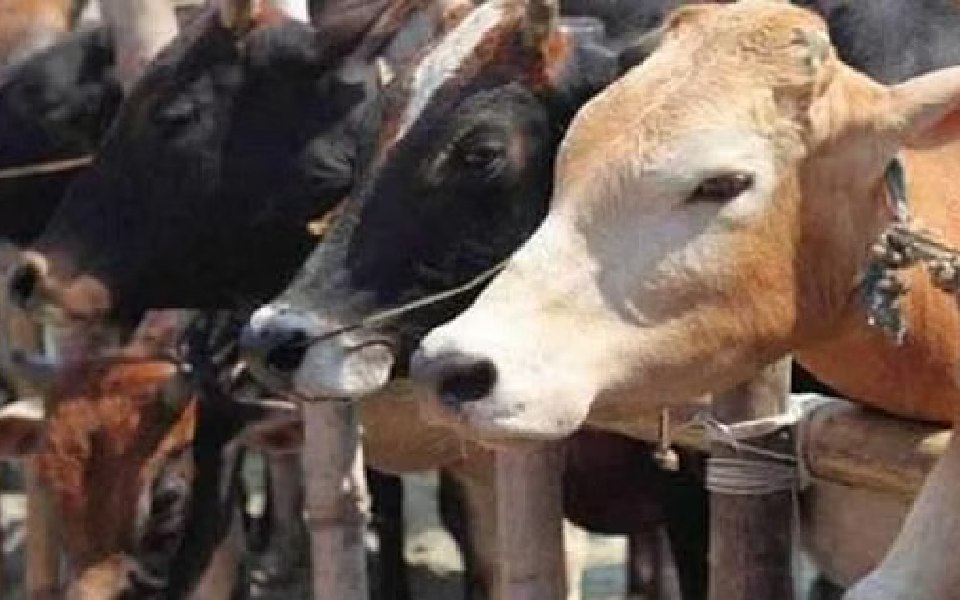
Idukki (Kerala), Jan 1: A young dairy farmer in Kerala has faced a devastating loss as 12 out of his 20 cattle died, suspected to be poisoned by their feed.
The incident occurred around 8.30 pm on Sunday, leaving Mathew (15), visibly distressed, state Animal Husbandry Department officials said.
"Upon learning of the tragedy, the Animal Husbandry Minister J Chinchurani's office promptly intervened. Four veterinary doctors were deputed to treat the remaining cows," an official said.
Witnessing the deaths of his cattle, Mathew became distressed and was hospitalised.
Officials said that the minister had consoled him over the phone. She is planning to visit his farm on Tuesday, they said.
Preliminary reports suggest that the cattle might have been affected by a poisonous substance in the tapioca leaves used as feed, a non-conventional but cost-effective option, a source in the department said.
The tapioca leaf meal contains toxic hydrocyanic acid (HCN), he said.
Out of the 20 cows on Mathew's farm, 12 have died, three are under treatment, and a cow with four calves has survived.
The losses incurred by Mathew are estimated to be around Rs 6 lakh, officials said.
Unfortunately, the family did not have insurance for the cows, making the situation more challenging," an official told PTI.
The boy, who took over the farm two years ago at the age of 13 after his father's untimely demise, relied on tapioca leaves as a more economical alternative to conventional feed.
Mathew's brother George and younger sister assist him with managing the farm.
Despite the severe setback, officials assured that the state government would extend all possible support to help Mathew recover from the substantial loss.
The State Animal Husbandry Department and the minister have provided him with support under various schemes.
"We will help him come back," an official said.
Let the Truth be known. If you read VB and like VB, please be a VB Supporter and Help us deliver the Truth to one and all.
India never offers any duty concessions in dairy sector under FTAs: Goyal
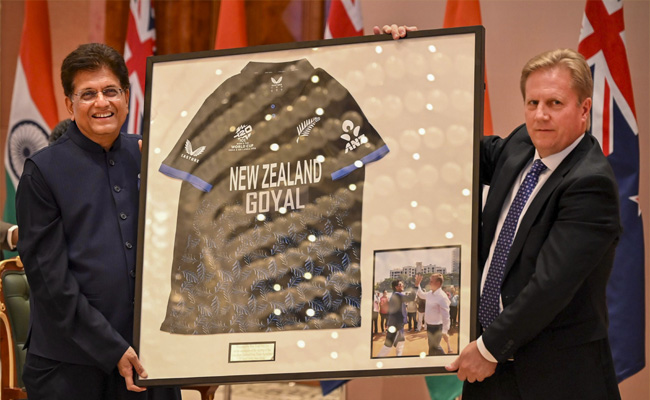
New Delhi (PTI): India has not offered any duty concessions in the dairy sector under any of its free trade agreements so far, including those with the European Union, the UK, New Zealand, and Australia, Commerce and Industry Minister Piyush Goyal on Monday.
He said India's dairy sector is driven by very small and marginal farmers with limited landholdings who own only a few cattle.
These farmers has a "very" low production and needs to be protected against large farms that Europe, America, Australia, or New Zealand have.
"India has had a very consistent stand in all our FTAs across the world, whether it is European Union, Switzerland... UK, USA, Australia, New Zealand. Never has India opened the dairy sector. Everybody in this room knows it. Everybody in the world knows it," he told reporters here after signing a trade pact with New Zealand.
This is a known position, and there is nothing new in this, he said.
However, he added that as per India's foreign trade policy, the government allows foreign firms to bring raw materials or ingredients into India, process them to make high-quality products and then re-export 100 per cent of those goods.
That product is not allowed to be sold in the country, he said.
"So it doesn't hurt the Indian market, doesn't hurt the Indian farmers, but adds to our foreign exchange income, adds jobs to our youth, provides opportunities for our farmers also to possibly supplement for further re-export. So it's a win-win for both countries," Goyal said.
The India-New Zealand trade pact has an investment arrangement under which firms from the Oceania country can bring raw materials or ingredients from the dairy sector into India, process them to make high-quality products and then re-export 100 per cent of those goods.
These dedicated fast-track arrangements will be used exclusively for the manufacture of products destined solely for export, thereby safeguarding the interests of the domestic industry.
New Zealand is one of the world's largest dairy exporters. Its dairy exports to India in FY25 totalled just USD 1.07 million, consisting of milk and cream (USD 0.40 million), natural honey (USD 0.32 million), mozzarella cheese (USD 0.18 million), butter (USD 0.09 million) and skimmed milk (USD 0.08 million).
Under the FTA, India would grant quota-based duty concessions on Albumins (a milk protein product) and bulk infant formula from New Zealand with Minimum Import Price and other safeguards.
Tariffs on bulk infant formula and other dairy-based preparations, and peptones (a dairy-based product) would be phased out by India in over seven years, according to New Zealand's Foreign Affairs and Trade ministry statement.