YouTuber Paurush Sharma faces channel termination; Accuses media house of misusing Copyright Strikes
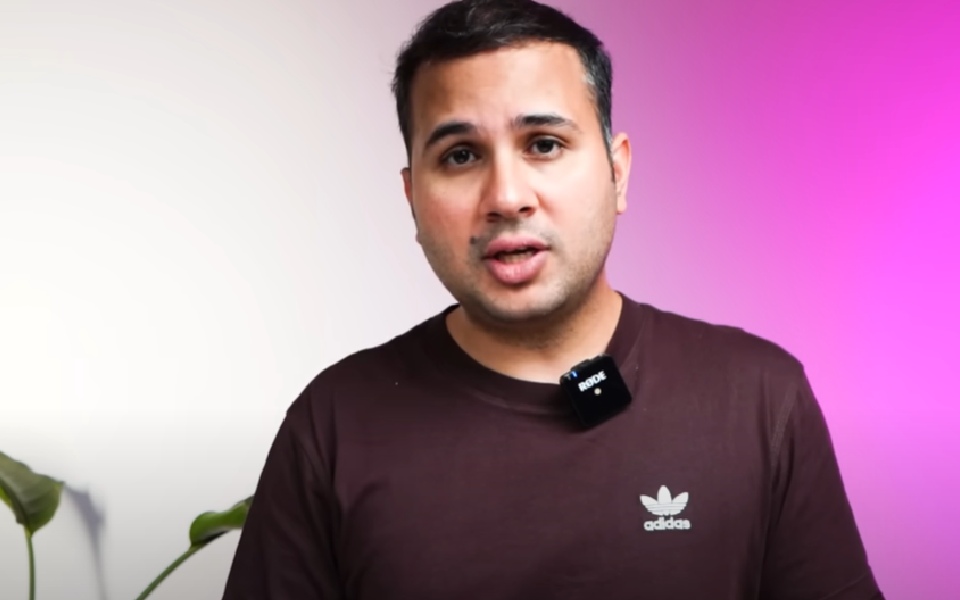
In an emotional video uploaded to his backup YouTube channel, popular content creator Paurush Sharma who has over 1.5 million subscribers announced that his main channel is on the verge of being permanently shut down by YouTube. The creator, known for his satirical and news-based content, said he never imagined having to make such a video and called the experience heartbreaking.
Sharma revealed that the process began two days ago when he received an email from YouTube stating that his channel is being terminated due to multiple copyright strikes. The strikes, according to him, were not from random individuals but from a single media house that issued repeated claims against several of his videos. The creator explained that his content often used publicly available clips to expose misinformation or highlight truths, and that these clips were generally covered under fair use, especially in the context of news and satire.
He described the impact the notice had on him, saying it took two days to even process what was happening. “I have given seven years of my life to this channel,” he said, recounting how he worked round the clock—often sacrificing family moments, including his own child’s birthday—to create content. For him, the channel was not just a profession, but a passion, and a medium to counter misinformation and lies with facts.
He pointed out that YouTube’s content rules for fair use are often complex and misused. He explained that his use of news footage was meant to inform the public and not for personal gain. Despite this, the media house in question sent multiple copyright strikes within a very short span of time.
“Day before yesterday, I received two copyright strikes in the morning. I thought I had time to act, as channels are only taken down after the third strike. But by afternoon, four more strikes came in, taking the total to six. Then I received a notice from YouTube that the channel will be deleted in seven days,” he said.
Attempts were made to contact the media house to resolve the issue, but he claimed there was no response. Strikes continued to come in through the next day and night, worsening the situation. When he contacted YouTube support, he was informed that not only will the main channel be deleted, but any other existing or future channels created under his name will also face the same fate.
According to him, this effectively amounts to a complete ban from YouTube. “What crime have I committed?” he questioned, his voice filled with emotion. “Is speaking the truth a crime now?”
He further alleged that this entire episode appears to be a targeted effort to silence his voice, especially because his videos have often challenged powerful individuals and exposed uncomfortable truths. “When you question power, you have to pay the price,” he said.
He also shared that after reaching out to the media house again, they gave him a final offer: pay ₹24 lakh (approximately ₹21 lakh plus 18% GST) within five days, and they would consider withdrawing the copyright strikes. The amount, he said, is impossible for him to arrange at such short notice.
“This isn’t just about a YouTube channel,” he added. “My entire livelihood depends on this. My family, my team, and their families are all connected to this work. This is my only source of income.”
He urged his followers to subscribe to his backup channel and stay connected, in case his main channel is taken down. “I don’t know if I’ll ever be able to come back on YouTube. But I want to thank everyone who has supported me over the years,” he said, choking back tears.
The video ends with a plea to his audience for continued support and a warning about how fragile digital freedom can be, especially when powerful entities are involved.
He added, those willing to support him in raising the 24L rupees required to be paid to the company, shall do so by depositing any convenient amoung to his account with details: Account Details- Paurush sharma Account number - # 915010000834762 IFSC Code- UTIB0005599. Or in an alternate account- Vinay Sharma Account # - 711710110006394 IFSC code- BKID0007117
Note: The identity of the media house, and other legal details were not disclosed due to ongoing legal constraints.
The incident involving Paurush Sharma is not isolated. Independent digital voices in India have been under growing pressure in recent times. Just a few weeks ago, access to the YouTube channel 4PM News, run by senior journalist Sanjay Sharma, was restricted. This move reportedly came after a complaint raised national security concerns. The Union Ministry of Information and Broadcasting intervened, leading to the channel being taken down. Sanjay Sharma has stated he plans to take legal action and expressed concern over the narrowing space for independent journalism. YouTube, however, has not issued any public statement on the takedown.
Similarly, folk singer and popular YouTuber Neha Singh Rathore has also faced legal trouble for her content. A criminal complaint was filed against her in Uttar Pradesh’s Ayodhya District, accusing her of sedition for allegedly linking BJP leaders including Prime Minister Narendra Modi and Home Minister Amit Shah to the recent Pahalgam terror attack in Kashmir. The complaint claimed that Rathore’s posts were meant to incite unrest and gain electoral advantage. It further alleged that her content was being used by anti-national elements abroad, including Pakistan’s PTI party, which shared her video. Rathore is already facing an FIR in Lucknow for similar charges. The complaint calls her a “habitual YouTuber” spreading unrest and accuses her of being connected to a larger network of political and mafia-backed groups.
The growing list of such cases has raised alarm among digital creators, journalists, and free speech advocates. Many see this as a worrying trend where online platforms, sometimes under pressure from authorities, are being used to curb dissent rather than protect free expression.
Let the Truth be known. If you read VB and like VB, please be a VB Supporter and Help us deliver the Truth to one and all.
Karnataka power tussle: BJP leader calls Siddaramaiah 'Sultan for 15 days'
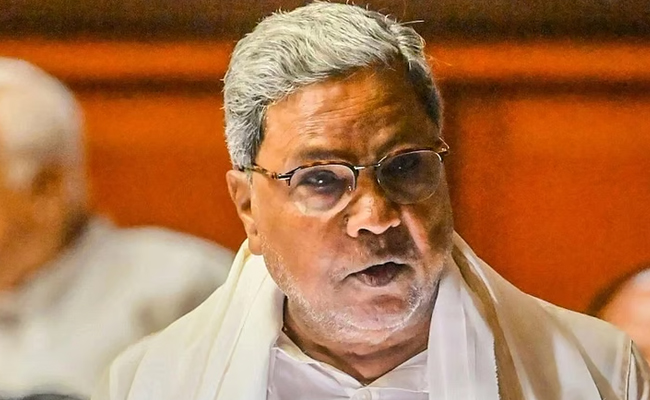
Bengaluru/Bagalkot (PTI): In the midst of the ongoing power tussle within the ruling Congress in Karnataka, senior BJP leader and MP Govind Karjol called CM Siddaramaiah "Pandrah din-ka-Sultan" (Sultan for 15 days), and said after that, he will not be the chief minister of the state.
Speculation has once again surfaced within the Congress party and political circles about a possible decision on leadership change and cabinet reshuffle after May 4, once the results for Assembly elections in four states and one union territory, along with bypolls to two Assembly constituencies in Karnataka, are announced.
"With the fight for the CM chair in the Congress, there seems to be no administration at Vidhana Soudha. The result for Siddaramaiah's CM chair fight will also be declared, along with election results for five states (four states and one union territory) and bypoll results for Bagalkot and Davanagere South Assembly seats in Karnataka," Karjol, a former Deputy CM, said.
Speaking to reporters here, he said, "As per today's information, Siddaramaiah is a Sardar for fifteen days, he is Pandrah din-ka-Sultan, after that Siddaramaiah will not be the chief minister of the state."
Stating that Shivakumar is ready to take up the top job, the MP said that this is the reason Siddaramaiah's supporters have gone to New Delhi to meet the Congress President.
"Already 40-odd legislators have lobbied in support of Siddaramaiah; about 50 are lobbying in support of Shivakumar. Amid this fight for the CM chair, the administration has completely collapsed," he said, urging the government to focus on addressing drinking water issues in various parts of the state amid summer by releasing at least Rs 50 crore per district.
PWD Minister Satish Jarkiholi on Monday met Congress President Mallikarjun Kharge and General Secretary (in charge of Karnataka) Randeep Surjewala in New Delhi and requested them to address the speculation regarding the change of leadership in Karnataka.
Subsequently, Social Welfare Minister H C Mahadevappa too met the party leadership in Delhi.
Both Jarkiholi and Mahadevappa are considered close to Siddaramaiah.
While MLAs and leaders who want Shivakumar to be elevated as CM have recently claimed they expect some "sweet news" by May 15, which is their leader's birthday.
Meanwhile, a team of 40 MLAs is preparing to visit New Delhi to press the Congress high command for a Cabinet reshuffle.
Speaking to reporters in Bengaluru, Leader of the Opposition in the Assembly R Ashoka hit out at the Congress leadership for indulging in "power tussle" instead of addressing the people's concerns. He called the government "anti-people" and "dead" to the people of the state.
With the fight for the CM chair, the ruling Congress in Karnataka seems to be shifting to Delhi. Congress MLAs are repeatedly touring Delhi, upset over the state leadership amid a power struggle between the CM and Deputy CM. This proves that there is no value for the state leadership," he said.
Pointing out that the Deputy CM Shivakumar was not present at the recent special cabinet meeting, which decided on internal reservation among SCs, the opposition leader said, "If the cabinet meeting was held purposely, despite knowing that Shivakumar was in Delhi, it proves that there are factions within the party"
"This government is dead in a way," he said, as he hit out at the Congress MLAs and Ministers, including Shivakumar, for doing "Delhi Yatras" instead of addressing drinking water issues in various parts of the state amid summer, picking up in the state.