YSR Congress Jagan Jaganmohan Reddy's Uncle Found Dead At Home, Case Of Unnatural Death Filed
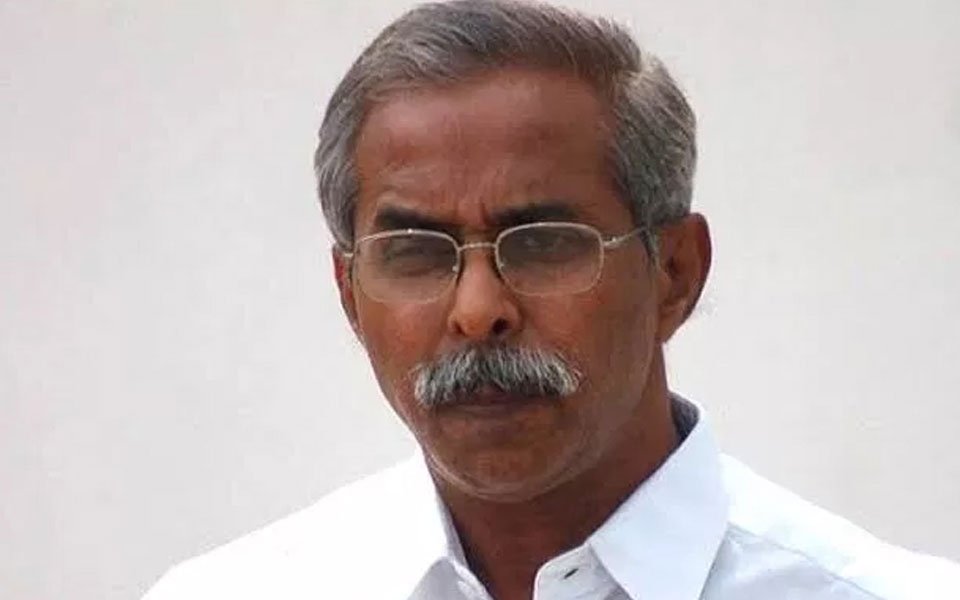
Amaravati (AP), Mar 15: Y S Vivekananda Reddy, former minister and younger brother of former Andhra Pradesh CM Y S Rajasekhara Reddy, was Friday found dead at his residence in Kadapa district of Andhra Pradesh, with family members alleging that the death was not natural.
Vivekananda Reddy's personal assistant M V Krishna Reddy has lodged a complaint with Pulivendula police expressing doubts over the nature of the death as blood clots were found in the bedroom and the bathroom.
The 68-year old leader is survived by his wife and a daughter.
Vivekananda Reddy's nephew and former MP Y S Avinash Reddy alleged that it was not a natural death and sought a thorough investigation.
"There were two injuries on his head, one each on the front and the back. So, a thorough probe is required to establish the cause of the death. There could possibly be a conspiracy angle as well that needs to be probed," Avinash Reddy said in Pulivendula.
A case under section 174 of CrPC (unnatural death) was registered and the body moved to the Pulivendula government hospital for postmortem, a local police inspector said.
YSR Congress president Y S Jaganmohan Reddy and his mother Vijayamma rushed to Pulivendula from Hyderabad on hearing the news.
Known as a down-to-earth and genial person, Vivekananda was elected as MLA in 1989 and 1994 from his hometown Pulivendula in Kadapa district.
He was elected to the Lok Sabha from the Kadapa constituency in 1999 and 2004 and to the Andhra Pradesh Legislative Council in 2009.
He had served as the agriculture minister under N Kiran Kumar Reddy in the then united Andhra Pradesh.
He had a difference in opinions with his nephew, Y S Jaganmohan Reddy, after the latter quit the Congress and established the YSR Congress, and chose to stay back in the parent party.
Vivekananda even lost the by-election to his sister-in-law, Vijayamma, in 2011.
Subsequently, the family differences were sorted out and Vivekananda Reddy joined the YSRC.
Two days ago, he was seen at the Lotus Pond residence of Jagan in Hyderabad and on Thursday, Viveka, as he was known by, campaigned for the YSRC in Pulivendula constituency.
He was alone at his residence in Pulivendula on Thursday night.
"There was no response when I went to his house this morning. I called his wife in Hyderabad over phone and she asked me not to disturb him. Later, the cook and other household staff reached the house but they too did not get any response. I then went in through a side door and found Vivekananda's body in the bathroom, with blood clots in the bedroom and the bathroom," Krishna Reddy said.
YSRC MP V Vijay Sai Reddy expressed shock over the former minister's death.
"He was such a humble person who always engaged himself in public service. It is a huge loss to the YSRC and also the state," the MP said in a message.
Let the Truth be known. If you read VB and like VB, please be a VB Supporter and Help us deliver the Truth to one and all.
Two injuries, one DNF, a DQ as India end messy World Relays campaign
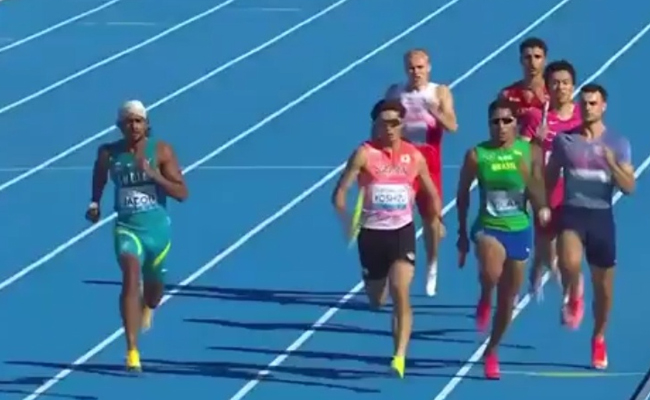
Gaborone (Botswana) (PTI): Amoj Jacob and Ragul Kumar got injured during the men's 4x400m and 4x100 races respectively as India ended their World Athletics Relays campaign in disappointment on the second day of competitions here on Sunday.
The Indian camp had high hopes of making the 2027 World Championships in the men's 4x400m relay but the team did not finish (DNF) the race as Jacob suffered cramps and pulled out of the race after taking the baton from the first leg runner Dharamveer Choudhary. Rajesh Ramesh and Vishal TK were to run in the third and fourth legs.
Those teams which could not qualify for the 2027 Beijing World Championships by reaching the final round of each of the six relay events on Saturday were given another chance in the second qualification round on Sunday.
The top two teams in each of the two heats (in all six relay events) booked the Beijing ticket on Sunday.
India will now have to try and qualify for the World Championships through the Top Lists of the World Athletics, which is a long and tedious process.
In the men's 4x100m race, third leg runner Ragul Kumar fell down the track after failing to hand over the baton inside the exchange zone to fourth leg runner Gurindervir Singh, which clearly showed the lack of coordination among the runners.
Harsh Santosh Raut and Animesh Kujur ran the first two legs.
The Indian quartet was disqualified and Kumar was seen being taken away from the Field of Play with the help of the volunteers.
It was a comedy of errors in the case of the women's 4x100m race, which saw the baton being dropped during an exchange between first leg runner Tamanna and second runner Nithya Gandhe, though the Indians finished the race in 53.09 seconds.
Gandhe started running quite a distance, but after realising that the baton was not in her hand, she turned and ran back to pick it up.
The only silver-lining for the Indian contingent was the national record time in the mixed 4x100m relay race, though the quartet of Ragul Kumar, Nithya Gandhe, Animesh Kujur and Sneha SS finished sixth in heat number two with a time of 41.35 seconds, bettering the previous national mark of 42.30 seconds set in March in Chandigarh.
The mixed 4x400m relay quartet of Theerthesh P Shetty, Kumari Saloni, Nihal William and Rashdeep Kaur ended at fifth in heat number one with a time of 3 minutes and 19.40 seconds.
On Saturday, all the five Indian relay teams had failed to make it to the respective final rounds and thus missed out on the 2027 World Championships berths.