Across Shores: The Beary Community’s Enduring Bond with the Gulf

Mangaluru: Coastal Karnataka is one of the most linguistically diverse regions in India. There are 7 different languages that are spoken in this region. One among them is a language called ‘Beary’, generally spoken by majority of Muslims of Mangalore and parts of Kasaragod, Udupi and Coorg districts. The people who speak this ‘Beary’ language are known to belong to a diverse ethnic community called ‘Bearys’.
The word ‘Beary’ is believed to have originated from the Tulu word ‘Byara’, meaning trade or business. According to historical accounts, the Beary community is considered the progeny of Arab traders who settled in Mangalore and married local women. The presence of these Arab traders along the shores of Coastal Karnataka dates back to the 7th century A.D. Another possible root is the Arabic word ‘Bahri’, meaning sailor, which also aligns with and espouses this belief about the community’s origins.
As the name suggests, Bearys are considered to be particularly involved in business activities and their demographic analysis also suggests that they thrive through migration, specifically for livelihood aspects. It is this feature of the Beary community that is still seen in the present times. There are over a million Bearys and many among them are scattered all across the world. Among this pattern of migration, one region where they are prominently found is the Middle East, also called the Gulf region.
This migration of Bearys to the Gulf region has a historical undertone too. It can be traced back to the times as early as Indus valley Civilisation. During those times, there were trade relations between Indus Valley Civilisation and Dilmun (modern day Bahrain).
From the 7th century onwards, the Arab traders started dealings with locals from Coastal Karnataka. The Local traders were involved in business transactions with the Arab merchants and their connection with the Gulf region further started to grow stronger.
Moreover, once the British started colonising the world, they wanted easy access to ports so that their trade operations were never disrupted. Hence, in the 1800s, there was a wave of migration facilitated by the British among their colonies. This resulted in development of out-migration from Coastal Karnataka as it was seen as a centre of trade operations.
Later, in the 1970s, the oil boom in the Gulf region saw unskilled and semi-skilled migrants leaving the shores of Coastal Karnataka to the Gulf region in another phase of migration. This was primarily due to lack of economic opportunities in the host region, as there were not many economic opportunities back home.
Apart from these historical perspectives, there are various other reasons behind this migration. In the present decade, this migration is prominent even among educated Bearys. This is primarily due to rising unemployment at home, stagnant wages and attraction of better economic opportunities in the gulf region. The skill set of the youth is better rewarded in the Gulf region. Back in the 1970s, the migration was primarily male-centric, but now it is family-centric due to better economic opportunities and increased standard of living there.
The proximity of Coastal Karnataka to the Gulf region also plays a huge role in this migration. It is considered easier and more convenient to travel to the Middle East than to the Northern parts of India. A flight from Mangalore to Delhi takes 2.5 - 3 hours, whereas Mangalore to Dubai takes about the same time. Further, due to the presence of past migrants, Gulf region feels more like home to the new migrants than migrating to other cities of India.
The proliferation of various identity-based organisations in the Gulf region has also provided easy access for the job market to the new immigrants. The reference networks of their friends and family also help them land a decent job. This has acted as another catalyst for out-migration of Bearys.
As discussed earlier, the Beary community of coastal Karnataka is known for their entrepreneurial tendencies and the booming Gulf market in the present times has opened up new scope of entrepreneurial ventures for them. Today there are thousands of firms established by Bearys in these regions and are contributing significantly to the host nation’s economy. Further, these firms also provide employment opportunities to the immigrants coming from Coastal Karnataka. Also, the tax relief, lack of red tapism, favourable business environment in the Gulf region has all acted as a pull factor for the Beary community.
Further, settling in the Gulf region is also seen as an upward mobility of a person’s social status. Back home, a person’s social status is directly linked to the work they do in most scenarios. However, as the Gulf settlers return home on vacation, nobody tends to ask them about their occupational standards in the Gulf Region. This provides them with a sense of enhancement of social status.
Increased migration of Bearys to the Gulf in search of better economic opportunities has yielded good fruits to the families back home in terms of the remittances sent home. These remittances have resulted in families being economically affluent, an increase in their standard of living, improvement in access to quality healthcare and education, among others.
However, as it is said, the devil lies in the details, it is not as if this region is immune to the human complexities. The increased focus on nationalisation laws in the Gulf region has started raising serious questions about the economic potential this region provided to the migrants. Also, racist sentiments, war-like situations, the psychological impact on the families who stay separated from their loved ones, difficulty in accessing judicial or legal remedies, increasing health and accommodation costs have made the migrants more vulnerable than ever.
In essence, the Beary community’s migration to the Gulf is a story shaped by history, opportunity and resilience. What began as ancient trade connections has grown into a long-standing pathway of economic mobility for thousands of families. While the Gulf continues to offer better livelihoods and new possibilities, it also presents challenges that migrants must constantly navigate. Yet, through their enterprise, adaptability and strong community networks, the Bearys continue to sustain this journey, shaping both their lives abroad and the progress of Coastal Karnataka.
Let the Truth be known. If you read VB and like VB, please be a VB Supporter and Help us deliver the Truth to one and all.
CM Siddaramaiah alleges ‘criminal conspiracy’ in Sringeri recount, vows legal action
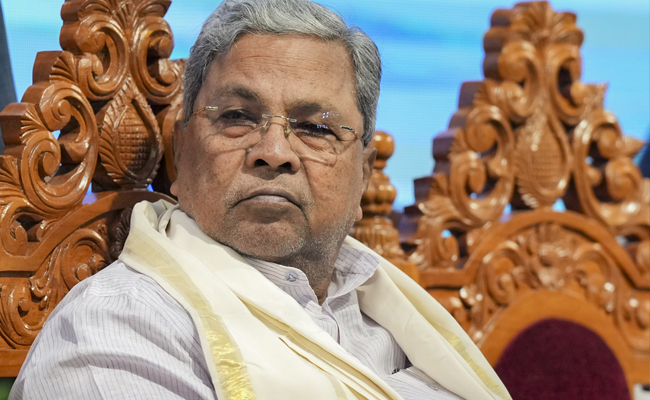
Bengaluru (PTI): Alleging a “criminal conspiracy” by BJP candidate D N Jeevaraj in the Sringeri Assembly poll recounting, Karnataka CM Siddaramaiah on Tuesday said the outcome was manipulated after valid postal ballot votes in favour of Congress leader T D Raje Gowda were tampered with during the recounting process.
Following a Karnataka High Court order on an election petition filed by Jeevaraj, challenging Raje Gowda’s election, the reverification and recounting were conducted on Saturday.
After the reverification and recount of postal ballots for the Sringeri Assembly constituency, votes polled in favour of Raje Gowda were reduced by 255, the returning officer said.
A report on the matter has been submitted to the Election Commission of India for further action, the officer added.
Congress leader Raje Gowda had won the 2023 Assembly polls from Sringeri by 201 votes, defeating his nearest rival Jeevaraj.
Addressing a press conference in Bengaluru, Siddaramaiah said the High Court had directed the recounting of postal ballots and that irregularities were noticed during the exercise conducted on May 2.
“This is a clear case of criminal conspiracy,” Siddaramaiah said, alleging that valid votes cast in favour of Raje Gowda were altered after being accepted by counting agents of all parties, including Congress, BJP, and JD(S).
He claimed that during the recounting of postal ballots, 255 votes were initially accepted as valid by all agents but were later tampered with by subordinate officials.
“There is a second mark on the votes polled in favour of Raje Gowda. They had accepted these as valid votes. Subsequently, another mark was made by officials. This is a clear case of criminal conspiracy,” he said.
When asked who was behind the alleged conspiracy, the CM replied, “It was hatched by Jeevaraj and others. It is planned.”
Siddaramaiah further alleged that the returning officer acted improperly by declaring the result despite the presence of an Election Commission observer during the recounting.
“Immediately after the counting, the returning officer announced the result. He should not have done so; this is against the law,” he said.
He pointed out that Raje Gowda had originally won by 201 votes, but after the recounting, the BJP candidate was declared the winner by 52 votes.
“The BJP has committed a criminal act of conspiracy. This is not vote chori but vote dacoity,” he alleged.
The CM said a police complaint had already been filed by Raje Gowda’s election agent, Sudhir Kumar, and emphasised the need for electoral integrity.
“We want transparency and free and fair elections. That is what our Constitution mandates,” he added.
Stating that the government would pursue legal remedies, Siddaramaiah said, “We are preparing an appeal challenging the returning officer’s announcement in a court of law.”
Responding to a separate query on elections in other states, the CM said there appeared to be an anti-incumbency factor in West Bengal, while results in Tamil Nadu were “surprising,” adding that Vijay’s party was emerging as the largest there.
Following the victory of party candidates in Bagalkote and Davanagere South, Siddaramaiah expressed confidence about future electoral prospects in Karnataka.
“Even in 2028, we will win the Assembly elections. We will come back,” the CM said.
Siddaramaiah added that he would order a forensic examination into the alleged tampering of postal ballots.