Action to be taken against bull trawling: Minister Kota Srinivas Poojary
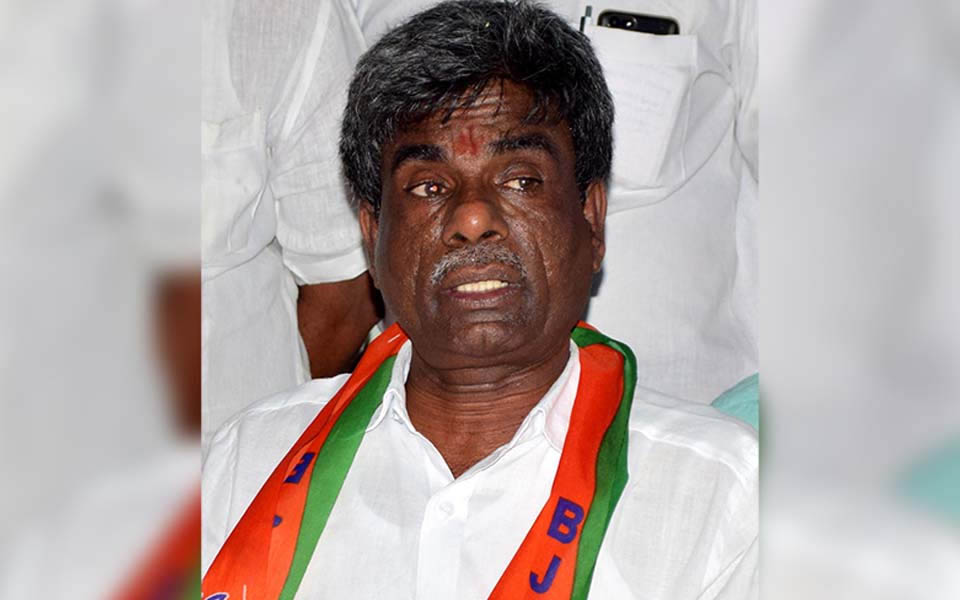
Mangaluru, Oct 6: Strict action will be taken against those who indulge in 'bull fish trawling' and use of lights on mechanised boats, Karnataka Minister for Fisheries and Ports Kota Srinivas Poojary said on Sunday.
Strict action will be taken against those who indulge in 'bull fish trawling' and use of lights on mechanised boats, Karnataka Minister for Fisheries and Ports Kota Srinivas Poojary said on Sunday.
Addressing reporters here, Poojary said there is already a ban in the state against bull trawling and use of lights and it will continue in future also.
However, a few fishermen are found to be engaged in fishing through bull trawling, adversely affecting the livelihood of traditional fishermen, he said.
He said the Traditional Fishermens Association has given a memorandum to the government demanding action against those who violate the rules set by the government on bull trawling.
In bull trawling, a net is tied between two mechanised boats and dragged for some kilometres to catch fish.
The minister said stringent action will be taken against those violating law.
To a question on the delay in providing compensation to flood victims, he said there is no need for worry and the amount of Rs 5 lakh announced by the government to those who lost their houses will be disbursed soon.
Let the Truth be known. If you read VB and like VB, please be a VB Supporter and Help us deliver the Truth to one and all.
Man arrested with Rs 2.54-crore heroin in Mumbai

Mumbai (PTI): Police have arrested a man and seized over 500 grams of heroin worth Rs 2.54 crore in the illicit market from him in Mumbai, officials said on Friday.
The police's Anti-Narcotics Cell (ANC) made the drug seizure in Santacruz in the western suburbs. The operation was conducted by the Kandivali unit of the ANC on Thursday as part of a special crackdown against drug trafficking in the area, they said.
Acting on specific inputs, an ANC team conducted a raid in Santacruz (East) and intercepted a man. During a search, the team recovered 508 grams of high-grade heroin from his possession, an official said.
The seized contraband, a highly addictive, opioid drug derived from morphine, is estimated to be worth Rs 2.54 crore in the international market, he informed.
Following the seizure, a case was registered against the man under relevant sections of the Narcotic Drugs and Psychotropic Substances (NDPS) Act, 1985, and he was formally placed under arrest in the early hours of Friday.
The police are currently investigating the source of the drug and trying to identify the intended recipients of the consignment, he said.