Allegations of cattle transport: Young man assaulted by Bajrang Dal activists in Karkala
Cases registered against 17 people at Karkala Rural Police Station
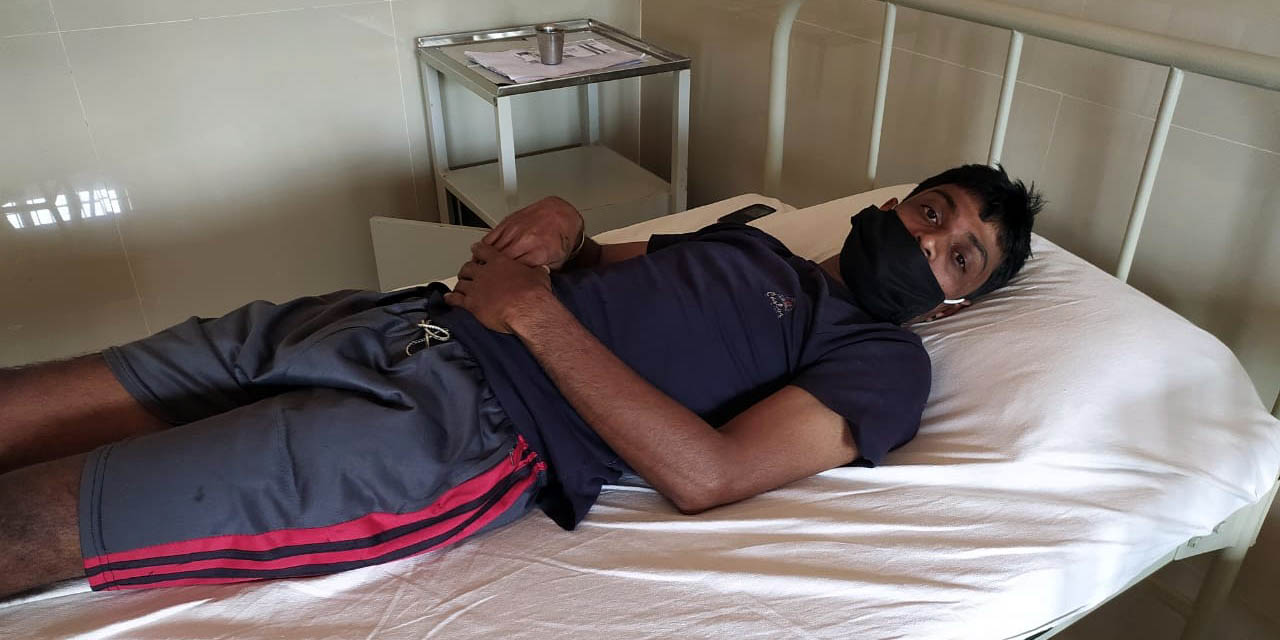
Karkala: A 30-year-old man was on Tuesday evening assaulted by a group of Bajrang Dal activists. The victim identified as Sujay Devadiga (30), who was working with Sita Ram, a resident of here who was also assaulted by Bajrang Dal activists last month for allegedly transporting cattle.
According to the reports, Sujay was riding on his two-wheeler when 17 people arrived on the car and assaulted him. In his complaint, Sujay has added that they also threatened him for life. Yogish aka Munna, Ravi Acharya, Ashok aka Abhi, Nitin are among 17 people named in the complaint.
Sujay who has sustained injuries in the assault is being treated at Karkala Government Hospital. A case has been registered at Karkala Rural Police Station and investigations are underway.
On July 22, Sitaram Malekdy, a local resident had purchased cattle for dairy farming from his neighbor Babu Poojary. Babu and Sujay had brought the cattle to Sitaram’s house and had tied it in the backyard. On the same evening, Abdul Rahman who had come to purchase goats for Bakri-Eid was intercepted by Bajrang Dal activists.
Later on the same night, more than 50 Bajrang Dal activists gathered outside Sitaram’s house and assaulted him. Sujay had escaped at that time. Sujay’s brother has alleged that the same group of activists attacked Sujay alleging his involvement in the matter.
Let the Truth be known. If you read VB and like VB, please be a VB Supporter and Help us deliver the Truth to one and all.
Two arrested in K'taka for assaulting minors, uploading CSAM content

Bengaluru (PTI): Two men were arrested for allegedly sexually assaulting two minor girls, recording the acts on mobile phones and uploading the videos online as child sexual abuse material, police said on Thursday.
The accused have been identified as Kiran Kumar (29), hailing from Chitradurga district, and Aditya M K (20), hailing from Shivamogga district, they said.
A probe was initiated after information was received from the NCRP portal regarding a suspected instance of creation of Child Sexual Abuse Material (CSAM) for online dissemination, police said.
Accordingly, a case was registered at Kaggalipura Police Station under relevant sections of the IT Act on May 10, they added.
Investigation revealed that two minor girl victims were exploited and videos were created and uploaded to the internet. The child victims have subsequently recorded their statements as per procedure and further necessary legal steps have been taken, Pronab Mohanty Director General of Police, Cyber Command, said in a statement.
Based on the statements of the victims, the accused persons, who allegedly assaulted the minors, recorded the acts on mobile phones and uploaded the videos online, were arrested, he said.
Following the probe, sections 65(2) (rape) and 70 (gangrape) of the Bharatiya Nyaya Sanhita, along with relevant sections of the POCSO Act, have been added to the FIR, police said.
Officials collected relevant information and on May 12, arrested the accused persons and seized three mobile phones belonging to them, in which the videos had allegedly been recorded, he said.
The accused were later produced before the court and taken into police custody for further investigation, he added.
According to him, in CSAM cases, police usually apprehend offenders who have downloaded such content or have kept them in their possession after obtaining them from elsewhere, usually the internet.
"The present case is one of the very few instances where content creators and uploaders have been apprehended," Mohanty added.