Allegedly harassed by married man, young woman commits suicide in Puttur

Puttur: On Wednesday, an incident came to light where a young woman committed suicide at Sampya near Puttur. The deceased young woman has been identified as Madhushri (26), who was working as a receptionist at a private hospital in Puttur. The unmarried young woman reportedly committed suicide by jumping into a lake late Wednesday afternoon beside her grandmother’s residence.
Based on the information found in her private journal, the deceased is said to have taken the drastic measure to end her life unable to cope with the emotional abuse meted to her by the now married ex-lover, who was also threatening her life. Along with the dairy as material evidence and a complaint from her uncle, a case has been registered at the Sampya Police Station.
The deceased young woman is the daughter of Banglegudde Balakrishna Gowda residing in Sampaje village and was working as a front desk receptionist at a private Hospital in Puttur and living in the Hospital’s hostel nearby. Reportedly, on her day-offs, Madhushri used to visit her grandmother’s house. On Wednesday afternoon, she had visited her grandmother’s house in Kolya at Sampadya. After lunch on the fateful day, she had reportedly ventured out into the nearby plantation garden and jumped into the lake in its premises.
‘Harassment from Married Man Drove her to Commit Suicide’
In the dairy found inside her handbag, Madhushri has written that the harassment from a married man named Devikiran is the reason behind her taking her own life. In the diary, she wrote, “Devikiran from Sampaje and I were in a loving relationship for the past 5 years. But, he got married to another woman last June. Despite that, he used to contact me. He used to persuade me to not get married to another man. Whenever I used to try for a marriage prospect, he used to threaten to reveal about our relationship and try to sabotage the marriage prospect. He has also threatened to kill me if I get married”, Madhushri’s diary revealed.
The deceased had also confided with her family about the harassment she faced from her former lover. Reportedly, even on the day of the suicide, her grandmother had comforted her while addressing the issue of harassment.
The deceased’s uncle, Vittal Gowda has complained to the Sampya police that the harassment meted out by Devikiran is responsible for his niece’s suicide. The Sampya Police has registered a case and are conducting further investigations.
Let the Truth be known. If you read VB and like VB, please be a VB Supporter and Help us deliver the Truth to one and all.
Look-out circular issued against Union Minister Bandi Sanjay's son in POCSO case
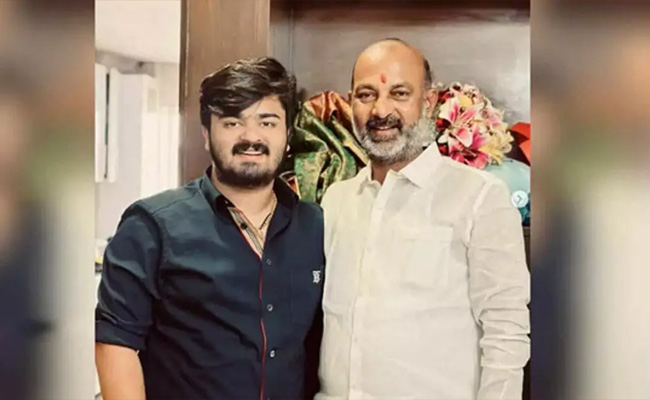
Hyderabad (PTI): The Cyberabad police have issued a look-out circular against Union Minister Bandi Sanjay Kumar's son Bandi Bageerath, who has been booked under the POCSO Act, to prevent him from fleeing the country.
A police official told PTI on Saturday that searches are being conducted to nab Bageerath.
Meanwhile, Telangana Rakshana Sena (TRS) president K Kavitha, in a letter addressed to Prime Minister Narendra Modi, demanded the removal of Sanjay Kumar, MoS (Home), from the Union Cabinet "to ensure a free and fair investigation in the POCSO case involving his son".
In a setback to Bageerath, the Telangana High Court on Friday night did not grant him any interim protection from arrest.
Dealing with an interim anticipatory bail petition of Bageerath, the court said it was not inclined to grant any interim order at this stage.
The counsel for Bageerath had requested interim protection from arrest until the orders on the petition were issued.
The case was registered under relevant Sections of the BNS and POCSO Act on May 8 against Bageerath based on a complaint by the mother of a 17-year-old girl, who alleged that Bageerath was in a relationship with her daughter and sexually harassed her.
After recording the statement of the victim, more stringent sections of the Protection of Children from Sexual Offences (POCSO) Act were invoked in the case.
Bageerath had also lodged a counter-complaint, alleging that the girl, who got acquainted with him, had invited him to family functions and group gatherings. An FIR was registered based on Bageerath’s complaint.
In the complaint, Bageerath stated that, believing the girl’s family to be trustworthy, he accompanied them on visits to certain holy places as part of a group of friends.
He further alleged that the girl and her parents later pressured him to marry her. When he rejected the proposal, the girl's parents allegedly demanded money and threatened to file false complaints against him if he failed to pay.
Bageerath claimed that, out of fear, he paid Rs 50,000 to the girl's father, but the family later demanded Rs 5 crore. He also alleged that they threatened that the girl's mother would commit suicide if he failed to meet their demands.