Ambedkar Parinibbana Diwas in Bengaluru on Dec 12, 13: Mavalli Shankar
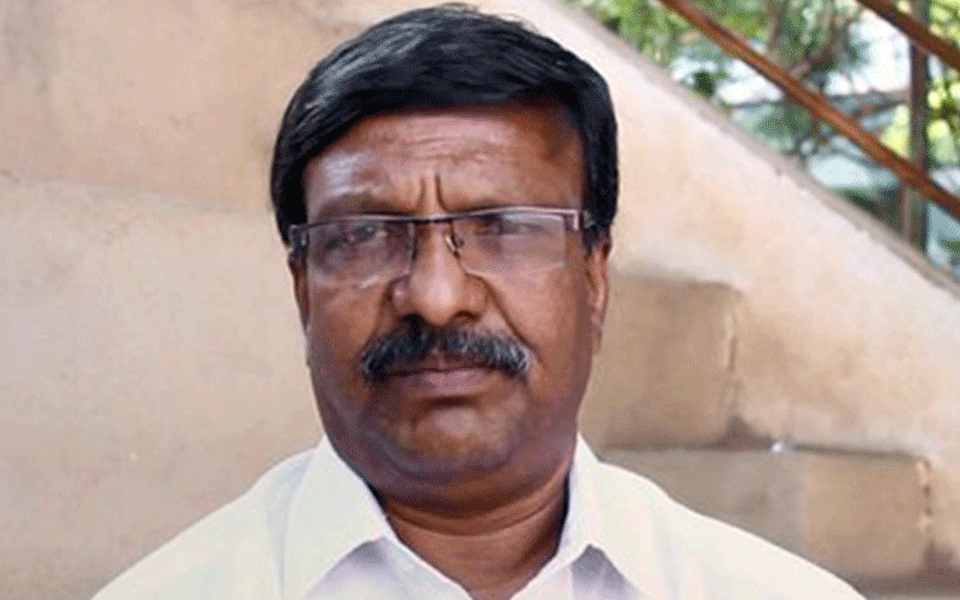
Mangaluru, December 2: The Karnataka Dalit Sangharsh Samiti (DSS) has organized the 62nd Ambedkar Parinibbana Day(Death anniversary) and the general body meeting of the Samiti at Dr. B.R. Ambedkar Bhavan at Devanahalli in Bengaluru on December 12 and 13.
Speaking to reporters here on Sunday, DSS state general convener Mavalli Shankar said that former minister H. Anjaneya would inaugurate the programme and he would preside over it. Justice Nagamohan Das would be the chief guest and senior journalist Dinesh Amin Mattu, Indira Krishnappa, Rudrappa Hanagavadi of Samiti Mahila Okkuta and economist Prof. Keshav would be present, he said.
The Parinirvan procession would start from Tippu birthplace at 11 am, reach the Mini Vidhana Soudha premises where Ambedkar statue would be garlanded and converge at the Ambedkar Bhavan, he said.
The communalists have been wielding the swords as they have decided to change the Constitution. Many incidents happening in the country were justifying that the future of the country was at stake now than before. Efforts were being held to oppress the dalits who have been trying to live with self esteem. Manu mentality has been engulfing the entire society, he said.
The central government has been weakening the constitutional agencies like RBI, CBI, Election Commission, CVC and others. Upper caste forces have been opposing the reservation facilities entitled to the backward and dalit communities in the Constitution. There was a need to organize a strategic movement against the anti-people policies of the central government, he said.
Progressive writers, Scholar, Social activists, Singers, Artistes and others would participate in the convention. More than 1,500 workers of Dalit Sangharsh Samiti across the state would participate and more than 250 workers would participate from Udupi district, he said.
DSS general convener B.K. Vasanth, Divisional organizing convener Chandu R, District convener Jagadeesh Pandeshwar, Sadashiva and others were present at the press conference.
Let the Truth be known. If you read VB and like VB, please be a VB Supporter and Help us deliver the Truth to one and all.
Have no personal involvement in Cong’s action against some minority leaders: Shivakumar
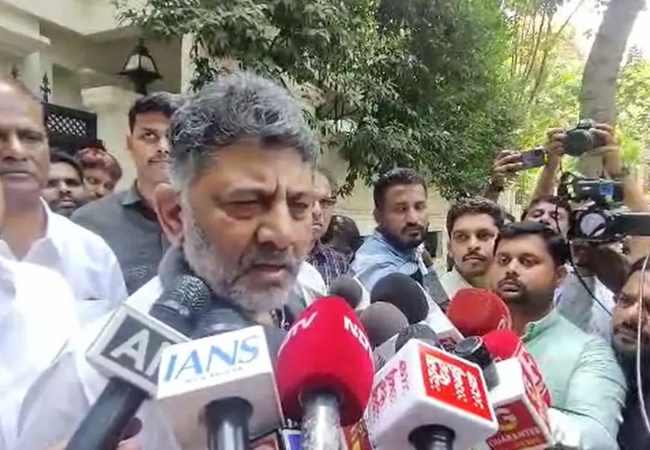
Bengaluru (PTI): Karnataka Deputy Chief Minister D K Shivakumar on Friday said he has no personal involvement in action taken against certain Congress leaders from the minority community following allegations of an internal conspiracy during the recently held Davanagere South bypolls.
He clarified that the decisions were taken by the party high command based on available reports.
Asserting that party discipline is of utmost importance, Shivakumar, who is also the Karnataka Pradesh Congress Committee (KPCC) president, sought to downplay concerns that action against minority leaders may send the message that “Muslims are being targeted.”
“I don’t have any personal involvement in this. Whatever decisions are taken are made by the party leadership. The party has its own reports. Decisions regarding MLAs or MLCs cannot be taken at the state level without instructions from Delhi,” he said.
Speaking to reporters, he added, “People may blame me; I am not concerned. Everyone must function in accordance with party discipline.”
Responding to concerns within sections of the party that recent actions may convey the impression that minority leaders are being targeted, he said the Congress exists for the welfare of Scheduled Castes, Scheduled Tribes, minorities, backward classes, farmers, and all sections of society.
The Congress has suspended MLC K Abdul Jabbar from primary membership and relieved another MLC, Naseer Ahmed, from the post of Chief Minister’s political secretary.
The action followed allegations by a group of Muslim leaders that certain party members conspired to defeat the official candidate in Davanagere South.
Following the action, speculation has emerged that Housing Minister B Z Zameer Ahmed Khan may also face disciplinary measures during the next cabinet reshuffle.
The three leaders had reportedly sought a Muslim candidate for the Davanagere South bypoll ticket, which the party instead allotted to the late MLA Shamanur Shivashankarappa’s grandson, Samarth Mallikarjun.
They were also said to have not actively participated in the campaign.
Shivakumar also rejected claims of factionalism within the ruling party amid speculation that leaders close to Chief Minister Siddaramaiah were being targeted.
Naseer Ahmed and Zameer Ahmed Khan are considered close to the CM.
Rejecting allegations of factionalism within the party, Shivakumar said, “We speak to each other every day. It is the media that creates divisions. Where is my faction? Has anyone put up a board saying they belong to the Siddaramaiah faction? Have I put up any such board?”
“All 139 legislators are my people, and they are all Siddaramaiah’s people as well. Everyone belongs to the Congress,” he added, saying there are no factions within the party and that such claims are media-driven.
Public Works Department (PWD) Minister Satish Jarkiholi met Shivakumar on Friday, a day after expressing concerns that disciplinary action against minority leaders may send the wrong message.
Shivakumar said he discussed with Jarkiholi the need to decongest Bengaluru traffic by diverting vehicles entering the city from state and national highways, along with party-related issues.
“We also discussed political matters in the interest of the party and the need to work together,” he said.
Later, speaking to reporters, Jarkiholi said he discussed with Shivakumar the issue of withdrawing Jabbar’s suspension. He said he will also visit New Delhi next week to meet the high command and discuss state developments.
“Jabbar’s suspension was discussed (with Shivakumar). It should be withdrawn. Let’s issue him a notice and allow him to reply. Then let’s send the report to the high command and seek their approval. High command approval is necessary because the instructions came from there. It may take some time,” he said.
Stating that he met the KPCC chief for “damage control,” the minister said, “We have tried to convince him. Sometimes certain decisions happen that need rectification.”
_vb_33.jpeg)